CHP Lawmaker Warns of Deepening Agricultural Crisis as Türkiye Faces Food Supply Risks
 tarim
tarim
CHP Niğde MP Ömer Fethi Gürer has warned that Türkiye is entering a risky period for food security after cereal production fell by more than 8 million tons over the past two years. Citing falling wheat and barley output, rising import bills, shrinking public procurement and mounting farmer debt, Gürer argued that structural problems in agriculture are being masked by official rhetoric. The broader picture for 2025 also points to a sector hit by drought, frost, animal disease, soaring costs and record contraction, raising new concerns for 2026.
Gürer Sounds Alarm Over Falling Grain Output
Republican People’s Party (CHP) lawmaker Ömer Fethi Gürer has issued a stark warning over Türkiye’s agricultural outlook, arguing that the country is entering a dangerous phase in terms of food supply and food security.
Speaking at a press conference in parliament, Gürer said cereal production has suffered a major collapse over the past two years, driven not only by drought and frost but also by flawed agricultural policies, rising input costs and insufficient support for farmers.
According to figures he shared, Türkiye has lost more than 8 million tons in crop production in just two years. Gürer said this decline cannot be explained solely by natural causes, insisting that policy failures have accelerated the sector’s deterioration.
Wheat Output Falls Below 2002 Levels Despite Population Growth
Gürer drew attention to what he called the most striking contradiction in official claims of self-sufficiency.
He said Türkiye produced 19.5 million tons of wheat in 2002, but that figure is estimated to have dropped to 17.9 million tons by 2025. During the same period, the country’s population increased by roughly 30 million.
Barley production has also moved in the wrong direction. Gürer said output fell from 8.3 million tons in 2002 to 6 million tons in 2025.
For Gürer, these numbers directly challenge official arguments that Türkiye remains comfortably self-sufficient in staple crops.
“If the population has risen by 30 million but production has fallen below 2002 levels, then claims of adequacy need to be questioned,” he said in substance, asking how such sufficiency calculations are being made.
Production Losses Accelerated in 2024 and 2025
The decline, Gürer said, has become more severe in successive years.
In 2024, compared with the previous year:
- Wheat production fell by 5.5%
- Barley dropped 12%
- Rye declined 15.2%
- Oats fell 4.9%
- Corn declined 10%
In 2025, the contraction deepened further compared with 2024:
- Wheat fell 13.7%
- Barley dropped 25.9%
- Rye declined 20.9%
- Oats fell 26.3%
Taken together, Gürer said, the two-year loss in field crop production now exceeds 8 million tons.
Imports Rise as Domestic Output Falls
The shortfall in production is translating directly into a larger import bill.
Gürer said Türkiye paid $1.159 billion in 2025 to import more than 4.5 million tons of wheat. Even in the opening phase of 2026, he said, the import bill had already reached $231 million.
He also criticized the lack of transparency around imports conducted under the Inward Processing Regime, saying data is being withheld from the public under the justification of “commercial confidentiality.”
The implication is clear: as domestic production weakens, Türkiye is becoming more dependent on foreign supply for basic food products.
TMO Procurement Falls as Farmers Face Mounting Debt
Gürer also argued that the Turkish Grain Board (TMO) has retreated from its stabilizing role in the market.
He said TMO’s wheat procurement fell from 12 million tons in 2023 to 3.5 million tons in 2024, and is programmed to fall further to 2.5 million tons in 2025.
At the same time, farmers are facing sharply rising costs and growing indebtedness.
Under Article 21 of Türkiye’s Agriculture Law, support to farmers is supposed to equal 1% of gross domestic product. Gürer said that while legal support should amount to TRY 772 billion in 2026, the allocated budget stands at only TRY 168 billion.
He added that diesel prices have climbed toward TRY 80 per litre and that farmers’ total credit debt has reached TRY 1.3 trillion.
Without effective floor-price mechanisms, Gürer said, farmers are being pushed into loss-making production or forced to switch to alternative crops, further weakening the country’s food balance.
“Fields Are Not Being Left Empty by Choice”
Gürer also criticized the Agriculture Ministry’s plan to lease farmland left uncultivated for two consecutive years.
He argued that land is not being abandoned voluntarily, but because farming has become economically unsustainable.
In his view, the real question is not why the state wants to reassign idle land, but why so many farmers can no longer afford to cultivate their own fields.
He linked this to broader rural decline, pointing to the lack of schools, health facilities and economic support in the countryside. Farmers, he said, are losing not only income but also tractors, land and livestock.
2025 Became a Disaster Year for Agriculture
The wider agricultural picture presented in the article is equally bleak.
According to sector data, 2025 was marked by drought, agricultural frost, excessive rainfall, hail, storms, extreme heat and water stress. Foot-and-mouth disease also hit the livestock sector hard.
The result was a record contraction in agriculture. According to Turkish Statistical Institute data, agriculture was the only major sector to shrink in the third quarter of 2025, posting a 12.7% decline. By contrast, construction, finance, communications and industry all recorded growth.
This makes agriculture the clear outlier in Türkiye’s economic performance.
Crop Output Collapsed Across Multiple Categories
Official crop production figures for 2025 also showed broad-based weakness:
- Cereals and other field crops fell 9%
- Fruit, beverage and spice crops dropped 30.9%
- Vegetables declined 0.9%
Cereal output overall fell 12.3% to around 34.2 million tons. In some fruit categories, production losses reportedly reached as high as 70%.
These figures suggest that the problem is not confined to a single crop or region, but reflects a deeper systemic crisis affecting large parts of the agricultural economy.
Support Model Changes Add to Uncertainty
Another major shift came with the new agricultural support model introduced in 2025.
Under the new framework, 13 products and forage crops were placed under a planning system. At the same time, product-based subsidies for diesel and fertilizer were removed.
Premium payments that had previously applied to 17 products were effectively left to the discretion of the Treasury and Agriculture Ministry, but no such support was granted.
Instead, a new “basic support” model was introduced, resembling the direct income support systems that had been widely criticized in the past. For the 2025 production year, farmers were to receive TRY 244 per decare in base support, while payments for planned production would come out of the 2026 budget.
Critics argue that this creates uncertainty and weakens the link between production decisions and effective state support.
Food Inflation, Pesticides and Livestock Imports Add Pressure
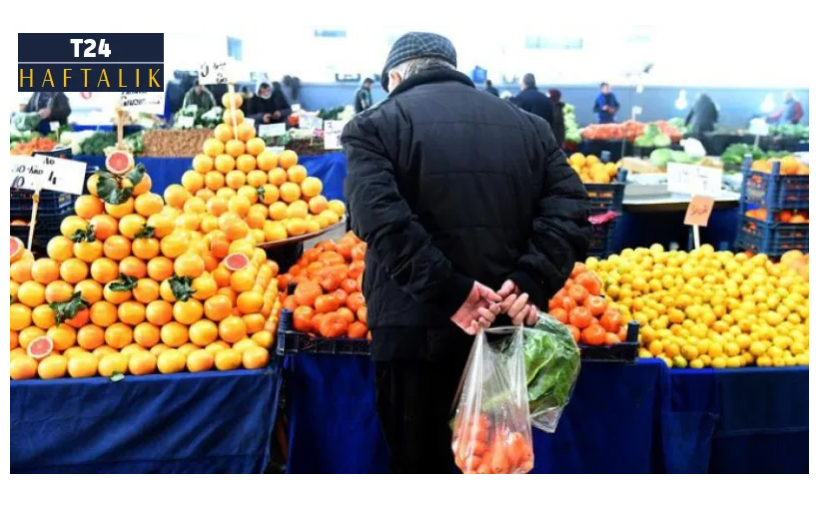
The agricultural crisis is not limited to output alone. Food inflation remained a major burden, with 2024 food inflation officially recorded at 43.58%. Fresh vegetable prices rose 73%, while fresh fruit prices increased 62%.
Meanwhile, pesticide residue and aflatoxin contamination remained prominent issues, with export shipments reportedly rejected abroad and public debate intensifying over food safety.
In livestock, imports continued at pace. Industry reports suggested Türkiye had become the world’s largest cattle importer. A new livestock support project launched in 2025 also remained dependent on imported breeding animals, underscoring the sector’s structural dependence on external supply.
2026 Outlook: More Risks Ahead
The central warning in Gürer’s assessment is that the damage from 2025 will carry over into 2026.
Higher food prices, water stress, climate-related shocks, inadequate support and low farmgate prices are all expected to remain major problems. If these pressures continue, Türkiye could face more serious disruptions in food supply, higher import dependence and deeper rural hardship.
The broader message from the opposition is that agriculture can no longer be treated as a secondary policy area. For Gürer, the issue is not only farmer welfare but national food security.
PA Turkey intends to inform Turkey watchers with diverse views and opinions. Articles in our website may not necessarily represent the view of our editorial board or count as endorsement.
Follow our English YouTube channel (REAL TURKEY):
https://www.youtube.com/channel/UCKpFJB4GFiNkhmpVZQ_d9Rg
Twitter: @AtillaEng
Facebook: Real Turkey Channel: https://www.facebook.com/realturkeychannel/***