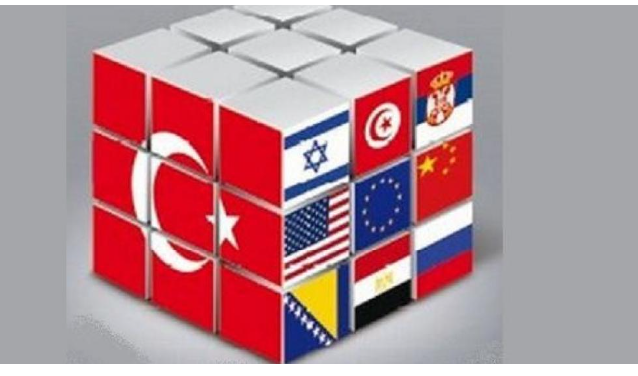
BESA Analysis | The Armed Man on the Bosphorus: Turkey in 2026
 BESA
BESA
Or, how the strategic minds of Isreal view Turkey
Summary:
As Turkey enters 2026, it projects growing military strength and regional ambition, yet faces mounting economic and social strain at home. Once dismissed as a secondary actor, Ankara has become impossible to ignore — but its reliance on militarized power risks turning strength into structural vulnerability.
From “Problematic Ally” to Assertive Regional Power
For decades, Turkey was rarely treated as an equal player in the international system. Western policymakers often portrayed Ankara as a “problematic” state in need of guidance rather than an autonomous power capable of shaping outcomes. Europe argued that Turkey did not belong in the EU due to democratic shortcomings, while the United States viewed Ankara as a partner — but not always a reliable one.
Turkey’s relationship with the West has long been defined by NATO membership. Its enduring strategic value lies in geography: proximity to Russia, the Middle East, and the Balkans makes Turkey indispensable on NATO’s southeastern flank. This position has historically afforded Ankara latitude to pursue policies that diverged from alliance norms — from repeated military interventions in politics between 1960 and 1997, to the prolonged state of emergency after the failed 2016 coup attempt, and the ongoing military presence in northern Cyprus since 1974.
Erdoğan’s Doctrine: Military Power as Political Currency
In recent years, Western condescension toward Turkey has given way to unease. Under President Recep Tayyip Erdoğan, Ankara has repositioned itself as a power in its own right, repeatedly testing the limits of its special status within NATO and often acting independently of the alliance.
Actions once deemed unacceptable for a “secondary actor” are now met with concern rather than dismissal. This shift reflects a deliberate strategic choice: Turkey no longer seeks approval; it seeks relevance — and leverage.
A Multi-Front Military Footprint
Turkey has systematically converted military capacity into political influence across nearly every regional theater:
-
Syria: Ankara maintains de facto control over parts of northern Syria, deploying regular forces and proxies, monitoring Israeli activity, and installing intelligence and air-defense assets to create strategic depth.
-
Libya: Turkish military intervention — including advisers, troops, and drones — proved decisive in preventing the collapse of the Tripoli government.
-
South Caucasus: Open military backing for Azerbaijan during the Nagorno-Karabakh war reshaped the balance of power and reinforced Turkey’s role as a regional security actor.
-
Eastern Mediterranean: Turkey has aggressively asserted maritime claims, deployed naval assets, conducted gas exploration, and expanded its drilling fleet — now the fourth largest globally.
-
Horn of Africa: Ankara has expanded its footprint through bases, security agreements, and deployments, with plans under discussion for a naval and logistics base in Somalia.
Taken together, these actions reflect a coherent strategy: Turkey is no longer reacting to the regional order — it seeks to shape it.
Israel: From Criticism to Confrontation
Turkey’s approach toward Israel has moved beyond rhetorical criticism. Pro-government media recently described Israel as Turkey’s “number-one threat,” raising the question of whether Jerusalem will eventually reciprocate that assessment.
Ankara now offers explicit institutional support for Hamas, framing it not merely as advocacy for Palestinians but as backing for Hamas as a political actor. Turkey’s military presence in Syria affects Kurdish and Druze dynamics, while Ankara also seeks a role in Gaza’s postwar security architecture — not just as mediator, but as a central player.
This posture significantly raises the risk of direct confrontation with Israel. Turkey’s broader objective appears to be constraining Israeli freedom of action across multiple arenas — from Syria and Gaza to the Red Sea and the Horn of Africa.
When Power Becomes a Burden
Here lies the core of Turkey’s strategic dilemma. Rather than converting military strength into diplomatic leverage, Ankara has turned it into a source of mistrust and ideological polarization. Military power has become a fiscal and economic burden.
-
Inflation peaked near 75% in 2024 and remained elevated in 2025, with double-digit forecasts for 2026.
-
The Central Bank maintained interest rates near 38% at the end of 2025, suppressing credit, consumption, and investment.
-
OECD assessments already point to economic slowdown driven by tight financial conditions.
To fund defense industries, the government introduced extraordinary levies aimed at raising $2–2.3 billion annually, underscoring the fiscal weight of security policy amid prolonged stabilization costs.
Social Strains Beneath the Surface
Economic erosion has amplified longstanding social challenges:
-
Rising poverty and reduced access to basic services.
-
Persistent regional inequality between Turkey’s west and its disadvantaged eastern provinces.
-
Structural gender disparities: women’s labor-force participation remains low, political representation is limited (under 20% of parliament), and gender-based violence remains widespread.
Women’s rights have become a focal point of public protest and criticism of government policy.
Strength Without Trust
Turkey has reinforced a nationalist discourse that suppresses dissent and relies on displays of force to sustain political legitimacy. Externally, the state appears assertive; internally, it struggles to generate trust, partnerships, or durable stability.
History suggests that under extreme pressure, military intervention is not alien to Turkish politics. As in Iran, large-scale public protest cannot be ruled out — even if any eventual political change would likely be elite-driven rather than street-led.
The Nasreddin Hodja Paradox
The analysis closes with a folk allegory. Nasreddin Hodja is seen fully armed in the marketplace — armored and sword in hand — yet barefoot and hungry. Asked why he spent all his money on weapons instead of bread, he replies: “So they won’t steal the bread I don’t have.”
In many ways, this is Turkey in 2026: constructing an imposing military edifice while society and the economy erode from within. Power, in this context, is no longer an asset — it is a liability. Heavily armed, Turkey is paradoxically more vulnerable at home than ever.
Source: Begin–Sadat Center for Strategic Studies (BESA)
Author: Prof. Efrat Aviv
PA Turkey intends to inform Turkey watchers with diverse views and opinions. Articles on our website may not necessarily represent the view of our editorial board or count as endorsement.
Follow our English YouTube channel (REAL TURKEY):
https://www.youtube.com/channel/UCKpFJB4GFiNkhmpVZQ_d9Rg
Twitter: @AtillaEng
Facebook: Real Turkey Channel: https://www.facebook.com/realturkeychannel/***
Related articles
Turkish FM Claims Mossad Is Fueling Iran Protests to Push Region Toward Conflict

Türkiye in a Multipolar World: Navigating the Shifting Global Order
Turkey–Israel Rivalry Spills Into the Eastern Mediterranean