ANALYSIS: Turkey’s Trade Deficit Widens to $92 Billion, Can It be Financed?
 trade deficit
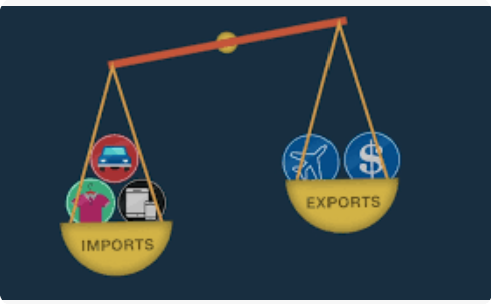
ISTANBUL — Turkey’s foreign trade deficit expanded to $92 billion in 2025, marking a 12% increase compared to the previous year, according to newly released data from the Turkish Statistical Institute (TÜİK). While the year ended with a surge in exports, a sharp acceleration in imports—particularly in gold and consumer goods—highlights persistent pressure on the nation’s external balance.
December Data: A Mixed Year-End Finish
The final month of 2025 saw a widening of the monthly trade gap. Exports rose by 12.7% year-on-year to reach $26.4 billion, but this was outpaced by a 10.7% rise in imports, totaling $35.7 billion. Consequently, the monthly trade deficit grew from $8 billion to $9.3 billion.
When stripping out volatile items like energy and gold, the “core” trade balance still remains in the red. Core exports increased by 14.6% ($24.9 billion), while core imports surged by 17.9% ($27.6 billion), resulting in a core deficit of $2.7 billion for December.
The Gold and Consumption Fever
Despite government attempts to curb demand through quotas, gold imports remained a significant burden on the trade balance.
-
Annual Surge: Gold imports for the full year reached $23.1 billion, a 35% jump from the $17.1 billion recorded in 2024.
-
Monthly Shift: While December saw a slight dip to $2 billion (down from $2.5 billion in November), the cumulative bill remains historically high due to soaring global prices and domestic hedging demand.
Similarly, consumer goods imports reached a record $59.2 billion for the year, up 8.7%. In December alone:
-
Passenger car imports surged by 16% to $2.5 billion.
-
Durable goods rose by 14%.
-
Non-industrial transport equipment saw the most dramatic spike, jumping 40%.
Economic Outlook: Forecasts Revised Upward
The persistent import demand has led analysts to revise current account deficit expectations.
-
2025 Estimate: Previously projected at $20 billion (1.3% of GDP), the deficit is now expected to land closer to $24 billion (1.5% of GDP).
-
2026 Outlook: Forecasts for the coming year have been raised from $25 billion to $30 billion, approximately 1.7% of GDP.
Despite the widening gap, there are silver linings. Tourism revenues defied “expensive destination” narratives, closing the year at $60 billion (a 3% increase). Furthermore, the Manufacturing PMI rose to 48.9 in December—a one-year high—suggesting a gradual recovery in industrial production heading into 2026.
Analysis: Overheating Risks and Policy Response
While Turkey’s increasing Central Bank (TCMB) reserves suggest that financing the deficit will not be an immediate crisis, the data points to an economy struggling to cool down.
Indicators such as the MUSIAD SAMEKS Composite PMI and the Economic Confidence Index suggest that domestic demand is not yet aligned with the government’s disinflation targets. In response to this “overheating” threat, both the BDDK and TCMB tightened credit conditions over the weekend.
Market Note: If these measures prove insufficient, or if January inflation exceeds the 4% threshold, investors should prepare for more “hawkish” messaging from the TCMB and further macro-prudential tightening to protect the Lira.
Sources: Tacirler Invest, PA Turkey staff commentary
Related articles
CBRT governor Karahan: Tight monetary stance to continue until disinflation achieved
Turkey Adjusts Taxes While Holding Back Public Price Hikes

Turkey Sets 2026 Economic Roadmap: Growth Target at 3.8%, Inflation Goal at 16%