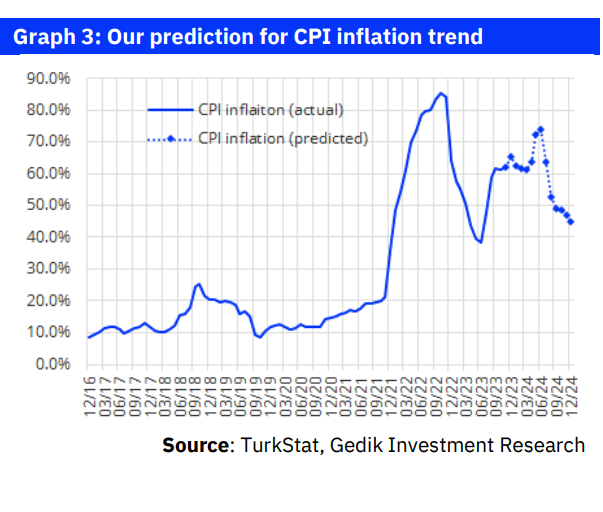
Turkey’s Finance Minister Şimşek in Washington: “We Expect Inflation to End the Year Around 30%”
 mehmet-simsek
Summary:
Turkey’s Treasury and Finance Minister Mehmet Şimşek shared key insights on the Turkish economy during a panel at the IMF–World Bank Annual Meetings in Washington, D.C., held alongside the G20 finance ministers’ gathering. Addressing global investors and policymakers, Şimşek emphasized that Turkey remains committed to its disinflation and structural reform program, forecasting inflation to ease to around 30% by the end of 2025 and return to single digits in the coming years.
Disinflation on Track Despite Challenges
Minister Şimşek acknowledged that the Turkish economy continues to face a turbulent external environment but stressed that the government’s disinflation path remains on course:
“Inflation continues to decline. We expect it to end the year at around 30%. Over the next few years, it will fall into single digits.”
Şimşek noted that household and corporate inflation expectations remain elevated, but he expressed confidence that the current policy mix — tight monetary conditions, fiscal discipline, and targeted reforms — would gradually anchor expectations.
ANALYSIS: Inflation Expectations Deteriorate Sharply as TCMB Survey Signals Upward Risks
He added:
“Our program may not be unfolding exactly as we planned, but the disinflation process is progressing within our projected path.”
Growth Slows, but Sustainability Takes Priority
Şimşek said that while economic growth has moderated, it is now on a more sustainable footing.
He described Turkey’s growth model as one increasingly focused on productivity, industrial transformation, and export competitiveness, rather than consumption-led expansion.
“Industrial transformation is helping Turkey move up the value chain. As we implement our program, macroeconomic stability will improve — and banks will benefit from this normalization.”
External and Geopolitical Headwinds
The minister also addressed recent geopolitical and environmental challenges:
-
Drought and agricultural frost have sharply pushed up unprocessed food prices, delaying the pace of disinflation.
-
Persistent geopolitical tensions have complicated the investment climate, yet Şimşek argued that Turkey stands to benefit once regional conflicts ease.
“As geopolitical issues begin to fade, Turkey’s position will strengthen significantly. Combined with progress on the Kurdish issue, these are transformative developments that could change Turkey’s credit story.”
Defense Spending and Strategic Investments
Şimşek placed Turkey’s recent defense investments within the context of global security spending, pointing out a dramatic rise worldwide:
“Global defense spending has surged from $1 trillion twenty-five years ago to around $6 trillion today. Turkey, too, has made major defense investments because it had to. These were strategic and necessary commitments.”
Closer Ties with Western Allies
Şimşek underlined Ankara’s renewed alignment with its traditional partners:
“We have reconnected with our Western allies — and it’s clear we need each other. Cooperation is mutually beneficial in the current global environment.”
This comment reflects the government’s broader diplomatic pivot toward rebuilding trust with Western financial institutions and deepening engagement with G20 partners amid global fragmentation.
Balanced Policy Stance: Growth and Price Stability
Rejecting the idea that Turkey must choose between growth and disinflation, Şimşek argued that both objectives can be achieved simultaneously through disciplined policymaking:
“I do not believe we must choose between growth and inflation. We have proven that this does not have to be the case.”
Long-Term Strengths: Demographics and Infrastructure
Şimşek highlighted Turkey’s young population, strong domestic market, and solid infrastructure as enduring advantages:
-
“Turkey has a $1.6 trillion economy with robust fundamentals.”
-
“We have invested over $300 billion in infrastructure — from transport to energy — to support long-term growth.”
-
“Our rapidly growing young population is one of our greatest assets.”
Outlook: A Reform-Driven Growth Strategy
Despite recent turbulence, Şimşek’s remarks suggest that Ankara will stay the course on its orthodox economic program, prioritizing stability, fiscal discipline, and structural transformation.
His message in Washington was clear: Turkey aims to rebuild credibility, attract sustainable investment, and reduce inflation without sacrificing growth.
By PA Turkey Staff
PA Turkey intends to inform Turkey watchers with diverse views and opinions. Articles on our website may not necessarily represent the view of our editorial board or count as endorsement.
Follow our English-language YouTube videos @ REAL TURKEY: YouTube Channel
Twitter: @AtillaEng
Facebook: Real Turkey Channel
Related articles
Inflation Data to Set the Stage for 2026: New Revaluation Rate to Lift Fees and Fines by 23%
Şimşek acknowledges cost-of-living crisis and rejects tax amnesty requests

ING: Turkey’s Policy Challenges Mount Amid FX Pressure and Reserve Concerns, Carry Still Attractive