Turkey’s Critical Minerals Draw Global Attention
 rare-earth-elements
As global trade conflicts increasingly center on raw materials and critical minerals, Turkey is emerging as a key player. With rich deposits of rare earth elements and a wide variety of minerals essential for advanced technologies, the country is attracting growing interest from international corporations and governments.
İbrahim Halil Kırşan, President of the Mining Assembly of the Union of Chambers and Commodity Exchanges of Turkey (TOBB), said that the world is entering an era where demand for minerals will surge across multiple high-tech industries. “Both the defense industry and clean technologies, as well as high-tech products such as computer chips, will require a very serious demand for minerals,” he noted. “We are entering a new era where rare earth elements will become extremely important.”
Critical Minerals Take Center Stage in the New Global Order
From artificial intelligence and semiconductor chips to robots, electric vehicles, and data centers, the world’s most transformative technologies rely on a steady supply of critical minerals. As global economies race to secure these resources, trade wars have evolved into battles over strategic mining and material control.
The most recent flashpoint came when the United States introduced new tariffs related to rare earth elements, opening a fresh front in its economic rivalry with other powers. While both sides have declared a temporary truce, analysts believe this is only the beginning of a longer struggle to control access to minerals essential for high-tech production and national security.
Amid this international contest, Turkey’s geological wealth is gaining unprecedented strategic importance. Located at the crossroads of Europe and Asia, the country has become a potential hub for both extraction and processing of key minerals.
Turkey’s Mineral Wealth: A Strategic Asset
According to TOBB’s İbrahim Halil Kırşan, Turkey possesses an impressive diversity of mineral resources that rival global leaders. “Out of the roughly 90 types of minerals traded globally, 70 are found in Turkey, and 60 of these are currently being mined and traded,” Kırşan said. “This makes Turkey an exceptionally rich and productive country in terms of mineral variety and deposits.”
Kırşan highlighted that Turkey’s resource base includes many of the materials now classified as ‘critical minerals’—those essential for clean energy, defense, and high-tech manufacturing. These include rare earth elements, lithium, boron, and nickel, among others.
Boron, in particular, is one area where Turkey already holds a dominant global position, supplying more than half of the world’s boron reserves. With the rise of battery technologies, renewable energy infrastructure, and semiconductor production, experts believe that Turkey’s access to such resources could make it an indispensable actor in the global supply chain.
From Local Mining to Global Strategy
Kırşan emphasized that the international focus on Turkey’s mining sector is not coincidental. As clean energy and digital technologies accelerate, demand for metals such as copper, cobalt, and rare earths continues to skyrocket. “Every electric car, every robot, every AI chip—each of them requires critical minerals,” he said.
In this context, Turkey’s ability to develop its mining infrastructure and attract foreign investment could determine its economic positioning in the next decade. “We must not just extract but also process and export higher-value mineral products,” Kırşan suggested, arguing that Turkey should focus on value-added mining rather than simply raw material exports.
The government has also recognized the sector’s potential. Recent policy initiatives aim to encourage sustainable mining, attract private investment, and align with international environmental standards. This includes expanding exploration efforts, investing in processing facilities, and promoting partnerships with global technology firms seeking secure, long-term supply lines.
A Global Power Shift Fueled by Minerals
Experts agree that the future of geopolitical power may rest on who controls access to critical minerals. The ongoing trade disputes between the United States and other global players have demonstrated that energy independence and technological dominance are now tied directly to mineral resources.
Turkey’s central geographic position, diversified mineral reserves, and growing industrial base make it an increasingly important participant in this evolving global order. As Kırşan put it, “We are transitioning into an era where rare earth elements and strategic minerals are as vital as oil once was.”
Whether Turkey can capitalize on this potential will depend on how effectively it can integrate its mining sector into global value chains, attract sustainable investment, and manage the balance between economic growth and environmental responsibility.
Related articles
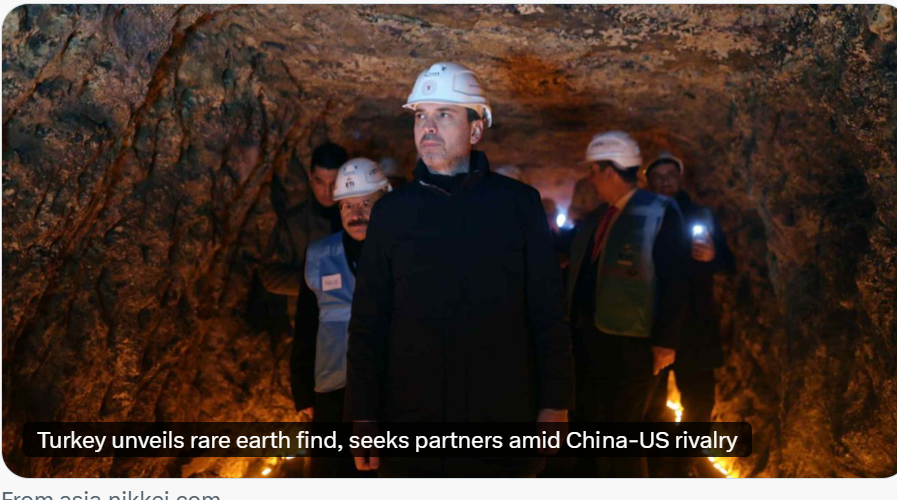
UPDATE: Turkey Unveils Major Rare-Earth Discovery, Seeks Global Partners Amid U.S.–China Rivalry
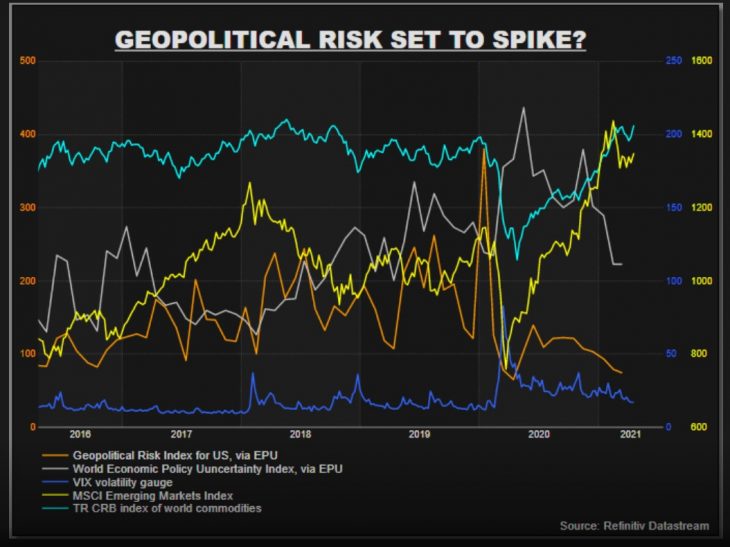
Reuters Column: When geopolitics matters to markets
TRT News: Turkey’s Mega Find: How 694 Million Tons of Rare Earth Elements Could Break China’s Global Monopoly