The Erosion of the Republic: How the AKP Systematically Dismantled Turkey’s Secular Education
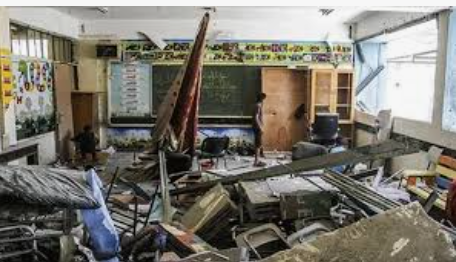 egitim coktu
For two decades, the Justice and Development Party (AKP) has dominated Turkey’s political landscape, transforming nearly every sector of the state. Few areas, however, have undergone a more fundamental and ideologically charged overhaul than the national education system. The reforms, often disguised as modernization or necessary restructuring, have systematically replaced the secular, science-based principles established by the Turkish Republic with a religious-nationalist framework driven by market forces and conservative values.
This transformation was not accidental; it began immediately upon the AKP taking power, starting with a 2002 “Urgent Action Plan” that promised to “restructure the Ministry of National Education (MEB) and renew the curriculum.” What followed was a deliberate, multi-layered campaign that leveraged executive power, legislative changes, and institutional capture to achieve a profound ideological shift in how future generations of Turkish citizens are educated. The ultimate result is a system structurally compromised, ideologically divided, and deeply indebted to religious-conservative goals.
The Purge and Institutional Capture
The initial phase of the educational overhaul focused on establishing political control over the Ministry of National Education. This began with a dramatic, symbolic act of administrative muscle: the dismissal of over a thousand national education directors overnight. This swift purge cleared the way for the appointment of loyalists, ensuring the bureaucratic machinery of the state would execute the AKP’s vision without resistance.
The structural changes went deeper, targeting key institutions intended to safeguard educational standards. The authority of the Board of Education and Discipline (Talim ve Terbiye Kurulu)—the intellectual heart of the MEB responsible for curriculum quality—was dramatically diminished, its members reduced from 15 to 10, with non-educators brought into decision-making roles. Crucially, the foundational purpose of education, as stated in the MEB’s enabling law, was redefined through a 2011 Statutory Decree (KHK No. 652). The original goal of raising citizens who embrace a “democratic, secular, and social state of law, based on the fundamental principles of the Constitution,” was replaced by a purely utilitarian and market-oriented mandate: “to prepare for the future by equipping (students) with the knowledge and skills required by an economic system with global competitiveness.”
This dual shift—the replacement of secular goals with market forces—was often supported by foreign financial institutions. The AKP government consistently relied on credits and expert guidance from market-oriented organizations like the World Bank and the European Union for projects such as the Vocational and Technical Education Modernization Project.
The 4+4+4 Law: A Legislative Earthquake
The most pivotal and controversial legal change was the adoption of the 4+4+4 law on March 30, 2012, which was driven directly by President Erdoğan’s stated desire to raise a “generation that will claim its religion and its grudge.”
Ostensibly designed to raise mandatory education from eight to 12 years, the law was, in reality, a legislative sleight of hand that broke the back of the Republic’s secular educational unity (Tevhid-i Tedrisat Law of 1924).
The law achieved three critical ideological goals:
- Imam Hatip Middle Schools: It enabled the creation of Imam Hatip (religious vocational) middle schools, allowing children to enter religious schooling after the age of 10, drastically expanding the religious educational footprint.
- Open Education: It counted open-education high schools as part of the mandatory 12-year schooling, creating a loophole that pushed vulnerable and low-income students out of traditional schools and into non-traditional, often remote learning environments.
- Constitutional Erosion: Despite being highly contested and violating numerous principles of the secular state, the law was later upheld by the newly structured Constitutional Court (AYM), showcasing the extent of institutional capture that enabled such fundamental changes.
The structural instability created by these legislative blitzes is evident in the record-breaking number of changes made to education laws. For instance, the Law on Private Educational Institutions (1965) was replaced in 2007, with sections subsequently altered 12 times between 2010 and 2023. The Vocational Training Law (1986) was amended nine times between 2008 and 2021—a dizzying pace of change that crippled stability and quality in the system.
The Islamization of Curriculum and School Culture
Beyond structural changes, the curriculum was systematically infused with religious and conservative content.
The “Values Education Project” was launched in cooperation with conservative religious foundations like ENSAR Foundation, prioritizing the values championed by Imam Hatip schools. Simultaneously, the Ministry abandoned its duty to inspect Quran courses, allowing religious instruction outside of state oversight to flourish.
School life itself was transformed:
- Dress Code: Mandatory modern dress was banned, while the use of the headscarf (türban) was liberalized in schools.
- School Facilities: The establishment of mandatory prayer rooms (mescit) was instituted across schools, blurring the separation between mosque and state education.
- The “Hafız” Invasion (ÇEDES): In 2023, the Ministry launched the “I am Sensitive to My Environment, I Protect My Values” (ÇEDES) project. This initiative officially brought imams, hafizes (those who memorized the Quran), and muftis into classrooms as “spiritual counselors,” normalizing the presence of state religious officials in secular schools.
Even the process for student placement was manipulated. After abandoning the TEOG system, the new address-based “High School Transition System” (LGS) effectively compelled low-income students to attend Imam Hatip or vocational high schools, as these were often the only facilities available near their addresses.
Political Cadres and The New Foundation
The push for control also targeted high-quality state schools. The “Project Schools” application was introduced, allowing the political authority to appoint school principals and management overnight in Turkey’s most elite high schools, overriding established meritocratic processes and installing a cadre of political loyalists.
Internationally, the state created the Turkey Maarif Foundation (TMF) in 2016. Following the July 15, 2016 coup attempt, TMF was leveraged via Statutory Decrees (KHKs) to seize control of the thousands of schools operated globally by the FETÖ network, effectively extending the AKP’s education model abroad. Simultaneously, tens of thousands of educators were dismissed from their posts without judicial review under the State of Emergency (OHAL) KHKs on the grounds of alleged FETÖ affiliation.
The recent introduction of the even more conservative “Turkish Century Maarif Model” curriculum, along with the establishment of the National Education Academy to cultivate a loyal teaching base, underscores the government’s unwavering commitment to this ideological direction, even after recent electoral setbacks.
Conclusion: A Fundamental Departure
The structural transformations undertaken by the AKP have rendered the Republic’s secular education law largely obsolete. The goal of raising “Fikri hür, vicdanı hür ve irfanı hür” (free in thought, free in conscience, and free in knowledge) youth, a cornerstone of the Turkish Republic’s founding vision, has been explicitly replaced by an ideological mandate to produce a religiously committed generation.
Furthermore, the government has refused to comply with the 2014 ruling by the European Court of Human Rights (ECHR) that compulsory Religion Culture and Ethics classes in Turkey are a violation of individual rights.
The cumulative effect of these purges, legislative maneuvers, and ideological shifts is not merely reform—it is the deconstruction of the unifying, secular foundation of Turkish education, leading to a system that prioritizes religious allegiance and market efficiency over critical thinking and constitutional secularism.
Source: Sol Gazette