Public Opinion Splits Over İmralı as New Poll Places CHP Ahead
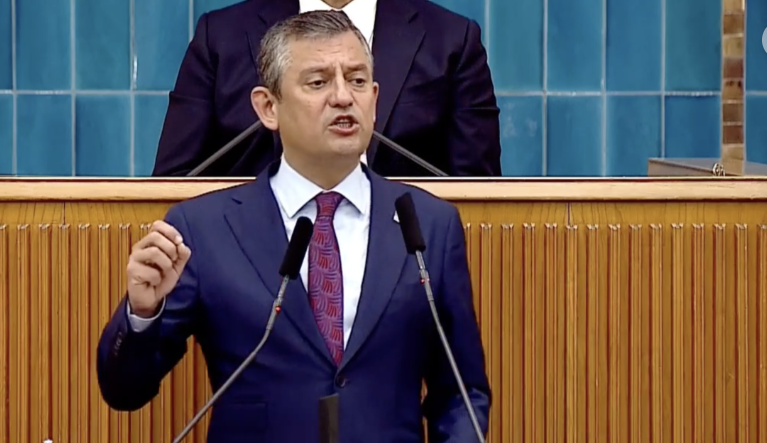 CHP Özgür Özel
Turkey’s political landscape continues to evolve as AREA Research releases its November “Turkey Political Agenda Survey.” The report offers a comprehensive view of how voters perceive the country’s ongoing political discussions—from party preferences to controversial investigations and the direction of peace-focused initiatives. The findings show sharp distinctions in public attitudes, particularly regarding the “Terrorsüz Türkiye (Terror-Free Turkey)” initiative jointly advanced by the People’s Alliance and DEM Party, as well as the parliamentary delegation’s planned visit to Abdullah Öcalan on İmralı Island.
According to newly published data, 60.2% of respondents expressed support for the national peace-oriented process, underscoring a broad base of support for efforts to reduce conflict. A 35.4% segment, however, stated they do not back the initiative. This public divide becomes even more pronounced when the focus shifts to the Parliamentary Commission’s intention to visit Öcalan, the imprisoned leader of the PKK. Here, 65.7% of participants said they disapprove of such a visit, while 27.5% argued that the trip should proceed. The polarized reaction underscores the complexity and emotional weight surrounding the issue within Turkish society.
CHP Leads the Poll as Voter Landscape Continues to Rebalance
One of the most striking insights of the November survey is the shift in political preference. When asked, “Which party would you vote for if a general election were held today?”, participants placed the Republican People’s Party (CHP) at the top with 24.8% support. The Justice and Development Party (AKP) followed closely at 23.6%. Lower in the rankings were DEM Party (6.2%), Good Party (5.5%), MHP (4.7%), Zafer Party (3.9%), Anahtar Party (3.1%), and Yeniden Refah Party (2.5%).
A significant element shaping electoral uncertainty is the 23% share of undecided voters, a bloc large enough to influence potential outcomes in future elections. For analysts, this undecided group represents both volatility and the possibility of late-stage momentum shifts ahead of any national poll.
Public Rejects Corruption Claims Targeting Mansur Yavaş
The survey also evaluated public perceptions of allegations raised by AKP Ankara MP Osman Gökçek against Ankara Metropolitan Mayor Mansur Yavaş. When participants were asked whether they agreed with the claims of irregularities and misconduct, 61% rejected the accusations, labeling them as politically driven. Only 23.7% sided with the allegations. Regarding the overall perception of Yavaş, 62.7% expressed a favorable view, while 29.3% expressed a negative one. These figures show a strong reservoir of trust behind Yavaş amid ongoing political criticism.
Strong Demand for Transparency in Ekrem İmamoğlu’s Trial
Another major topic covered by the AREA Research survey centers on the legal proceedings involving Istanbul Metropolitan Mayor Ekrem İmamoğlu. Following an indictment prepared against the İBB administration, participants were asked whether they believed the legal actions were justified. A majority—52.6%—said they do not accept the allegations are valid and view the process as politically motivated, whereas 33.8% considered the accusations credible.
One of the most overwhelming findings in the report is the public’s desire for transparency: 82.1% of respondents said İmamoğlu’s trial should be broadcast live on TRT. This suggests a strong social demand for open judicial processes in high-profile political cases.
Mansur Yavaş Emerges as Top Presidential Preference Among CHP Voters
The survey also asked CHP-leaning voters who they believe should run as the party’s presidential candidate. Mansur Yavaş received the strongest backing with 37.4%, positioning him as the leading preference. Ekrem İmamoğlu followed with 21.5%, while 7.9% supported CHP Chair Özgür Özel as a potential candidate. These numbers signal a sustained trend: metropolitan mayors continue to enjoy strong public favor as national leaders.
Public Supports CHP’s Decision to Avoid the İmralı Delegation
On the subject of the parliamentary visit to Öcalan, respondents were also asked to evaluate the CHP’s decision not to participate in the commission. 54.8% viewed the decision favorably, while 37.7% disagreed. This indicates that the CHP’s stance aligns with the general sentiment of the electorate, which essentially rejects the idea of an İmralı visit.