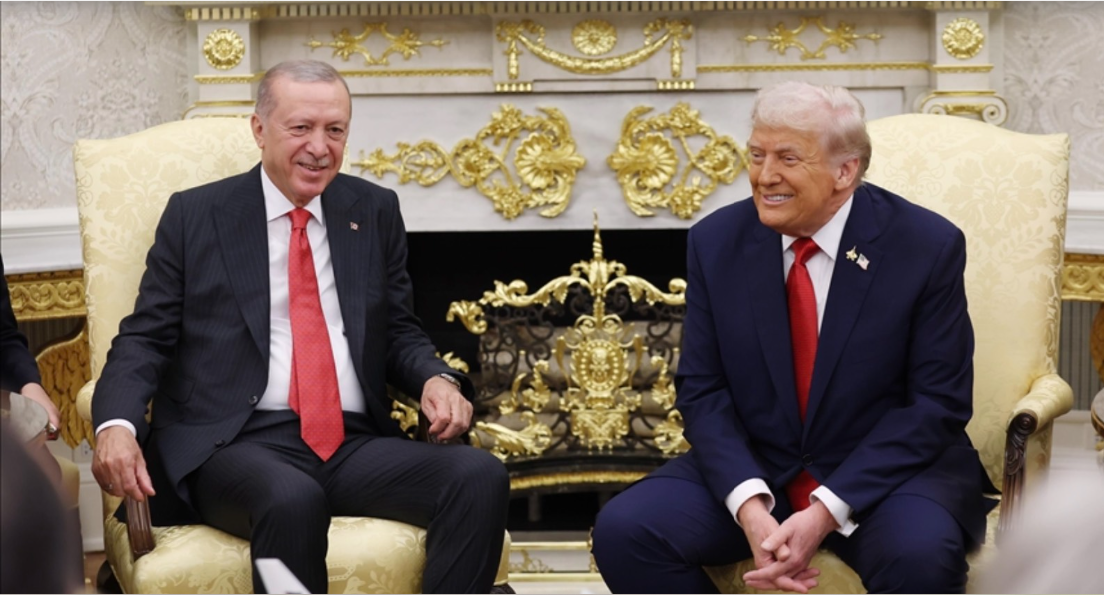
Fidan in Washington: Türkiye Pushes for End to Caesar Sanctions
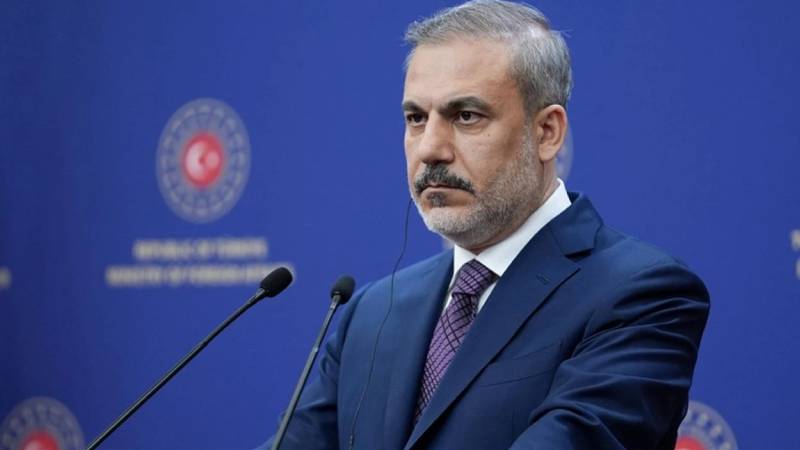 Hakan Fidan
Turkish Foreign Minister Hakan Fidan held a series of high-level meetings in Washington, focusing on Syria’s stabilization, regional security, and the possible lifting of U.S. Caesar Act sanctions. Speaking to reporters, Fidan said he discussed how to “better manage the problem areas in Syria’s north, south, and other regions” while exploring “how work on the Caesar Act could move forward.”
Ankara and Washington Revisit the Syria File
Fidan’s visit came at the invitation of the U.S., coinciding with the trip of Syrian President Ahmed Shara, who met with President Donald Trump and his Middle East team. Fidan noted that he was invited to part of the Trump–Shara meeting, during which he conveyed President Recep Tayyip Erdoğan’s greetings and discussed areas of mutual interest.
“We had a chance to express our views and positions clearly,” Fidan said, emphasizing that Türkiye and the U.S. explored opportunities for cooperation on Syria’s unity, reconstruction, and stability, as well as broader regional security.
Following the presidential discussions, Fidan joined a longer working session at the White House with U.S. Secretary of State Marco Rubio, Syrian Foreign Minister Esad Hasan Shaybani, Trump’s Middle East Envoy Steve Witkoff, U.S. Syria Envoy Tom Barrack, and later Vice President JD Vance.
“The focus was on how we can manage tensions in Syria more effectively, and what can be done regarding the Caesar Act sanctions,” Fidan said, describing the talks as “detailed and constructive.”
Deep Talks on Palestine, Ukraine, and Iran
Beyond Syria, Fidan held separate meetings with Witkoff and Barrack, delving into other major geopolitical issues. With Witkoff, he discussed the Palestine file, including the Gaza cease-fire and remaining challenges in implementing it. “We analyzed in depth what has gone wrong and what can be improved,” Fidan said.
He also confirmed that Witkoff oversees the Russia–Ukraine dossier, and the two held “lengthy talks” on how Türkiye and the U.S. could cooperate to de-escalate the war. “We are at a critical juncture. We discussed the steps both sides could take to support peace,” he noted, adding that President Erdoğan’s perspectives on mediation were shared in detail.
Regarding Iran, Fidan stated that they reviewed the stalled nuclear negotiations and the U.S. position moving forward. “This is a topic that deeply affects the entire region,” he said, adding that both sides exchanged extensive views.
“Trump’s Syria Approach Was Constructive”
Fidan described Trump’s attitude toward Syria as “notably constructive,” a stance Ankara views positively. He also underlined that Türkiye’s dialogues with the U.S. are gaining strategic depth across regional issues — from the Levant to Eastern Europe.
Push to Remove the Caesar Act
A major agenda item was the Caesar Syria Civilian Protection Act, the U.S. sanctions law that restricts economic engagement with Syria. Fidan said Türkiye and several regional actors now see the complete removal of the Caesar Act as essential to reviving Syria’s economy.
“Limited exemptions were introduced through presidential authority, allowing certain activities,” he explained. “But the law must be completely lifted through Congress so that no further presidential waivers are needed. The administration’s alignment on this issue — and its willingness to recommend such action to Congress — is critical.”
Fidan noted that President Shara also met with U.S. lawmakers, emphasizing that Congress holds the key to the Caesar Act’s repeal: “Their vote will be decisive.”
Türkiye’s Broader Regional Vision
The Washington meetings reflect Türkiye’s intent to redefine cooperation with the U.S. in a turbulent region — balancing humanitarian, economic, and security concerns. Fidan’s engagement touched multiple flashpoints — Syria, Gaza, Ukraine, and Iran — underscoring Ankara’s role as both a regional stabilizer and a pragmatic negotiator.
By pressing for an end to crippling sanctions and advocating reconstruction-driven diplomacy, Türkiye is signaling a strategic shift: from managing crises to engineering regional recovery.
Related articles
Zelensky to Visit Turkey in Bid to Reignite U.S.-Backed Peace Diplomacy With Russia
Netanyahu Draws a ‘Red Line’ on Turkish Troops in Gaza as U.S. Sides with Israel

The Iranian Fault Line: Assessing the 2026 Spillover Risks to Turkey