EU Appoints First Military Advisor to Turkey — A Turning Point in Strategic Relations
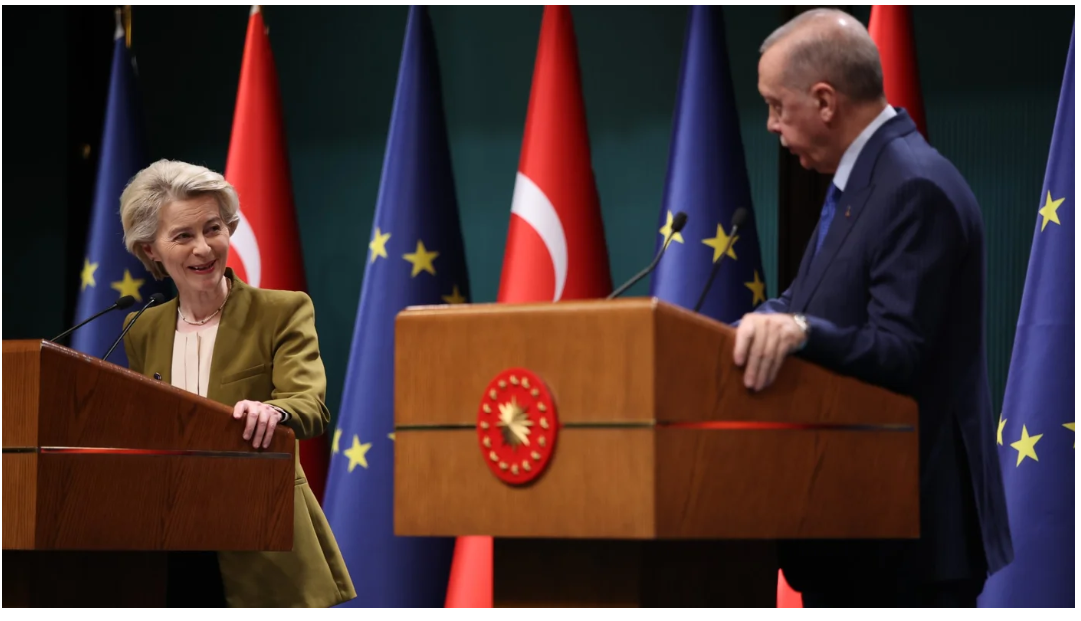 leyen-rte
Summary:
The European Union has quietly appointed its first-ever military advisor to Turkey, marking a symbolic yet strategic milestone in EU–Turkey relations. The move underscores Europe’s growing recognition that cooperation with Ankara is indispensable for regional security and defence production in a post-Ukraine landscape.
Brussels Signals Strategic Shift
For the first time, the European Union has deployed a military advisor to its mission in Ankara, a western official confirmed to Middle East Eye.
The appointment follows months of internal EU deliberations over Turkey’s evolving role in the European security architecture, amid mounting geopolitical uncertainty.
European powers, particularly Germany, have pushed for a structured dialogue with Turkey on defence matters, including joint weapons development and industrial cooperation — a priority that gained momentum after Russia’s 2022 invasion of Ukraine.
According to Turkish defence outlet TurDef, the new EU military advisor is Colonel Adam Grzymkowski, Poland’s former defence attaché in Ankara.
Under the principle of reciprocity, Turkey will soon post its own defence advisor to its EU mission in Brussels. Both officials will operate under diplomatic status, reflecting a deliberate move to keep the process outside formal military channels.
Building Defence Bridges
The EU and Turkey have increased high-level visits and coordination meetings over the past year as both sides acknowledge the need to align against shared threats — chiefly Russia’s military assertiveness.
A senior official at Germany’s Federal Office for Bundeswehr Equipment (BAAINBw) told DW Türkçe that Berlin must deepen its partnership with Turkey despite political differences:
“Turkey should certainly start a democratisation process. But at the end of the day, we don’t have many options. The U.S. also faces domestic turmoil — do we stop buying their weapons?”
The same source added that Turkey’s drone technology has reached a point where Germany “definitely needs to take a closer look.” Turkish defence manufacturers such as Baykar are now seen as credible partners within Europe’s broader rearmament push.
Turkey’s Growing Strategic Leverage
The EU’s appointment comes amid Ankara’s accelerating rapprochement with Western Europe.
President Recep Tayyip Erdoğan hosted both UK Prime Minister Keir Starmer and German Chancellor Friedrich Merz last week, sealing a GBP 8 billion (USD 10.5 billion) deal for 20 Eurofighter Typhoon jets after Germany lifted its objections — a breakthrough that would have been unthinkable two years ago.
The move highlights Turkey’s pivotal role in Europe’s defence recalibration following the Ukraine war and the U.S. strategic pivot away from the continent.
Strategic Convergence, Political Distance
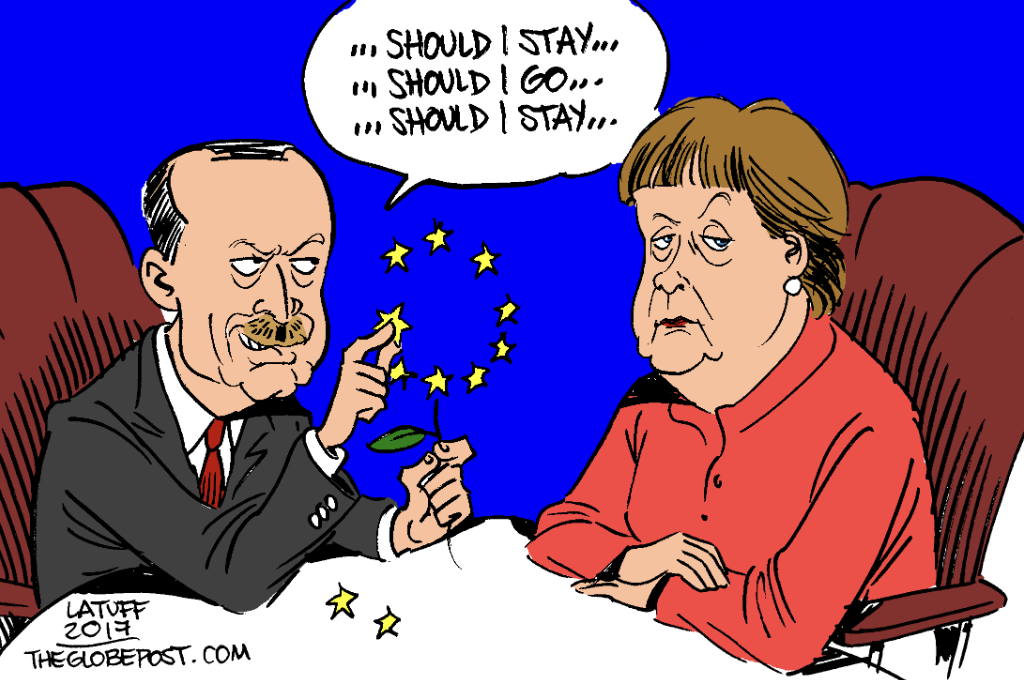
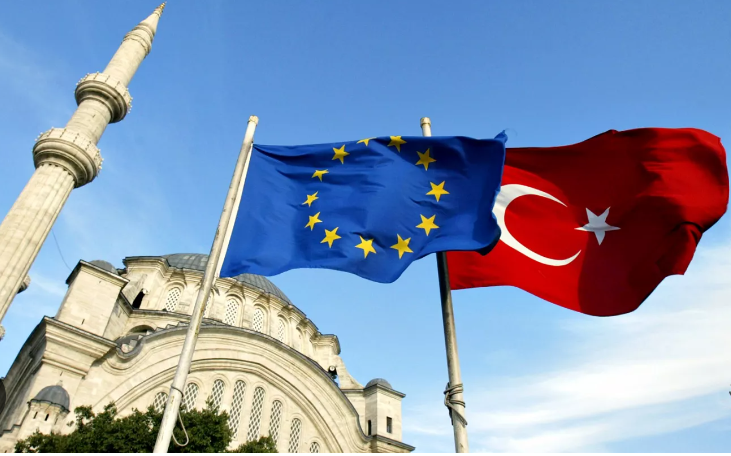
While Turkey’s stalled EU membership bid remains off the table, both sides are converging on defence and economic pragmatism.
The EU is expected to pressure holdout members such as Greece and Cyprus to allow Turkey’s participation in EU defence funding mechanisms, including the €150 billion Security Action for Europe (SAFE) initiative.
Turkey is already engaged in joint industrial projects across Europe:
-
Baykar and Italy’s Leonardo launched a joint drone venture in March 2025.
-
Baykar also acquired Piaggio Aerospace in 2024.
-
Turkish shipbuilders have collaborated with Portugal, Romania and Bulgaria on naval programs.
Beyond defence, Ankara aims to modernise the EU–Turkey Customs Union, expand it to services and agriculture, and secure visa liberalisation for Turkish citizens — goals that Brussels is now more open to discussing amid regional realignments.
A Broader Diplomatic Recalibration
The EU’s newly appointed sanctions compliance diplomat will focus on Russia’s “black fleet” — vessels carrying sanctioned oil through third countries — signalling closer cooperation with Turkey on enforcement.
Ankara recently cut Russian oil imports after the U.S. imposed new sanctions, a move that European officials privately described as “encouraging.”
Meanwhile, developments in Syria are further easing friction. The rise of Ahmed al-Sharaa, a Turkey-aligned president in Damascus, has turned Syria from a flashpoint into an emerging EU–Turkey coordination zone, with Brussels pledging €5.8 billion in reconstruction aid at Turkey’s urging.
Looking Ahead
Turkey’s improving ties with Germany and France suggest a lasting realignment. Berlin, once critical of Ankara’s domestic policies, has resumed large-scale arms transfers, while Paris has quietly endorsed Turkey’s participation in European peacekeeping and pro-Ukrainian coalitions.
As one EU diplomat put it:
“Europe is learning that it cannot secure its eastern flank without Turkey — militarily, economically, or politically.”
The EU’s appointment of a military advisor to Ankara may appear bureaucratic, but it represents a deeper shift: Turkey is no longer viewed solely as a difficult neighbour, but as a strategic partner Europe cannot afford to ignore.
PA Turkey aims to inform Turkey watchers with diverse views and opinions. Articles may not necessarily reflect the editorial board’s stance or constitute endorsement.
Follow REAL TURKEY on YouTube: https://www.youtube.com/channel/UCKpFJB4GFiNkhmpVZQ_d9Rg
Twitter: @AtillaEng
Facebook: Real Turkey Channel