Cyprus Talks Could Unlock EU–Turkey Customs Union Modernisation, Brussels Summit Signals
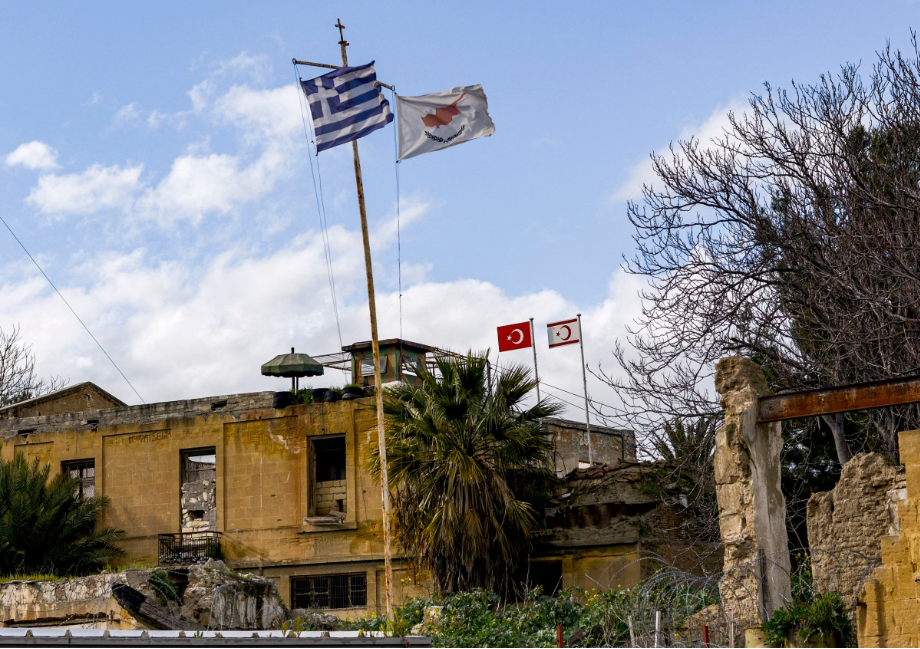 kibris
At the EU–Turkey Business Summit in Brussels, senior EU officials indicated that progress on restarting Cyprus negotiations could pave the way for long-stalled efforts to modernise the EU–Turkey Customs Union. While Ankara insists that the upgrade is essential to stabilise trade, investment and supply chains, Brussels ties any meaningful step to “constructive engagement” and movement on the Cyprus file. Turkish business leaders argue that mutual interests are too significant to be held hostage by political blockages.
Brussels Summit Revives Debate on Customs Union Upgrade
The EU–Turkey Business Summit, held at Brussels’ historic Egmont Palace, brought renewed attention to the stalled effort to modernise the EU–Turkey Customs Union — a framework that has remained largely unchanged since 1995 despite significant shifts in global trade.
The event, organised under the European Business Summit (EBS) umbrella by the Foreign Economic Relations Board of Turkey (DEİK), convened more than 400 participants, including European policymakers, Turkish officials, and leaders from major business groups.
Although the initial programme listed several Turkish ministers, none attended due to a cabinet meeting in Ankara. Trade Minister Ömer Bolat addressed the summit remotely, and Deputy Minister Mustafa Tuzcu delivered remarks in Brussels.
EU Signals Conditional Green Light: “Cyprus Progress Needed”
One of the summit’s most influential voices, Gert Jan Koopman — Director-General for Neighbourhood Policy and Enlargement Negotiations at the European Commission — underlined that economic interdependence gives both sides compelling incentives to deepen cooperation.
Koopman described Turkey as a “reliable partner” in migration management, counterterrorism, regional connectivity and mediation efforts involving Syria, the Russia–Ukraine war, and the South Caucasus.
But on the Customs Union upgrade — Ankara’s long-standing priority — Koopman delivered a clear message:
“If constructive engagement continues and we see progress toward restarting Cyprus negotiations, work on modernising the Customs Union can resume.”
He suggested that such movement could reshape the full potential of EU–Turkey relations.
The reference to Cyprus echoed past EU statements tying institutional steps to political conditions — a linkage Ankara views as unfair, given that the original 1995 agreement already included Turkish reservations on Cyprus.
Visa Obstacles Remain a Major Burden for Business
Koopman acknowledged severe business complaints over EU visa restrictions:
-
Chronic delays
-
Rejections for long-term, multi-entry visas
-
A growing barrier to trade and commercial mobility
He said the recent “visa gradation” decision provides more favourable conditions, particularly for long-term multiple-entry visas, but business groups argue implementation remains inconsistent.
Koopman added that predictability, trust, and legal certainty are essential to strengthen economic ties.
Turkey: EU Still Our Largest Trade Partner
Trade Minister Ömer Bolat stressed that the global trading environment has become increasingly unpredictable amid protectionism, industrial rivalry and geopolitical tensions.
Bolat highlighted:
-
Turkey is the EU’s 5th-largest trade partner.
-
Bilateral trade reached a record $220 billion in 2023 and is expected to reach $230 billion in 2024.
-
41% of Turkey’s exports go to the EU, amounting to $109 billion last year — the highest in history.
-
70% of foreign investment into Turkey comes from Europe, supporting 1.2 million jobs.
Bolat called the Customs Union upgrade “essential” for both sides, noting that the existing structure does not reflect shifts in digitalisation, green transformation, services trade or modern regulatory frameworks.
A Customs Union Fit for 2050 — Not 1995
Bolat and other Turkish officials emphasise that the Customs Union must expand into:
-
Services trade
-
Digital trade and e-commerce
-
Green transformation and sustainability regulations
-
Investment and regulatory cooperation
This would align the EU–Turkey trade relationship with current global standards while giving both sides new competitive advantages.
However, Bolat warned that EU visa restrictions and transport quotas for Turkish commercial vehicles are creating “significant bottlenecks,” obstructing the free movement of goods, services and people.
DEİK: “The Cost of Delay Is Higher for Europe”
DEİK President Nail Olpak criticised the fact that discussions on Customs Union modernisation have been effectively frozen for a decade.
“In a partnership, if there is a loss, the larger side incurs the larger loss,” he said, arguing that EU–Turkey economic integration is too valuable to be blocked by political constraints.
Olpak highlighted Turkey’s growing importance to the EU amid supply-chain restructuring, energy security concerns and Europe’s green transition goals.
He underlined that Turkey’s renewable energy capacity, industrial infrastructure and digital innovation make it one of the EU’s most strategic partners for green and digital transformation.
A Vision for a New Economic Partnership
Mehmet Ali Yalçındağ, the coordinator of DEİK’s Turkey–Europe Business Councils, said Turkey remains one of the EU’s most reliable partners:
-
in supply-chain resilience,
-
in defence industry cooperation,
-
and as a regional stabilising force.
He urged both sides to focus on mutual benefit rather than political blockages.
“In an era where global trade flows are disrupted and supply chains face new risks, distance is the most critical factor in building new economic corridors,” Yalçındağ said. “Together, we can write a new global success story.”
Could Cyprus Unlock the Customs Union?
The summit made clear that the EU sees Cyprus as the central political obstacle. Any step on the Customs Union — even technical — is tied to a broader diplomatic thaw.
Ankara argues that:
-
Cyprus should not be used as a veto mechanism
-
Turkey has already borne the costs of past EU decisions
-
Both sides risk losing competitiveness if the update remains frozen
Business leaders note that global trade is shifting rapidly, and delays will erode market opportunities for both the EU and Turkey.
If Cyprus talks restart, Brussels could accelerate technical preparations for the Customs Union upgrade — a process that could reshape EU–Turkey economic relations for decades.