CBRT Karahan Signals Optimism on Inflation Outlook Despite Market Caution
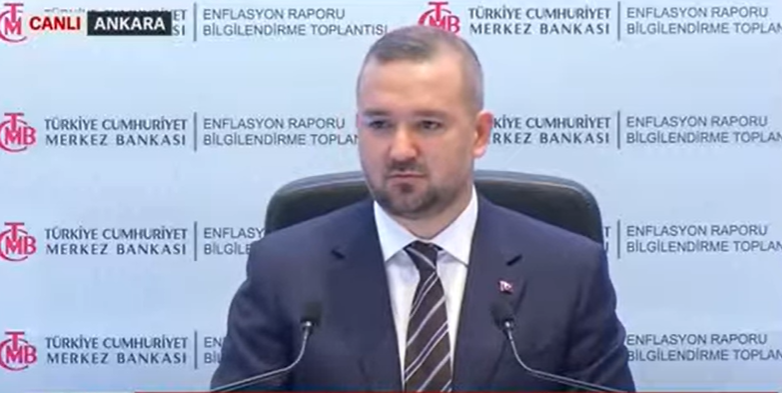 Fatih Karahan
Amid growing caution in financial markets, Central Bank of Turkey (TCMB) Governor Fatih Karahan expressed greater optimism about the country’s inflation outlook. Speaking in an interview with Bloomberg, Karahan emphasized that demand conditions continue to support disinflation and reaffirmed the Bank’s end-year target of 24% inflation.
“Even though headline growth exceeded expectations, when we look closely at the components of GDP, we see that demand conditions continue to support disinflation,” he said, pointing to a decline in private consumption over consecutive quarters as a sign that monetary tightening is working.
Headline Inflation vs. Core Trends
Turkey’s annual inflation in August came in above forecasts, largely driven by food prices. However, Karahan stressed that the underlying trend is more important than the headline figure.
“We saw the downward trend in core indicators continue in August as well,” he explained. Median inflation fell to 1.8%, which corresponds to an annualized rate of around 24%.
Still, the Governor acknowledged weaknesses in certain areas: “The improvement in rental and education inflation has been weaker than expected, and we are closely monitoring the impact of these components on inflation expectations.”
Market Concerns and Policy Stance
Despite recent political developments and inflation surprises that have led international banks to scale back expectations of further rate cuts, Karahan reiterated the Central Bank’s firm stance.
“We have not allowed inflation expectations to deteriorate or demand to disrupt disinflation. And we will not allow it going forward,” he said, sending a clear signal ahead of the September 11 Monetary Policy Committee meeting.
Karahan confirmed that the Bank’s targets remain unchanged: 24% by the end of 2025, and 16% for the following year. “Unless there is an extraordinary development, we will not revise these targets,” he added.
The Path of Monetary Policy
The Central Bank cut its policy rate from 46% to 43% in July, resuming a cycle of rate reductions after pausing for several months amid market volatility earlier in the year. The easing move raised expectations that gradual rate cuts would continue in the second half of the year.
Asked whether political risks or renewed domestic demand could undermine the disinflation process, Karahan was cautious but firm: “Non-economic factors can also spill over into financial markets. We react to the impact of such developments on the inflation outlook.”
He underscored that the Bank will continue to take a data-driven, meeting-by-meeting approach: “Until we achieve a lasting decline in inflation, we will maintain a tight stance. We will not allow domestic demand to recover in a way that interrupts the disinflation process.”
Second Quarter Growth and Consumption Trends
Turkey’s economy grew by 1.6% quarter-on-quarter and 4.8% year-on-year in Q2 2025, surpassing forecasts. Household consumption remained a key driver of growth. Yet, Karahan pointed out that on a seasonally adjusted basis, private consumption contracted for two consecutive quarters—down 1.2% in the first half of the year.
“Looking at trend-adjusted data, private consumption is even weaker,” he noted, suggesting that monetary policy is successfully dampening demand. Leading indicators such as PMI, capacity utilization, and import figures also confirm that overall demand is moderating.
August Inflation Data: Food Prices Drive the Upside
Consumer inflation in August exceeded expectations, fueled by food price hikes linked to drought and agricultural supply issues. Karahan explained:
“Headline inflation came in above forecasts, but core categories excluding food showed a decline compared to the previous month. Processed and unprocessed food prices both rose, while services inflation remained close to 3% monthly, though many subcategories showed declines.”
Meanwhile, goods inflation has been declining for four consecutive months, falling below 1% in August.
Differentiating Forecasts from Targets
Karahan also clarified the Bank’s new communication framework, introduced with the August Inflation Report. Previously, interim targets were tied directly to forecasts, which often led to confusion when market conditions required adjustments.
“We decided to separate forecasts from interim targets. Our medium-term inflation target remains 5%, but now we also provide interim year-end targets for the next three years. These serve as both commitments and anchors,” he said.
“We will not change our interim targets unless there is an extraordinary development. They will serve as the reference for adjusting the stance of monetary policy. Forecasts may deviate in the short term due to shocks, but interim targets will remain intact.”
Balancing Risks Ahead
The Governor acknowledged that services inflation remains sticky, keeping inflationary risks alive. Housing and education costs in particular continue to pressure expectations. Still, he insisted that the disinflation process is intact and will be defended with tight policy if needed.
“We want to preserve the gains we have achieved in reserves, the current account balance, and de-dollarization. This requires maintaining a careful and firm stance,” Karahan concluded.
Conclusion: Optimism Amid Uncertainty
Fatih Karahan’s remarks reflect a balancing act between cautious optimism and pragmatic vigilance. While headline inflation still faces risks from food and services, the underlying trend points toward progress. With demand weakening and tighter policy in place, the Central Bank is signaling confidence in meeting its 24% year-end target.
Whether markets will share that optimism remains to be seen. But Karahan’s message is clear: Turkey’s Central Bank is committed to defending disinflation and will not allow political or market turbulence to derail its goals.
Related articles

Bloomberg Survey: Turkish Economy to Grow Modestly Through 2027, Inflation Seen Gradually Falling

BBVA Research Sees Room for January Rate Cut as Turkey’s Inflation Surprise Eases Pressure

Services Producer Price Index (H-PPI) increased 4 percent over previous month