🚨 Shockwaves in the AKP-MHP Alliance: Bahçeli Endorses Demirtaş Release and Imrali Talks
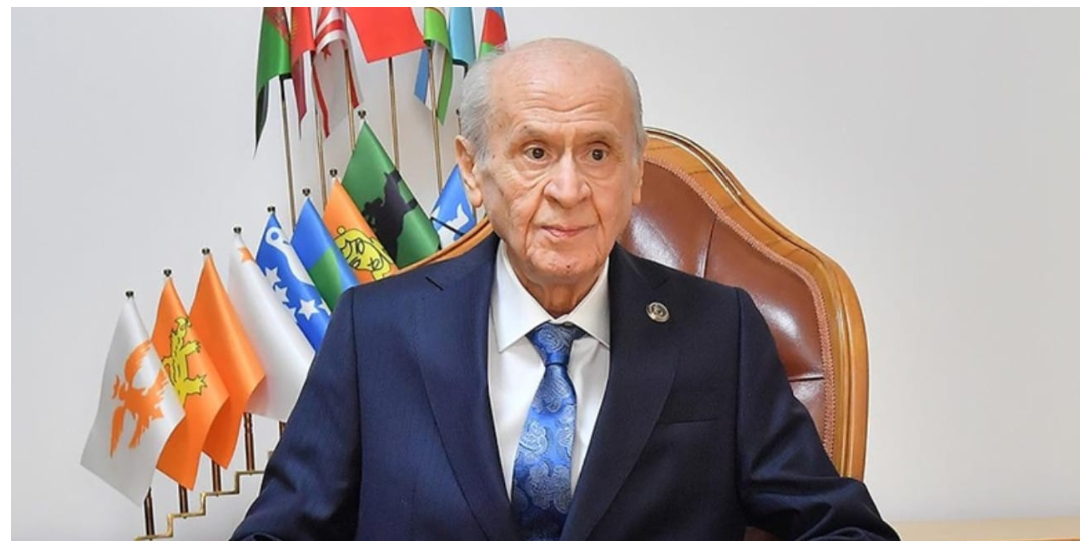 bahceli
MHP’s Explicit Call for Immediate Demirtaş Release and Parliamentary Delegation to Öcalan Raises Questions on Erdoğan’s Stance
ANKARA – A major rift in policy and rhetoric appears to be widening between the two core parties of the ruling Cumhur İttifakı (People’s Alliance). Following up on a stunning initial statement by MHP leader Devlet Bahçeli, a top MHP official has publicly and unequivocally called for the immediate release of former HDP Co-Chair Selahattin Demirtaş, a move that places immense political pressure on President Recep Tayyip Erdoğan and the ruling Justice and Development Party (AKP).
The MHP’s stance comes amid renewed calls for a new “Peace Process” and a series of economic pressures, adding urgency to Turkey’s commitment to international law.
MHP’s Clear Directive: “Court Will Order Release”
The latest statement came from MHP Deputy Chairman Feti Yıldız, who addressed the binding ruling by the European Court of Human Rights (ECtHR) regarding Demirtaş’s continued detention.
Yıldız stated explicitly:
“The failure to act in accordance with Turkey’s status as a signatory to the ECHR, its recognition of the ECtHR’s jurisdiction, and these accepted conventions is legally inexplicable.”
“The administration, as a requirement of the principle of the rule of law and being a state of law, must execute the ECtHR decision, just as it executes a national court decision… At this stage, the court will issue a decision for release.“
Yıldız confirmed that the ECtHR’s Grand Chamber panel had rejected Turkey’s request to refer the Selahattin Demirtaş/Turkey (no:4) decision, making the ruling final. The government had appealed the violation ruling just one day before the deadline.
This statement reinforces Bahçeli’s initial, equally surprising comment that Demirtaş’s release “will be auspicious for Turkey.”
Bahçeli’s Peace Process Push: Parliament to Imrali?
In a parallel and equally stunning move, MHP Chairman Devlet Bahçeli used his party’s parliamentary group meeting to aggressively advocate for restarting dialogue with imprisoned PKK founder Abdullah Öcalan.
Bahçeli called for a parliamentary delegation to visit Öcalan:
“The message needed, obtained first-hand and first-source, by the members of parliament to be selected from the [Parliamentary] Commission will strengthen the process much further… The Nationalist Movement Party (MHP) is ready to participate in such a delegation.“
Bahçeli stressed that his party stands firm on the goal of a “Turkey without Terror” and dismissed any suggestion of disagreement with the AKP, despite the drastic difference in tone and policy direction on the Kurdish issue. He also cautioned against attempts to “mine the path” between Öcalan and Demirtaş, indicating a strategic attempt to bring both figures into the dialogue’s orbit.
Political Fallout: Is Erdoğan Dragging His Feet on Peace Process?
The MHP’s explicit and detailed legal and political maneuvers put President Erdoğan in a difficult position, creating a perception of “Bahçeli shocks AKP”:
- Demirtaş Release: AKP officials have consistently maintained that Demirtaş’s detention is purely a matter for the national judiciary, resisting pressure from the ECtHR. Bahçeli’s direct and public legal interpretation now forces the national courts and, implicitly, the government to act immediately on the final ECtHR ruling.
- Imrali Dialogue: Bahçeli’s bold offer to send MHP members to İmralı Island fundamentally challenges the AKP’s conservative base and past rhetoric, forcing the government to either accept a dramatic step toward dialogue or risk appearing to block a “Turkey without Terror” goal advocated by their alliance partner.
The central questions now are: Would Erdoğan allow Selahattin Demirtaş to be released? And is Erdoğan dragging his foot on the Peace Process while his key alliance partner pushes the issue forward?
Other Concerns: Economic and Diplomatic Signals
The political maneuvering comes as Turkey faces economic headwinds, as confirmed by Trade Minister Ömer Bolat, who announced a massive increase in the foreign trade deficit for October, despite a rise in exports.
Additionally, Bahçeli fiercely criticized the US Ambassador to Ankara and US Special Representative for Syria, Tom Barrack, for a statement on Turkish-Israeli cooperation, calling the diplomat’s comments a “high-level lapse of reason” for attempting to dictate policy to the country where he is assigned.