Türkiye Weighs “Loneliness Ministry” as Erdoğan Unveils Family Decade Plan
 nufus yaslanıyor
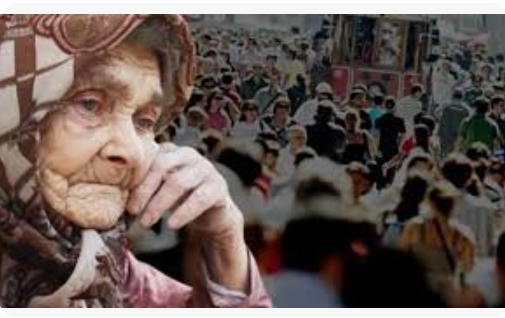
President Recep Tayyip Erdoğan has declared the 2026–2035 period as Türkiye’s “Family and Population Decade,” warning that demographic decline poses long-term risks to national strength. His remarks were reinforced by Family and Social Services Minister Mahinur Özdemir Göktaş, who cautioned that Türkiye could eventually need a “Ministry of Loneliness” if current social trends persist. The debate highlights growing concern within the government over falling birth rates, shifting family structures, and broader societal change—though critics argue such policies may misallocate limited economic resources.
Erdoğan: National Strength Rooted in Family Structure
Speaking on the launch of Türkiye’s new demographic strategy, President Erdoğan emphasized that a nation’s power cannot be measured solely by military capability, economic size, or technological advancement.
Instead, he argued, long-term resilience depends on strong family units, cultural continuity, and population growth.
“The true strength of a nation lies in its homes, in the children raised within families, and in values passed from generation to generation,” Erdoğan said.
The government’s “Family and Population Decade” initiative aims to reinforce these foundations through policies designed to encourage higher birth rates and strengthen family cohesion.
“Three Children” Policy Vindicated, Erdoğan Says
Erdoğan also revisited his long-standing call—first made in 2007—for families to have at least three children.
At the time, the proposal faced strong criticism from secular and opposition groups, who accused the government of interfering in personal lifestyles. Erdoğan now argues that demographic trends have validated his concerns.
“Those who criticized us back then are now forced to acknowledge we were right,” he said, pointing to declining fertility rates and aging populations.
The president further blamed past population-control narratives—dating back to the 1960s—for contributing to today’s demographic challenges, arguing that such policies framed population growth as a burden rather than a strategic asset.
Minister Warns of Social Isolation Risk
Family and Social Services Minister Mahinur Göktas
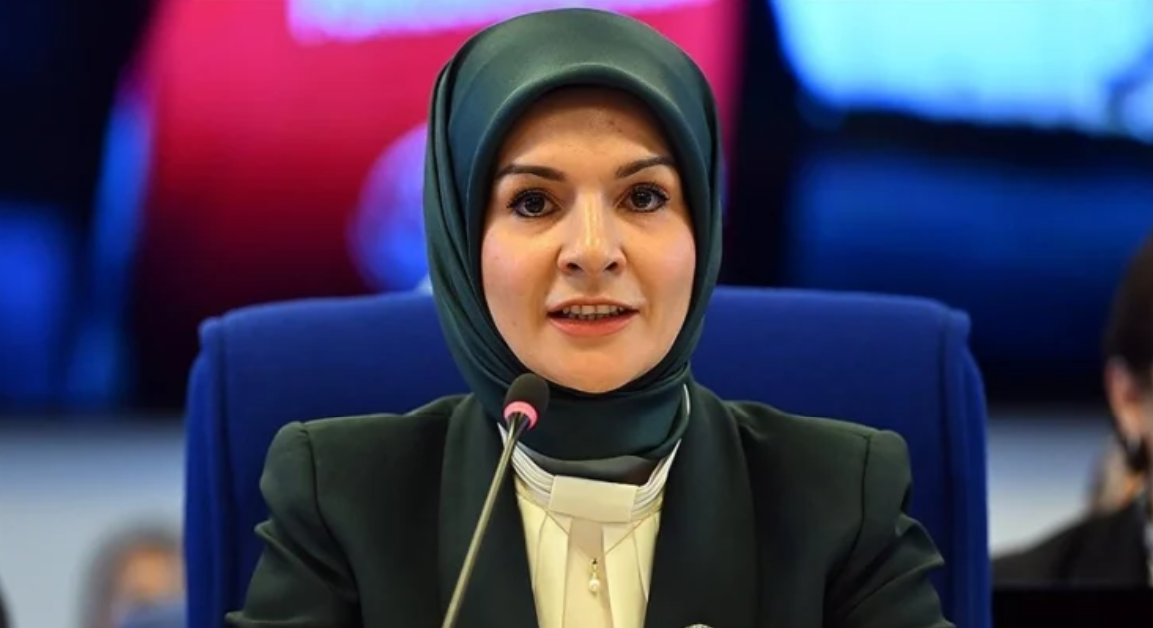
Echoing Erdoğan’s concerns, Family Minister Mahinur Özdemir Göktaş issued a stark warning about the social consequences of declining family structures.
“We need larger family tables, stronger community ties,” she said. “Otherwise, like some countries, we may be forced to establish a Ministry of Loneliness.”
Such institutions already exist in countries like the United Kingdom and Japan, where aging populations and social isolation have become major policy concerns.
Göktaş framed the issue not only as a demographic challenge but also as a psychological and cultural one, arguing that family life provides essential meaning and emotional stability.
Media Controversy Fuels Debate
The discussion gained further traction following a controversy over a Mother’s Day advertisement by Bosch.
The ad depicted two women discussing motherhood in a store, only to reveal that one was referring to her pet dog as her “child.” The campaign, which ended with the message “You can be a mother if you carry love in your heart,” sparked backlash from pro-government circles.
Authorities, including the broadcasting regulator RTÜK, launched a review, and the advertisement was subsequently withdrawn.
Government officials criticized the campaign as part of a broader media narrative that, in their view, undermines traditional family values and discourages parenthood.
Government Pushback Against Global Narratives
Göktaş also took aim at international media coverage, citing reports from outlets such as the BBC and the Daily Mail.
She argued that such narratives exaggerate the burdens of parenthood while ignoring evidence that married individuals with children report higher life satisfaction.
“Data shows the opposite,” she said. “People with children experience a greater sense of meaning and purpose.”
According to the minister, excessive focus on the difficulties of parenting risks promoting a culture of individualism and isolation.
A Broader Global Trend
Erdoğan noted that many developed economies—often cited as models of prosperity—are now grappling with declining fertility rates and aging populations.
Without immigration, he warned, some countries would struggle to sustain economic activity and basic public services.
He also criticized what he described as “global trends of gender neutralization,” arguing that such developments weaken the traditional family structure.
Critics: Economic Priorities May Be Misaligned
Despite the government’s emphasis on pro-family policies, critics argue that demographic engineering has historically proven difficult—and costly.
Cross-country evidence suggests that urbanization and rising income levels typically lead to lower fertility rates, regardless of government incentives. Even generous subsidies and family support programs in advanced economies have struggled to reverse the trend.
Some analysts contend that Türkiye would achieve more sustainable economic gains by focusing on:
- Increasing youth labor force participation
- Expanding vocational training programs
- Supporting workers displaced by technological change
- Improving productivity and education outcomes
From this perspective, allocating scarce fiscal resources to boost birth rates may yield limited returns compared to investments in human capital and workforce adaptability.
Outlook: Policy Ambition Meets Structural Reality
Türkiye’s push to prioritize family and population growth reflects growing awareness of long-term demographic risks. However, the effectiveness of such policies remains uncertain.
Balancing cultural priorities with economic realities will likely define the next phase of the country’s social policy agenda.
While the government seeks to strengthen family structures, structural forces—urbanization, changing lifestyles, and labor market dynamics—continue to shape demographic outcomes in ways that policy alone may struggle to reverse.