Cetin Unsalan: Who Paid the Price Economic Collapse? A May Day Reflection from Türkiye
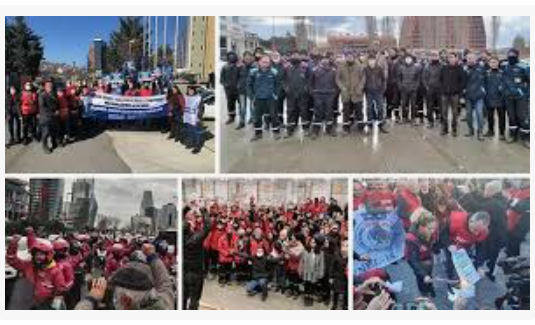 isci hareketi
As Türkiye marks May Day—officially Labor and Solidarity Day—the question of who has borne the cost of repeated economic crises is once again in focus. Despite annual speeches and symbolic celebrations, structural issues in wages, labor rights, and social protections continue to weigh heavily on workers, raising doubts about whether the day reflects celebration or deepening hardship.
A Celebration or a Reality Check?
May Day is traditionally a moment to honor workers’ rights. Yet in Türkiye, where unionization stands at around 15% as of early 2026, the day often follows a familiar pattern: speeches are delivered, promises are made, and life quickly returns to what many describe as a difficult economic reality.
That reality is stark:
- Hunger threshold: 34,596 TL
- Poverty line: 112,660 TL
- Minimum wage: 28,000 TL
- Average wage: ~35,000 TL
- Average pension: ~28,000 TL, with many retirees earning closer to 20,000 TL
In practical terms, a large portion of the population—both workers and retirees—live at or below subsistence levels.
Labor Market Pressures and Structural Weaknesses
The broader labor environment reflects long-standing structural challenges:
- Precarious employment conditions remain widespread
- Workers face limited job security and restricted bargaining power
- Strikes are frequently curtailed on national security grounds
- Informal or underreported unemployment continues to distort official figures
Since the 2008 social security reforms, critics argue that workers’ rights and protections have steadily eroded, leaving many employees with fewer safeguards and greater vulnerability.
Declining Labor Standards Across Sectors
Recent developments highlight the pressures facing workers:
- Mining sector incidents have drawn renewed attention to safety conditions
- Hunger strikes and protests often receive limited visibility
- Contract-based public employment has expanded
- Female labor participation remains around 30%
- Workplace fatalities involving trainees and young workers continue to raise concerns
At the same time, wage-setting mechanisms are increasingly centralized, reducing the role of collective bargaining.
The Role of Trade Unions
Trade unions, once a central pillar of worker advocacy, are also under scrutiny.
Critics argue that:
- Some unions have lost their independence and effectiveness
- Representation of workers’ interests has weakened
- Institutional fragmentation has reduced collective influence
This has contributed to a broader decline in organized labor’s ability to shape policy outcomes.
A Turning Point: May Day 2009
To understand the current landscape, many observers point to a key moment: May Day 2009, in the aftermath of the global financial crisis.
At the time, a unifying slogan emerged among workers:
“We will not pay the price of the crisis.”
The crisis—rooted in global financial markets—had triggered economic hardship worldwide, and Turkish workers joined the broader international response.
On May 1, 2009:
- Workers marched from DİSK headquarters in Şişli
- They were initially stopped in Harbiye
- After tense negotiations, authorities allowed access to Taksim Square for the first time in decades
While the moment was seen as historic, some analysts argue that the focus shifted from economic demands to symbolic victory.
May Day in Türkiye: Mass Turnout, Police Crackdown and Mounting Economic Anger
May Day in Türkiye: Mass Turnout, Police Crackdown and Mounting Economic Anger
From Symbolic Victory to Structural Loss
According to this perspective, the emphasis on entering Taksim overshadowed the original economic message.
In the years that followed:
- Labor rights weakened
- Union influence declined
- Economic burdens on workers increased
Ironically, workers were not permitted to return to Taksim in subsequent years, and the underlying economic grievances remained unresolved.
Today’s Question: Who Is Paying?
More than a decade later, the central question remains:
Who ultimately paid the price of the crisis?
The answer, many argue, extends beyond workers to include:
- Retirees struggling with declining purchasing power
- Middle-income earners facing rising living costs
- Even businesses dealing with economic instability
Author Cetin Unsulan is a columnist for our sister site ParaAnaliz.com and an economist specializing on non-financial sector
Related articles
Everyone Is Becoming a Minimum-Wage Worker: The Silent Income Collapse in Turkey
Prof. Esfender Korkmaz: Türkiye Could Resolve Inflation and FX Crisis in Six Months
Turkish Worker Arrested After Protest Banner and Phone Thrown at Erdoğan Rally