Silent Crisis: Schools Are Emptying as Türkiye Faces a Demographic Shift
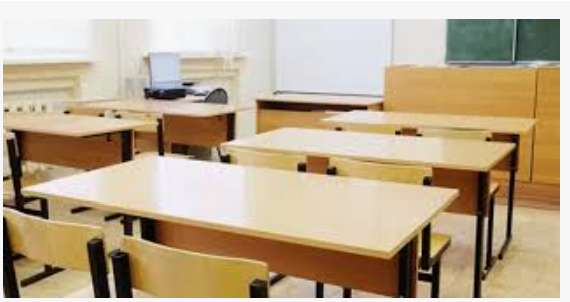 okul bos
By Hande Yener, Hurriyet Columnist and TV commentator
A quiet but profound transformation is underway in Türkiye. Falling birth rates, an aging population, and shifting attitudes toward education are beginning to reshape the country’s school system. A new report warns that unless policymakers adapt quickly, the education model built on decades of expansion could face serious inefficiencies and structural strain.
A Crisis Few Notice — But One With Deep Impact
It is not visible on the streets.
It rarely makes headlines.
Yet its impact is far-reaching.
Türkiye is undergoing a silent demographic transformation—and the education system is now at the center of it.
According to the 2025 Education Evaluation Report by TEDMEM, the think tank of the Turkish Education Association, the system has reached a turning point. For decades, education planning was based on a simple assumption: student numbers would keep rising.
That assumption no longer holds.
The Numbers Tell the Story
The data is stark:
- Births have declined by 30.6% over the past decade
- From 1.35 million in 2014 to 937,000 in 2024
- Population growth has dropped from 1.33% to 0.34%
This is not just a statistical shift.
It means that within a decade, the number of children entering school will be roughly 30% lower.
A Shrinking System, Not a Growing One
Based on current birth trends, the number of children starting primary school is expected to fall by around 21% by 2030.
This signals a fundamental shift:
Türkiye’s education system must prepare not for expansion—but contraction.
If this transition is not managed carefully:
- Schools and classrooms in some regions may sit empty
- Teacher allocation could become severely imbalanced
- Education investments may lose efficiency
Yet policy discussions still focus on building more schools and expanding capacity.
In reality, the challenge is increasingly about managing excess capacity, not shortages.
An Aging Society, an Unchanged System
The second dimension of this transformation is aging.
Today, 1 in 10 people in Türkiye is over 65.
By 2050, that figure is expected to rise to 1 in 5.
This shift will affect not only social security systems—but also how education itself is defined.
Education is no longer confined to childhood.
With life expectancy rising, a 65-year-old today still has an average of nearly two decades ahead.
This makes lifelong learning not a choice, but a necessity.
Why Is Demand for University Falling?
Another striking trend highlighted in the report is declining demand for higher education.
University entrance exam applications (YKS) have dropped by nearly 1 million in just two years:
- 3.5 million applicants in 2023
- 2.5 million in 2025
This decline cannot be explained by demographics alone.
Young people’s perception of university is changing.
- Graduate unemployment stands at 9.1%, above the national average
- Nearly half of unemployed individuals aged 25–34 hold university degrees
A university diploma is no longer seen as a guaranteed path to a secure future.
Rising living and housing costs are further discouraging participation.
Atilla Yesilada: Damage Assessment: Taking Stock of the Economic Fallout
Education as Population Policy
The report also emphasizes the growing importance of early childhood education—not just for development, but as a policy tool.
Accessible and high-quality preschool education can:
- Reduce the burden of childcare
- Support women’s participation in the workforce
- Influence family decisions about having children
This means education policy and population policy can no longer be treated separately.
The Bottom Line: A System at a Crossroads
Türkiye is entering a critical phase.
- The number of children is declining
- The population is aging
- Young people’s expectations are shifting
Yet the system continues to operate with outdated assumptions.
The TEDMEM report delivers a clear warning:
The education system must be redesigned based on demographic realities.
Because this is not just about schools.
It is about the kind of society Türkiye will become—and the time to decide is running out.
PA Turkey intends to inform Turkey watchers with diverse views and opinions. Articles on our website may not necessarily represent the view of our editorial board or constitute endorsement.
Follow our English YouTube channel (REAL TURKEY):
https://www.youtube.com/channel/UCKpFJB4GFiNkhmpVZQ_d9Rg
Twitter: @AtillaEng
Facebook: Real Turkey Channel: https://www.facebook.com/realturkeychannel/***