Economic Crisis in Turkey Named Top Concern: Report
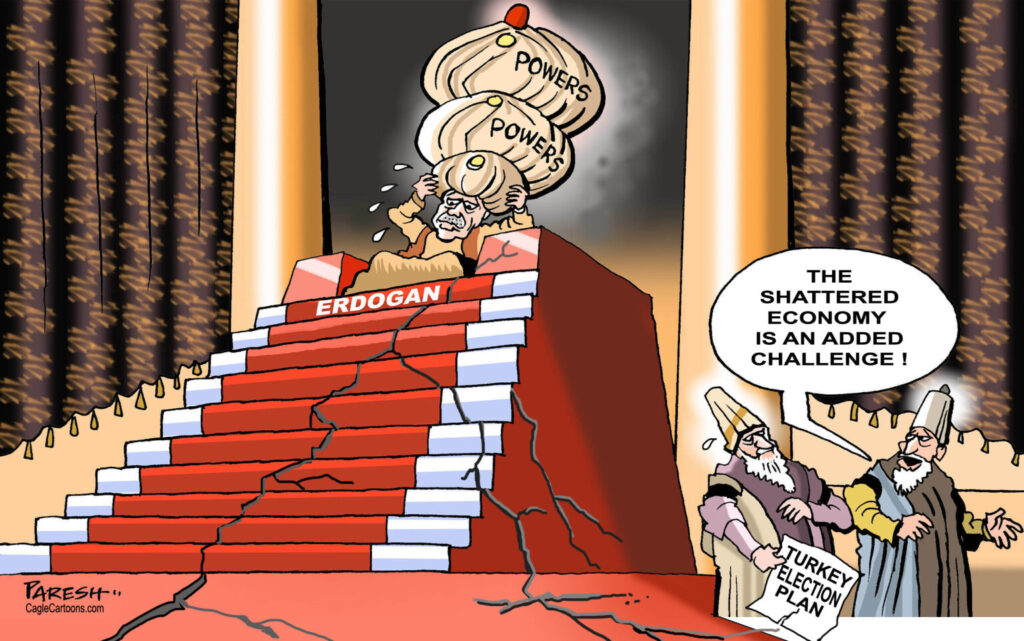 erdogan economy
The latest March 2026 public opinion report from Asal Research has sent shockwaves through the political establishment, revealing a profound disconnect between the public and the ruling elite. According to the study, the economic crisis in Turkey remains the undisputed primary grievance for the population, with a staggering 58.2% of participants citing “Economy and the Cost of Living” as the nation’s most pressing issue. This figure dwarfs all other concerns, including the justice system (8.5%) and unemployment (6.0%), highlighting a society under intense financial strain.
“None of Them”: The Dominant Answer to the Economic Crisis in Turkey
Perhaps the most alarming finding for Ankara’s politicians is the lack of confidence in any institutional solution. When asked which political party is capable of solving the country’s problems, the top response was “None,” chosen by 37.0% of respondents. This collective shrug from the electorate suggests that despite the deepening economic crisis in Turkey, voters do not believe the current political menu offers a viable way out.
The breakdown of trust in specific parties shows the ruling AK Party leading with 22.2%, followed by the main opposition CHP at 19.5%. Smaller parties like the DEM Party (3.6%) and MHP (3.2%) trail significantly behind. The data paints a picture of a “trust vacuum” in which nearly four out of ten citizens feel politically homeless amid soaring inflation and diminished purchasing power.
Shifting Tides: CHP Gains Momentum as AK Party Dips
A month-over-month comparison between February and March 2026 reveals subtle but significant shifts in the political landscape. While the economic crisis in Turkey continues to erode the government’s standing, the AK Party’s problem-solving credibility dropped from 23.2% to 22.2%. In contrast, the CHP experienced a notable boost, rising from 17.0% in February to 19.5% in March—a 2.5 percentage point increase.
Despite this slight momentum for the opposition, the overarching sentiment remains one of skepticism. While the percentage of people who believe “no one” can fix the issues dropped slightly from 38.0% to 37.0%, it remains the single largest “bloc” in the survey. For the 25-44 demographic, these results reflect a generation that identifies the diagnosis—economic instability—but remains unconvinced by the prescriptions offered by either the government or the opposition.
Related articles
Turkish Economic Outlook: Rating Agency Confirms ‘BB-‘ Stable, But Commerzbank Forecasts Lira at 57.0 by 2027

ANALYSIS: Imamoglu Indictment Seen as Political Move Targeting CHP Leadership
Turkey’s Economic Renewal: Şimşek Outlines the Nation’s Path to Stability and Growth