Hakan Fidan’s Iran War Briefing Reshapes Government Agenda in Türkiye
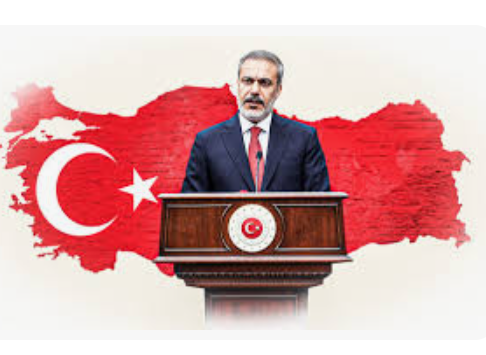 hakan fidan
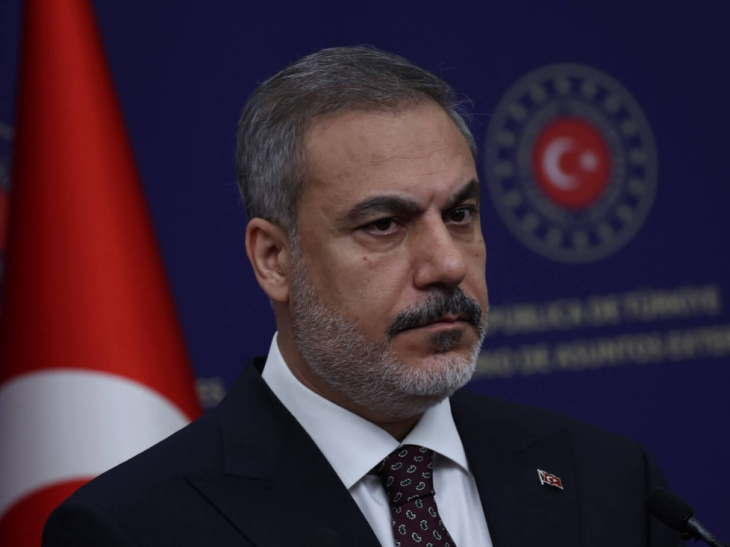
Türkiye’s Foreign Minister Hakan Fidan delivered a detailed briefing on the Iran war during the ruling AKP’s latest leadership meeting, shifting the government’s political agenda toward the regional conflict. Fidan outlined the likely strategies of Iran, the United States, and Israel, while emphasizing Türkiye’s effort to remain outside the war. Both Fidan and Defense Minister Yaşar Güler are also expected to brief opposition parties in parliament.
The escalating war involving Iran has begun to reshape the political agenda in Türkiye. During the ruling Justice and Development Party (AKP)’s most recent Central Decision and Executive Board (MKYK) meeting, the planned agenda was reportedly changed after discussions about the conflict took center stage.
Foreign Minister Hakan Fidan delivered a comprehensive briefing outlining the strategic approaches of Iran and the United States, as well as Türkiye’s geopolitical position in the unfolding crisis.
War briefing dominates AKP leadership meeting
According to reporting by columnist Nuray Babacan, the MKYK meeting initially included routine policy presentations. However, as developments in the Iran war intensified, those presentations were canceled and Fidan was asked to provide a detailed assessment of the conflict.
During his briefing, Fidan reportedly emphasized that while the probability of Türkiye being drawn directly into the war remains very low, preparations are underway for all possible scenarios.
“Iran will likely try to prolong the war,” Fidan reportedly told party officials. “Each day of the conflict carries a very high cost for the global economy. Iran will seek to exploit the economic damage and the pressure it creates on governments and societies in other countries.”
Murat Yetkin: Could Israel Ever Risk a Military Confrontation with Türkiye?
Iran and US pursuing different strategies
Fidan also outlined the contrasting military approaches of Iran and the United States.
According to his assessment, Iran is relying heavily on low-cost asymmetric warfare, using drones and missiles instead of expensive conventional assets such as aircraft and naval forces.
“They are not fighting with visible and costly elements like aircraft and ships,” Fidan reportedly said. “They are using drones and missiles, which significantly reduces their costs, while the opposing side bears a much higher financial burden.”
In contrast, the United States is believed to be seeking a rapid conclusion to the war, aiming to inflict maximum damage on Iran’s military capabilities in a short period.
Even if regime change is not achieved, Washington’s objective is to cripple Iran’s military infrastructure to the point where it cannot operate effectively for an extended period, Fidan reportedly said.
Israel, meanwhile, is pursuing its own strategic goals within the conflict.
“We know Israel’s expansionist and divisive agenda,” Fidan said during the meeting, according to sources familiar with the briefing.
Türkiye aims to maintain balanced position
Fidan emphasized that Türkiye occupies a key position in the regional geopolitical landscape due to its relationships with multiple actors and its role as a major NATO member.
He reportedly told AKP leadership that Türkiye’s policy of maintaining a balanced diplomatic approach toward both sides has been crucial so far.
Despite this, Ankara is closely monitoring potential risks.
“We see the dangers ahead and continue to take the necessary precautions,” Fidan said.
In previous public remarks, Fidan also warned that Iran’s strategy appears to include targeting energy infrastructure across the region, describing such actions as a major escalation.
“The duration and nature of the war could change,” Fidan said earlier. “Iran attacking energy infrastructure indiscriminately across the region would be an extremely dangerous and misguided strategy.”
The Iran War Stress Test: What Ankara Demands from the Trump Administration
Parliament expected to receive briefing
As the conflict continues to influence Türkiye’s domestic political debate, attention has also turned to the role of the Turkish Grand National Assembly (TBMM).
Opposition parties recently called on the government to brief parliament on developments related to the war.
According to sources, the AKP parliamentary leadership conveyed these requests to Foreign Minister Fidan. He initially signaled that he could address lawmakers the same week, but party leadership decided it would be more appropriate to hold the briefing the following week.
A date has since been finalized and will be announced to opposition parties and the public.
Defense Minister may also brief lawmakers
Defense Minister Yaşar Güler is also expected to participate in a special parliamentary session focused on the war.
The session is likely to be held behind closed doors, which is standard practice for security briefings.
However, observers note that in many previous closed parliamentary sessions, the information shared with lawmakers has often been similar to what was already publicly available. Because discussions from these sessions are classified for 10 years, critics argue that such meetings have increasingly become formalities with limited new disclosures.
As a result, attention will focus on whether Foreign Minister Fidan will maintain the relatively open and detailed communication style he has occasionally demonstrated in past briefings.
PA Turkey intends to inform Turkey watchers with diverse views and opinions. Articles in our website may not necessarily represent the view of our editorial board or count as endorsement.
Follow our English YouTube channel (REAL TURKEY):
https://www.youtube.com/channel/UCKpFJB4GFiNkhmpVZQ_d9Rg
Twitter: @AtillaEng
Facebook: Real Turkey Channel: https://www.facebook.com/realturkeychannel/
Related articles
Türkiye–Spain Ties Gain Unlikely Momentum Amid Iran War, European Media Reports
Neo-Ottoman Vision of Turkey: Strategic Pillars Face Strain
Like his master, Turkish Foreign Affairs Minister sharpens attacks on US, Europe