



The Lavrov Doctrine: An In-Depth Look at Russia’s Strategy for a Multipolar World
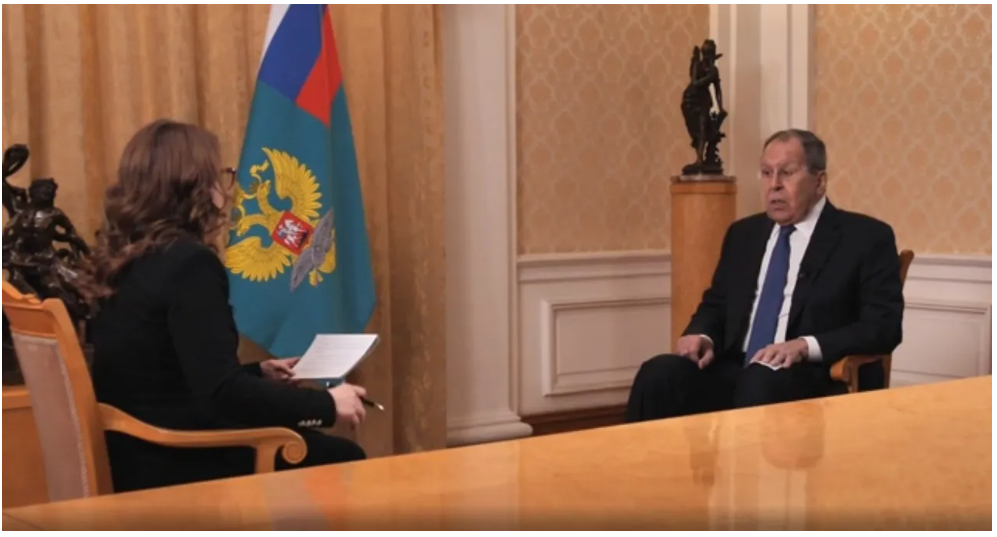 sergei lavrov
In a landmark interview that marks a pivotal moment in Eurasian diplomacy, Russian Foreign Minister Sergey Lavrov sat down with Türkiye Gazetesi’s Sevil Nuriyeva to outline Moscow’s vision for 2026 and beyond. Speaking with the clinical precision of a veteran diplomat, Lavrov dissected the “neo-colonial” ambitions of the West, the shifting sands of Middle Eastern alliances, and why he believes the current global security architecture is facing an irreversible collapse.
Five Years of Conflict: Ukraine as a Geopolitical Tool
As the world prepares to mark the fifth anniversary of the military operations in Ukraine on February 24, 2026, Lavrov offered a blunt assessment of the stalemate. For Moscow, the conflict was never merely a bilateral dispute; it was the inevitable explosion of a “centuries-old project” by the West to weaken the Russian state.
“Ukraine is not an independent actor; it is a pawn, a tool used by the West to create a direct base on our borders,” Lavrov asserted. He traced the roots of the crisis back to the 1991 Declaration of Independence, noting that Russia recognized Ukraine’s sovereignty only on the condition of its neutrality and non-alignment with military blocs. According to Lavrov, the 2004 Maidan movement was the “first crack,” where the West forced a “with us or against us” dilemma upon the Ukrainian people.
He cited the “confessions” of former U.S. officials regarding the $5 billion investment in the 2014 coup as evidence that the “Anti-Russia” project was a long-term financial and ideological investment. “The Zelensky regime,” Lavrov added, “is a horrific historical repetition. It is a regime that has legalized Nazi ideologies and seeks to erase the very identity of the Russian-speaking population that built these lands.”
The “Ghost” of the Istanbul Accords
One of the most revealing segments of the interview focused on the missed opportunities for peace. Lavrov spoke highly of the Istanbul Negotiations held in 2022, praising the “perfect organization” provided by Turkish leadership. He revealed that a comprehensive peace treaty was nearly finalized, which included security guarantees for both sides and limited foreign military presence in Ukraine.
“The document was initialed. We had an agreement,” Lavrov recalled. “But Boris Johnson arrived in Kiev and told them to keep fighting. This proves that the ‘independence’ of the Ukrainian regime is a myth. They are managed by former colonial powers who cannot break the habit of leading everyone else.”
Lavrov was equally firm on the current talk of ceasefires. He dismissed the idea of a 60-day pause as a “trap” designed to allow Kiev to re-arm and replenish its “cannon fodder” from the streets. For Moscow, any peace must be permanent and rooted in the reality of the new territorial and cultural boundaries.
NATO: An Atavism in a Changing World
Turning his attention to the West, Lavrov described NATO as a “geopolitical atavism”—a relic of the Cold War that has lost its raison d’être but continues to survive by creating artificial enemies. He argued that after the dissolution of the Warsaw Pact, there was a window to transform the OSCE into a genuine security organization, but the West chose expansion instead.
“They told us the Baltics were ‘afraid’ and that bringing them into NATO would calm them down,” Lavrov said with a touch of irony. “Instead, the Baltics have become the most aggressive, Russia-phobic voices in the alliance. Today, leaders like Mark Rutte and Ursula von der Leyen fuel ‘Third World War’ rhetoric to distract their citizens from the fact that they are paying four times more for American gas than they ever did for Russian energy.”
Syria’s New Chapter: The Şara Era
A significant portion of the discussion was dedicated to the recent political shifts in Damascus. With Ahmet Şara now at the helm in Syria, many questioned whether Russia’s influence would wane. Lavrov countered this narrative, highlighting that Russia-Syria relations are not tied to individuals but to decades of institutional and economic cooperation.
“Our relationship dates back to the era of Hafez al-Assad. It is a strategic partnership that spans defense, transport infrastructure, and culture,” Lavrov explained. He revealed that despite the transition, trade between the two nations is approaching the $1 billion mark annually. A high-level Russian delegation visited Damascus in January 2025, and President Şara visited Moscow in October, solidifying a “synergy” that Lavrov believes is essential for regional stability.
The Middle East Triumvirate: Russia, Turkey, and Iran
Regarding the volatile Iran-Israel situation, Lavrov positioned Russia as the “logical mediator.” He accused the U.S. of pursuing a policy of “controlled chaos” to maintain dominance over energy routes, particularly the Strait of Hormuz.
“We have regular contact with both Tehran and West Jerusalem,” he stated. “We have shown in the past, through the 2015 nuclear deal, that we can facilitate complex withdrawals of nuclear materials. Today, we are ready to play that role again.” He echoed President Erdoğan’s calls to avoid the “worst-case scenario,” noting that Turkish and Russian interests in preventing a regional conflagration are almost perfectly aligned.
Turkey’s Push for Nakhchivan Rail Corridor Raises Alarm in Moscow
The Arctic and the UN: A Critique of Global Governance
In the final stages of the interview, Lavrov addressed the growing competition in the Arctic. While dismissing U.S. claims that Russia seeks to “seize” Greenland, he defended Russia’s right to control and secure the Northern Sea Route.
He used the Greenland debate to launch a sharp critique of UN Secretary-General António Guterres. Lavrov pointed out the irony of the UN recognizing the “self-determination” of Greenlanders while ignoring the referendums in Crimea and Donbas. “The UN Secretariat is acting with a double standard that violates Article 100 of its own Charter,” Lavrov claimed. “You cannot support the right to choose for one group and label it ‘aggression’ for another simply because it doesn’t suit Western interests.”
Conclusion: The Path Forward
As the interview concluded, Lavrov’s message was clear: the era of unipolarity is over. Whether through the BRICS framework or bilateral “synergies” with powers like Turkey, Russia is committed to a world where “no one power can dictate terms to the rest.” He ended on a note of respect for his hosts, stating that the “yoke of Western dominance” is being lifted by the very nations—like Turkey—that have the diplomatic courage to chart their own course.
Related articles
Turkish and American Defense Ministers Meet to Discuss NATO Expansion
Erdogan throws sand in NATO expansion wheels
Turkish FM Hakan Fidan Meets Putin in Moscow to Advance Russia-Ukraine Peace Talks
