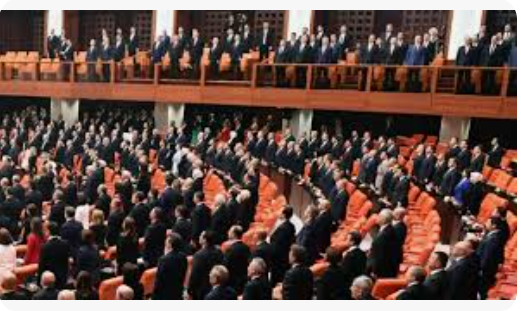
Turkish Parliament Commission Advances Cross-Party Peace and Democracy Report
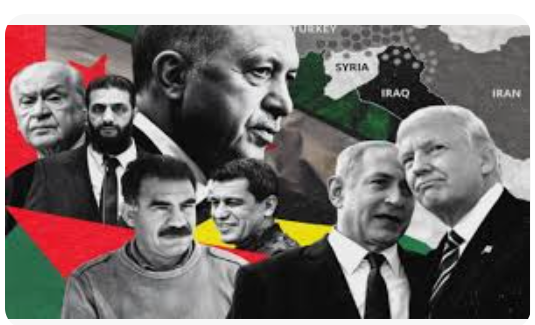 baris sureci
Summary:
Turkey’s cross-party “National Solidarity, Brotherhood and Democracy Commission” has convened for the fourth time under the chairmanship of Parliament Speaker Numan Kurtulmuş, as lawmakers work toward a landmark report aimed at democratic reform, social reconciliation, and lasting peace. CHP deputy group chair Murat Emir said the process would not be rushed, stressing the need for a broadly owned and historically significant text, while also commenting on regional developments in Syria and their potential implications for Türkiye.
The Turkish parliament’s National Solidarity, Brotherhood and Democracy Commission met again on Monday under the leadership of Speaker Numan Kurtulmuş, as political parties continue negotiations over a joint report designed to lay the groundwork for democratic reform, justice, and social peace.
Speaking after the meeting, Republican People’s Party (CHP) deputy group chair Murat Emir said lawmakers were not expecting to complete the work in a single day, emphasizing that quality and consensus were taking precedence over speed.
“We are working through the process carefully. There is no pressure on timing,” Emir said. “However, we also recognize that the process should not drag on unnecessarily. If needed, we can work more intensively. What truly matters is presenting Türkiye with a perspective that strengthens democratization, justice, and social peace — a text that can be relied upon in the coming years and embraced by society as a whole.”
Fourth Meeting Under Kurtulmuş
The commission’s drafting team, composed of representatives from political parties with parliamentary groups, gathered for the fourth time to finalize the joint report. Alongside Kurtulmuş, the meeting was attended by AK Party deputy group chair Abdullah Güler, CHP deputy group chair Murat Emir, DEM Party Istanbul lawmaker Cengiz Çiçek, Nationalist Movement Party (MHP) deputy leader Feti Yıldız, and New Path Party parliamentary group chair Bülent Kaya.
The talks form part of a broader effort to institutionalize Türkiye’s peace and reconciliation process following the Kurdistan Workers’ Party’s (PKK) announcement that it had dissolved its organizational structure and completed its withdrawal, a development that has reshaped Ankara’s domestic political agenda since late 2025.
Consensus and Disagreement
Responding to questions from journalists at parliament, Emir acknowledged that negotiations remained complex, with areas of both agreement and divergence among the parties.
“There are issues we have agreed on, and others where we remain divided,” he said. “But the essential goal is to develop a shared political wisdom that serves Türkiye’s peace, democracy, justice, and the rule of law.”
According to lawmakers involved in the talks, the draft report is being shaped not only by the commission’s core text but also by supplementary submissions, particularly from the CHP and the DEM Party. Together, these inputs have structured the main document around four core pillars.
Legal Framework and a Proposed “Peace Law”
The first and most consequential pillar centers on establishing a durable legal framework to ensure that the peace process does not depend on individual political actors or short-term political will. At the heart of this proposal is a draft “Peace and Democratic Integration Law.”
The proposed legislation aims to regulate the reintegration of former militants who lay down arms, remove barriers to participation in legal political life, and clarify the definition of terrorism in line with European legal standards. Supporters argue that anchoring these principles in law would provide predictability, transparency, and institutional continuity.
However, proposed amendments to Türkiye’s Anti-Terror Law under this framework are expected to be among the most politically sensitive issues as the report moves toward parliamentary debate.
Do Developments in Syria Threaten Türkiye’s “Terror-Free” Initiative?
“Right to Hope” and Judicial Reform
The second pillar addresses judicial reform, including the so-called “right to hope,” a concept derived from rulings by the European Court of Human Rights (ECHR). The proposal would allow for periodic reviews of prisoners serving aggravated life sentences after a defined period of incarceration.
While framed as a general legal principle aligned with European norms, the issue is politically delicate, as it directly affects the legal status of Abdullah Öcalan and other inmates in comparable circumstances. Lawmakers acknowledge that this element of the report is likely to draw intense public and political scrutiny.
Local Democracy and the Trustee System
Strengthening local democracy forms the third pillar of the draft report. The commission text calls for an end to the practice of appointing government trustees (kayyum) to replace elected mayors, a policy that has been widely criticized by opposition parties and international observers.
The report proposes constitutional guarantees for the principle that elected officials should only be removed through democratic processes, summarized by the phrase “those elected should leave office through elections.”
Truth, Accountability, and Social Reconciliation
Perhaps the most far-reaching proposal appears in the fourth pillar: the establishment of a Truth and Reconciliation Commission. The body would be tasked with investigating past human rights violations and social traumas linked to decades of conflict.
Proponents argue that confronting historical grievances openly is essential for lasting social peace, while critics warn that such a process could reopen old wounds and deepen political polarization.
Regional Context and Syria
Emir also commented on developments in neighboring Syria, particularly an agreement between the Syrian government and the Syrian Democratic Forces (SDF). He said Ankara was closely monitoring the situation.
“Our shared hope is for a constitutional democracy in Syria that excludes no one — a system that embraces Turkmens, Arabs, Alevis, Druze, and all communities equally, uniting them under citizenship and enabling peaceful coexistence,” Emir said.
He added that the CHP believed Türkiye should contribute constructively to such an outcome, urging the state to act with restraint and balance. “The silencing of weapons in the region will always have positive repercussions for Türkiye,” he said.
Current Status
As of January 2026, the commission has completed the drafting phase of the main report and is preparing to submit it to the office of the parliament speaker. While broad political consensus is being sought, debates over constitutional amendments and security legislation continue to pose challenges to final agreement.
Lawmakers involved in the process say the coming weeks will be critical in determining whether the report can translate into binding legislation — or remain a framework document reflecting aspirations rather than enforceable reform.
PA Turkey intends to inform Turkey watchers with diverse views and opinions. Articles in our website may not necessarily represent the view of our editorial board or count as endorsement.
Follow our English YouTube channel (REAL TURKEY):
https://www.youtube.com/channel/UCKpFJB4GFiNkhmpVZQ_d9Rg
Twitter: @AtillaEng
Facebook: Real Turkey Channel: https://www.facebook.com/realturkeychannel/***
Related articles
PKK leader Ocalan calls for peace, claims he is ready to arrange it

Trustee Appointed to Akdeniz Municipality Following Arrest of Pro-Kurdish Co-Mayors
Turkey Elects Women Mayors Amid Rights Concerns