OPINION: Turkey is becoming a narco-economy
 uyusturucu
Turkey Has Become an Open Corridor for Cocaine, Dirty Money Flows Near $35 Billion
10 Tons of Cocaine Seized off the Canary Islands: Kamer Shipping Taken Over
This is how the story begins. But anyone who has been following the narcotics trade knows that this operation represents only the visible tip of the iceberg. Turkey has now become an open corridor for all kinds of drug trafficking. Drug trade on this scale cannot take place without the knowledge and protection of the state. While prosecutors detain a handful of celebrities for cocaine use “to set an example,” Özgür Özel’s question — “Where are the barons?” — continues to echo off empty walls.
There are two main reasons behind rising drug use. The first is economic: alcoholic beverages have become prohibitively expensive, creating a clear substitution effect. The second is the deep psychological crisis gripping society. The latest Metropoll survey highlights the following findings:
Participants described their daily lives as being shaped by persistent emotional fatigue, pressure from the constant news cycle, and anxiety about the future. This collective sense of strain reflects not a single shock, but the cumulative impact of prolonged economic stress and an intense political agenda.
Burnout levels were not evenly distributed. The report identifies women, young people, the unemployed, and students as the most affected groups. Among women, two-thirds (66%) reported high burnout, a result widely attributed to combined work, caregiving, and social responsibilities.
It is therefore hardly surprising that young people turn to drugs as a way to forget. But there is also a major economic dimension to this story. As I will outline below, nearly 2.5% of Turkey’s GDP is circulating through the economy as untaxed dirty money. According to the Istanbul Governor’s Office, gang operations carried out within city limits over the past year alone resulted in the seizure of real estate worth TRY 318 billion. The economic power of drug gangs manifests itself as domestic demand, making it increasingly difficult for the Central Bank of the Republic of Turkey (CBRT) to rein in internal demand.
Let us now return to the news item that prompted this analysis:
A massive drug operation conducted in international waters off Spain’s Canary Islands has triggered a far-reaching investigation extending into Turkey. Nearly 10 tons of cocaine were seized aboard a commercial vessel stopped in the Atlantic Ocean, reportedly carrying salt cargo. In connection with the ship, seven individuals were detained in Turkey. The Istanbul Chief Public Prosecutor’s Office announced that all assets of United Shipping Gemi Acentalığı Sanayi ve Ticaret Limited Şirketi, known as Kamer Shipping, had been seized as part of the investigation.
A Historic Operation in the Atlantic
On January 7, Spanish police and navy forces seized 9,994 kilograms of cocaine aboard the commercial vessel “UNITED S” off the Canary Islands. Hidden among sacks of salt, the drugs represent one of the largest overseas maritime cocaine seizures ever recorded in Europe.
All 13 crew members on board were detained, and the vessel was towed to the island of Tenerife. Spanish media reported that four of the detainees are Turkish citizens.
Simultaneous Raids in Turkey
Following the operation in Spain, the Istanbul Chief Public Prosecutor’s Office launched a large-scale investigation inside Turkey. Simultaneous raids were conducted at 19 addresses across Istanbul, Mersin, Tekirdağ, Kocaeli, Sakarya, and Hatay.
The following individuals were detained on charges of:
-
Establishing a criminal organization
-
Drug trafficking
-
Laundering proceeds of crime
Three additional suspects were identified as fugitives abroad.
Seizure of Kamer Shipping
In its statement, the Prosecutor’s Office said that all movable and immovable assets, company shares, bank and investment accounts, and crypto assets belonging to Kamer Shipping (United Shipping Gemi Acentalığı) were seized ex officio. The seizure was approved by the on-duty criminal court of peace, and the investigation is continuing under strict confidentiality.
“Financiers from the Balkans, Producers from Latin America, Logistics from Turkey”
Security and intelligence expert Serkan Yıldız drew attention to the multinational nature of the operation, noting the involvement of the U.S. DEA, the UK’s NCA, French Customs, and Spanish police. He found it striking that Turkish law enforcement was absent from the operation, despite the ship, crew, and company being Turkish.
“Financiers from the Balkans, producers from Latin America, logistics from Turkey. This triangle has turned the Eastern Mediterranean into a new distribution hub,” Yıldız said, stressing that the real architects of the network were not on board the ship.
Political Reactions: “Turkey Is Becoming a Transit Country”
İYİ Party parliamentary group deputy chair Turhan Çömez criticized the government’s silence, highlighting the ship’s Turkish connections. He argued that Turkey is increasingly becoming a transit country for cocaine and synthetic drugs, adding that successive international seizures in recent years have reinforced these claims.
Çömez said he had raised similar warnings in parliament in the past but received no response, and called on the Interior Ministry to immediately engage with Spain and other countries involved in the operation.
A Critical Threshold in the Fight Against Drugs
Experts and opposition figures argue that focusing solely on street-level dealers is insufficient, calling instead for a comprehensive fight against global barons and logistical networks. The United S operation has once again reignited debate over Turkey’s role in international drug trafficking.
Estimating the Scale of the Drug Economy
Using data from the UN Office on Drugs and Crime (UNODC), the European Monitoring Centre for Drugs and Drug Addiction (EMCDDA), and Turkey’s National Police Anti-Narcotics Reports, I analyzed — together with Gemini — the annual economic value of drug trafficking passing through Turkey.
Estimated Annual Monetary Value: A Multi-Billion-Dollar Market
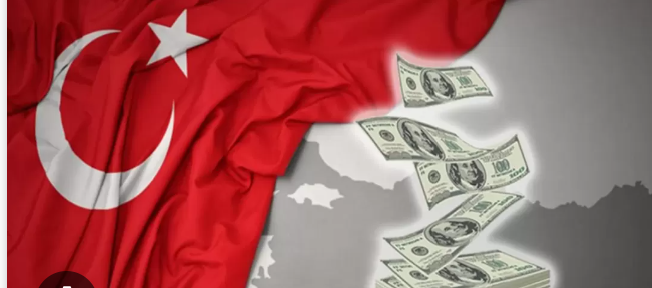
International narcotics experts and crime-economy researchers estimate that the annual volume of drug trafficking passing through or remaining in Turkey ranges between $20 billion and $35 billion.
Key components include:
-
Heroin trafficking: Turkey remains the primary transit route for 30–40% of global heroin trade. With a European street value of €40,000–€60,000 per kilogram, seized quantities represent only a fraction of total flows.
-
Methamphetamine and synthetics: Trafficking routes are increasingly shifting from heroin to methamphetamine, which is more profitable and easier to produce.
-
Cocaine: Cocaine trade centered on Turkey is estimated at $4–7 billion annually, accounting for roughly 20% of Turkey’s total drug economy.
In my personal view, unless state-linked elements who take bribes from every shipment — along with the real cartel leaders — are purged, Turkey will sink ever deeper into addiction. The drug economy has become an extremely attractive career path for unemployed youth. After all, even if you are caught and imprisoned, amnesties arrive a few years later. What do you really have to lose?
I also recorded an English-language video on this topic.
For those interested, it is linked below.
By Atilla Yesilada