Who Comes After Erdoğan? The Quiet Succession Battle Inside Turkey’s Power Circles
 Erdogan
As Turkey approaches a pivotal political horizon, questions surrounding what comes after President Recep Tayyip Erdoğan are no longer confined to speculation on the margins. In a recent in-depth analysis, The Economist examined the emerging post-Erdoğan debate, arguing that while no official transition plan exists, a quiet competition is already unfolding behind closed doors.
According to the magazine, Erdoğan’s presidential term is set to end in 2028, and under current constitutional rules, he cannot technically run again. While legal pathways such as a constitutional amendment or an early election could extend his rule, The Economist suggests that attention within Ankara has increasingly shifted toward potential successors—and the internal dynamics shaping that race.
A Visible Signal: Bilal Erdoğan Steps Further Into the Spotlight
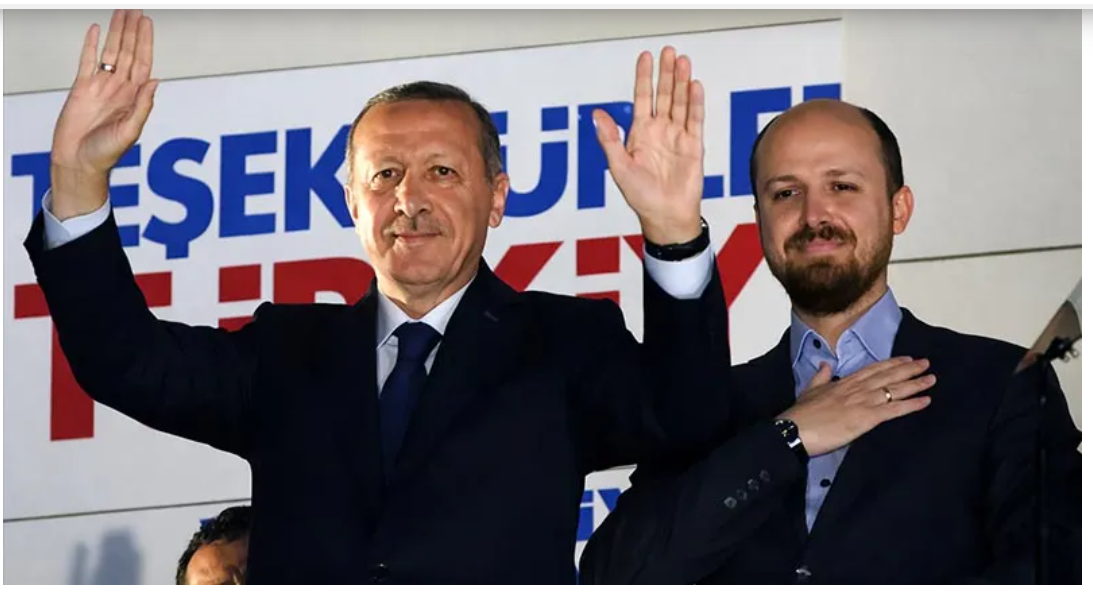
The Economist opens its analysis with an event that many observers viewed as symbolically significant. On January 1, 2026, Bilal Erdoğan, the youngest son of the president, delivered a speech at a pro-Gaza demonstration organized by TÜGVA, a youth foundation with close ties to the ruling party.
Despite holding no formal public office, Bilal Erdoğan has become increasingly visible in political and diplomatic settings. The analysis notes that his recent public interventions, combined with his presence alongside President Erdoğan during meetings with foreign leaders, have fueled speculation that he may be positioning himself as a potential heir.
The magazine writes that these appearances have “strengthened speculation that Bilal Erdoğan is being prepared as a successor,” even though such a scenario remains highly controversial within both the ruling party and the broader electorate.
The Constitutional Barrier—and Possible Workarounds
The Economist underscores that Erdoğan’s future hinges on constitutional arithmetic. To pass a new constitution directly through parliament, 400 of the 600 lawmakers would need to vote in favor—an unlikely outcome under current political conditions.
Alternatively, Erdoğan could secure 360 votes to send constitutional changes to a referendum. However, the analysis notes that this route carries substantial risk. Erdoğan’s 2017 constitutional referendum, which expanded presidential powers, was narrowly won amid allegations of irregularities.
Given this history, The Economist argues that a more likely scenario is for Erdoğan to push for early elections in late 2027, thereby resetting the political clock and opening the door to another five-year term. Still, the article stresses that this outcome is far from guaranteed.
No “Plan B,” but a Race Behind Closed Doors
The analysis highlights a striking admission from within the ruling party. Speaking to The Economist, an AK Party official described the post-Erdoğan landscape bluntly: “There is no Plan B.”
Yet despite the absence of an official succession framework, the magazine reports that an informal contest to win Erdoğan’s endorsement is already underway. According to sources cited in the article, four figures stand out as the most serious contenders.
The Four Names Emerging as Potential Heirs
The Economist identifies four prominent figures believed to be vying for Erdoğan’s backing:
-
Selçuk Bayraktar, Erdoğan’s son-in-law and the architect of Turkey’s internationally recognized drone program
-
Süleyman Soylu, former interior minister and a polarizing but influential political figure
-
Hakan Fidan, the current foreign minister and former intelligence chief
-
Bilal Erdoğan, the president’s youngest son
The article cites a December public opinion poll measuring preferences among AK Party supporters. According to the survey, 33.4% favored Hakan Fidan as the party’s next leader. Süleyman Soylu followed closely with 32.5%. Bilal Erdoğan ranked third with 14.2%, ahead of Selçuk Bayraktar at 12.9%.
Hakan Fidan is seen as the Strongest on Paper
Among the four, The Economist describes Hakan Fidan as having “by far the strongest résumé.” His background spans intelligence, diplomacy, and national security—areas central to Erdoğan’s governance model.
The analysis recalls a statement Fidan made last year, when he warned that production of Turkey’s indigenous fighter jet, KAAN, had nearly stalled because the U.S. Congress refused to grant export licenses for the engines. According to The Economist, this unusually direct public intervention intensified speculation about Fidan’s political ambitions and positioned him as more than a behind-the-scenes technocrat.
A Difficult Landscape for Any Successor
The article argues that any leadership transition within the AK Party would be deeply challenging, regardless of who emerges as Erdoğan’s choice. High interest rates, new taxes, and spending cuts have eroded public support, even as inflation has declined from extreme highs.
Although inflation has fallen, it remains above 30%, a level The Economist notes is still widely viewed by voters as unacceptable. These economic pressures, combined with voter fatigue, create a hostile environment for continuity candidates.
The Problem With Dynastic Politics
The analysis ends on a skeptical note, particularly regarding the prospect of a familial succession. Political scientist Seda Demiralp is quoted as saying that many AK Party voters oppose turning governance into a “family enterprise.”
Academic Burak Bilgehan Özpek offers an even sharper assessment:
“Erdoğan is an autocratic leader, but he has democratic legitimacy. Bilal does not.”
The Economist concludes that any successor personally chosen by Erdoğan will face an uphill battle, and that challenge may be even steeper if the successor carries the Erdoğan surname.