Turkish Defence Minister Güler Says Plans Ready for Any Syria Developments, Presses for SDG Integration
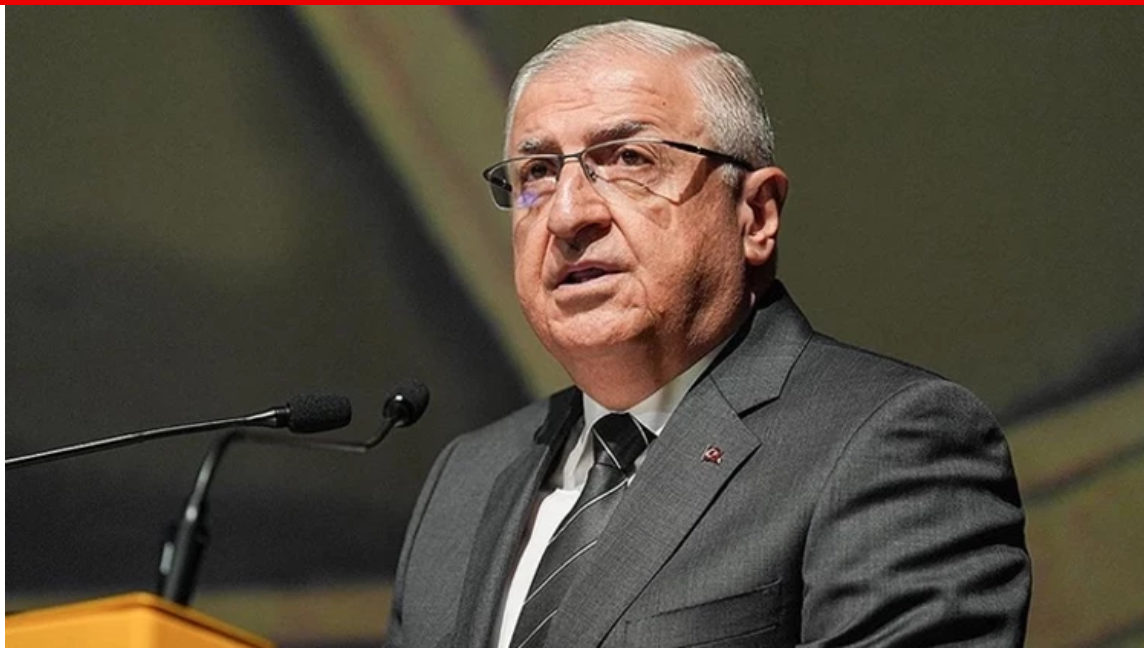 guler msb
Turkish Defence Minister Yaşar Güler said Ankara is closely monitoring developments in Syria and has contingency plans “for any scenario,” while reiterating Türkiye’s position that the Syrian Democratic Forces (SDG) must be integrated into the Syrian national army on an individual basis rather than as a bloc. Speaking at an annual briefing with Ankara bureau chiefs, Güler also addressed tunnel-destruction operations in northern Syria, Türkiye’s military training support to Syrian institutions, the government’s “Terror-Free Türkiye” process, the status of Iran-based PJAK militants, and recent incidents involving a downed UAV and a C-130 crash investigation.
Turkish Defence Minister Yaşar Güler said Türkiye has prepared plans for “any development” in Syria and will continue to support the country’s new administration in restoring unity and territorial integrity, while insisting that the Syrian Democratic Forces (SDG) must be integrated into Syria’s national army under terms Ankara considers “real integration.”
Güler’s remarks came during a Year-End Evaluation Meeting with Ankara representatives of Turkish media organisations, according to comments reported by journalist Hande Fırat. The minister answered questions on a range of security issues spanning Syria, counterterrorism, and Black Sea air and maritime safety.
SDG integration: “Not as a unit, but individually”
Güler said Türkiye has been watching developments in Syria “carefully” and has not changed its stance since the start of the latest political transition in the country.
He said Syria now has a new government and president and should be given time to establish order, adding that Syrian leaders have conveyed to Turkish officials their approach to integrating the SDG.
“We have our plans ready for any development. We know very well what we will do,” Güler said, according to the report. He added that Türkiye has the capacity to repeat the kinds of cross-border operations it has carried out since 2016 if it deems them necessary.
On the core question of SDG integration, Güler argued that the group must be integrated “individually” into the Syrian army rather than remaining intact as an organised formation.
The SDG has at times framed “integration” as joining while preserving unit cohesion. Güler rejected that interpretation, saying integration “as a unit” would not amount to genuine absorption into state structures.
“Differences with the U.S. are narrowing,” Güler says
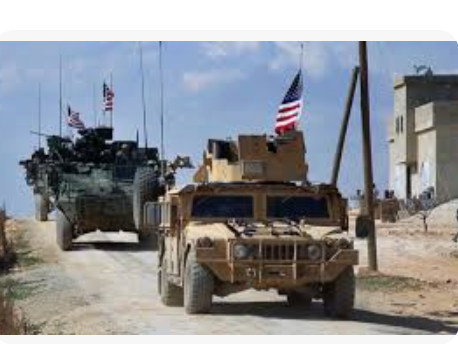
Asked whether Ankara and Washington remain at odds over the SDG, Güler said talks with the United States were continuing and claimed U.S. views have shifted.
“Our talks with the U.S. on SDG integration continue. The U.S. position has changed considerably,” he said, adding that “our American friends now see realities better” and that differences of opinion had narrowed.
He repeated Türkiye’s position that there would be no retreat from its demand for SDG integration into the Syrian army, presenting it as a non-negotiable point.
Warning on unilateral action if needed
Güler said Türkiye’s past operations in Syria were conducted while both the U.S. and Russia were present on the ground and that Ankara carried out what it considered necessary without seeking anyone’s permission.
“If there is a need in the coming period, we will do what is necessary without asking anyone,” he said, signalling that Ankara wants to retain freedom of action should it view developments as a threat.
Tunnel operations: 732 km destroyed, ministry says
Güler also described what he said were extensive tunnel-destruction operations linked to SDG activities and broader militant infrastructure in northern Syria.
He said Turkish forces completed the destruction of 302 kilometres of tunnels in the Tel Rifaat area and had destroyed 430 kilometres in Manbij, with work continuing. That would bring the total destroyed tunnel length to 732 kilometres, according to his remarks.
Güler presented the operations as enabling civilian resettlement and agriculture in areas Türkiye has secured, citing the case of Afrin, where he said places of worship and schools had been turned into militant sites prior to Turkish control. He claimed Türkiye made the area “safe and liveable,” including steps to restore access to water resources.
He added that Türkiye was monitoring alleged ongoing tunnel excavation activities in Raqqa and Deir ez-Zor.
Training and institutional support for Syria
Güler said Türkiye had already started providing training support to Syrian counterparts and suggested Ankara could extend similar assistance as it has provided to countries including Azerbaijan, Libya and Somalia.
He said he had visited Syria previously and that Türkiye’s chief of general staff and land forces commander also travelled there in recent weeks. The focus, he said, was discussing how Syria could improve governance and security and how Türkiye could assist.
The minister framed the training support as part of helping Syria combat terrorism and stabilise institutions, without providing specific details on scale or timeline.
“Terror-Free Türkiye” process: “State-led, not dictated by militants”
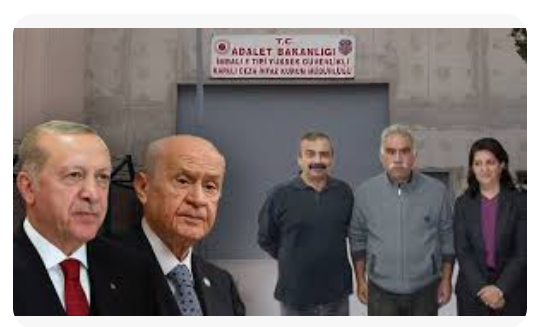
On domestic security, Güler described the government’s “Terror-Free Türkiye” process as an opportunity for a country that has fought terrorism for decades.
He said the Turkish Armed Forces (TSK) remains fully engaged and aware of developments, stressing that the process would proceed on the state’s terms.
“The process will not continue in the way the terrorist organisation wants, but in the way our state determines and wants,” he said, according to the report.
Güler also said that following successful military operations, Türkiye had pushed the PKK to a stage where it declared it would comply with the “Terror-Free Türkiye” process, portraying this as a result of security pressure.
PJAK and Iran: claims of transfers and coordination
Güler addressed the status of PJAK, an Iran-based armed group regarded by Türkiye as linked to the PKK ecosystem.
He said that during the Israel-Iran conflict, PJAK militants believed Iran would lose and that this would bring about political change, and that their statements exposed “their true face,” in his words.
He also claimed that after the PKK’s statements about laying down arms, militants and weapons attempted to move from northern Iraq into Iran, and that Türkiye conveyed such information to Iranian authorities “every day,” with Iran conducting operations when it had opportunities.
These remarks reflect Ankara’s long-standing position that regional militant networks are interconnected and that cross-border coordination is needed, particularly amid heightened regional tensions.
C-130 crash: black box under review at TUSAŞ
Güler also spoke about the investigation into a C-130 military cargo plane crash.
He said Türkiye has been operating C-130 aircraft since 1964 and had not experienced such an accident previously. He described the platform as among the safest aircraft globally and noted that it is used by around 70 countries.
Following the incident, he said all C-130 aircraft were taken in for inspection and would return to service after checks were completed. He added that the aircraft’s black box was still being examined at TUSAŞ and that the accident investigation board continued its work.
He said the ministry would disclose findings transparently once the cause is determined.
Downed UAV and Black Sea safety measures
Güler addressed a UAV shot down by Turkish F-16 aircraft on 15 December, describing it as a difficult-to-detect platform and thanking personnel who identified it.
He linked the incident to the wider context of the Russia-Ukraine war, noting heavy use of drones and unmanned surface vehicles in the Black Sea. He said the UAV Türkiye engaged was “out of control” and was tracked and destroyed away from populated areas using an air-to-air missile.
He said debris recovery was ongoing and that authorities would inform the public after examination.
On wider Black Sea security, Güler said drone and unmanned maritime activity posed risks to commercial shipping and civilian aviation. He said Türkiye took immediate measures to ensure air traffic safety by redirecting aircraft to nearby airports before engaging the UAV.
He also said Türkiye had implemented protective measures for critical offshore and underwater infrastructure, including drilling vessels, against threats from drifting unmanned surface vehicles or underwater risks.
PA Turkey intends to inform Turkey watchers with diverse views and opinions. Articles in our website may not necessarily represent the view of our editorial board or count as endorsement.
Follow our English YouTube channel (REAL TURKEY):
https://www.youtube.com/channel/UCKpFJB4GFiNkhmpVZQ_d9Rg
Twitter: @AtillaEng
Facebook: Real Turkey Channel: https://www.facebook.com/realturkeychannel/***