ANALYSIS: Imamoglu Indictment Seen as Political Move Targeting CHP Leadership
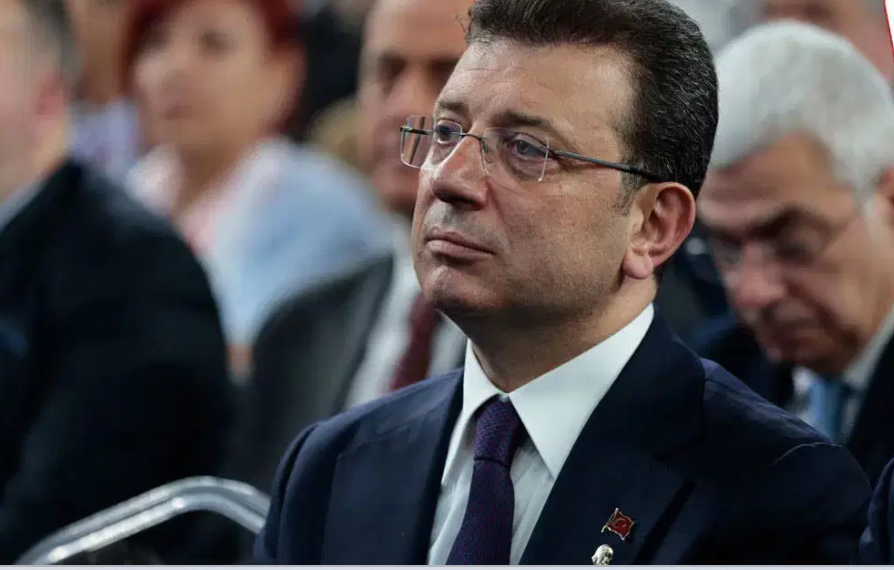 ekrem-imamoglu
Massive 3,700-page document links Istanbul Mayor to alleged corruption network — prosecutors also notify top court to consider legal action against the main opposition party
A 3,700-page indictment targeting Istanbul Mayor and opposition presidential candidate Ekrem İmamoğlu has been leaked to the press, naming 402 defendants, 105 of them in custody. The document accuses İmamoğlu of establishing a “systematic corruption network” beginning in his time as mayor of Beylikdüzü, allegedly collecting money from business figures, engaging in bribery, and creating a large “pool of funds” used for personal and political gain.
Prosecutors claim the system’s aim was twofold: personal enrichment and political power consolidation. They allege that the funds helped finance İmamoğlu’s 2019 Istanbul election campaign, supported his bid to take control of the Republican People’s Party (CHP), and ultimately positioned him for a presidential run.
İmamoğlu and the CHP have rejected all allegations, calling them fabricated and politically motivated. Opposition figures say the government’s real goal is to block İmamoğlu’s presidential candidacy and smear CHP-led municipalities ahead of elections.
Indictment extends beyond Imamoglu to implicate the CHP
One of the most politically explosive parts of the indictment is its claim that the CHP leadership itself benefited from illicit funds and was aware of all operations conducted by the alleged network.
Prosecutors demand the confiscation of the party’s Istanbul provincial headquarters, arguing that it was purchased with “bribe money.”
The document goes further, formally notifying the Court of Cassation’s Chief Prosecutor’s Office — which has constitutional authority over political parties — and urging it to assess whether the CHP’s actions violate Articles 68 and 69 of the Constitution, which regulate party dissolution and political bans.
“Based on our findings, it has been determined that the Republican People’s Party systematically interfered with electoral integrity and democratic order,” the indictment states, citing Article 101 of the Political Parties Law. “Accordingly, this has been communicated to the Chief Public Prosecutor for evaluation and necessary action.”
Analysts interpret this as a clear referral to initiate a potential party closure investigation, even though no such lawsuit has yet been filed.
Critics: The case aims to suppress opposition through judiciary
Columnists Ali Bayramoğlu and Gökçer Tahincioğlu, among others, argue that the case marks an unprecedented escalation in the government’s use of the judiciary to constrict political space and intimidate opposition leadership.
Bayramoğlu describes the indictment as “the second act of a political play” — one seeking not only to criminalize İmamoğlu but also to undermine the legitimacy of the CHP as Turkey’s main opposition force.
Tahincioğlu notes that the document’s “organization” section portrays individuals and businesses who donated to İmamoğlu’s campaigns as acting “under fear of the organization’s public authority.”
He highlights that corruption probes into ruling party municipalities or pro-government officials have been ignored or closed, contrasting with the extensive focus on the İBB investigation.
“The key question remains: why only the Istanbul Municipality, and why now?” Tahincioğlu asks, suggesting selective prosecution and an intent to discredit the opposition ahead of possible early elections.
The broader political message: From Imamoglu to the CHP
The indictment’s narrative goes beyond financial wrongdoing. It asserts that the CHP, under İmamoğlu’s alleged control, has been “captured” by an organized criminal network seeking to seize the state.
Although prosecutors claim the referral to the Chief Prosecutor’s Office does not explicitly aim to close the CHP, the implication of party infiltration and national security risks resembles language used in previous party ban cases in Turkish political history.
The document also draws a distinction between the former leadership of Kemal Kılıçdaroğlu, who is depicted as unaware of these activities, and the new leadership under Özgür Özel, which is presented as part of the alleged “network.”
Observers note that this division further politicizes the case by attempting to pit CHP factions against each other while casting doubt on the party’s integrity.
Will a lawsuit be filed against the CHP?
While no formal closure case has yet been launched, legal experts and opposition sources believe that the indictment’s referral to the Chief Prosecutor’s Office lays the groundwork for such an action.
The process mirrors early steps taken in past party ban proceedings, such as those against the Democratic Society Party (DTP) and HDP.
If the Chief Prosecutor decides that sufficient grounds exist, a formal case could be filed before the Constitutional Court, potentially seeking to dissolve the CHP or impose political bans on its leadership.
However, for now, the move appears to be a strategic warning rather than an immediate legal action — designed to apply political pressure and further isolate İmamoğlu within both his party and the opposition bloc.
In conclusion, the leaked indictment represents more than a corruption case. It marks a new phase in Turkey’s judicialized power struggle, in which the country’s largest opposition party could soon find itself fighting for institutional survival alongside its most prominent leader.
PA Turkey intends to inform Turkey watchers with diverse views and opinions. Articles in our website may not necessarily represent the view of our editorial board or count as endorsement.
Follow our English language YouTube videos @ REAL TURKEY: https://www.youtube.com/channel/UCKpFJB4GFiNkhmpVZQ_d9Rg
And content at Twitter: @AtillaEng
Facebook: Real Turkey Channel: https://www.facebook.com/realturkeychannel/