TRT News: Turkey’s Mega Find: How 694 Million Tons of Rare Earth Elements Could Break China’s Global Monopoly
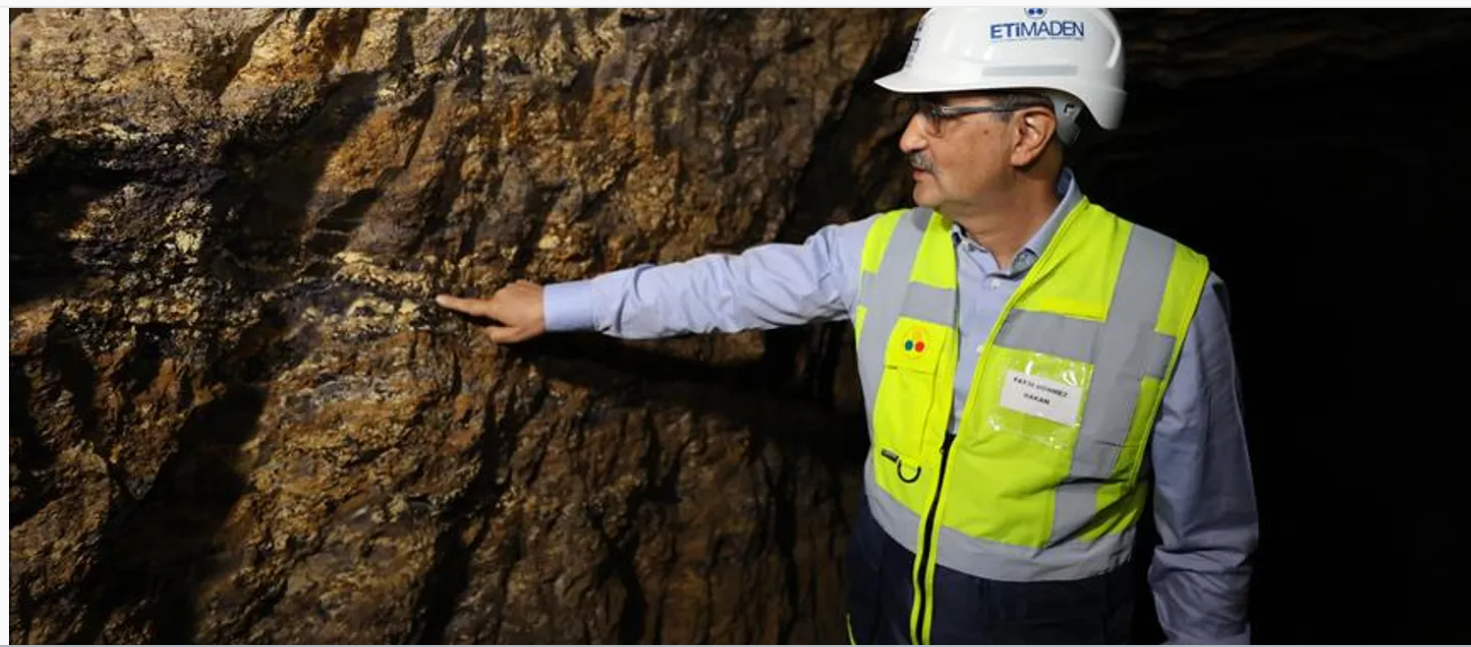 nadir mineraller
Turkey Poised to Become Second Largest REE Reserve Holder
The discovery of massive reserves of Rare Earth Elements (REE) in central Turkey is set to fundamentally reshape the global supply chains for the clean energy, technology, and defense sectors.
The Beylikova site in Eskişehir is estimated to hold 694 million tonnes of deposits, immediately positioning Turkey as the second-largest global holder of REE reserves, trailing only China.
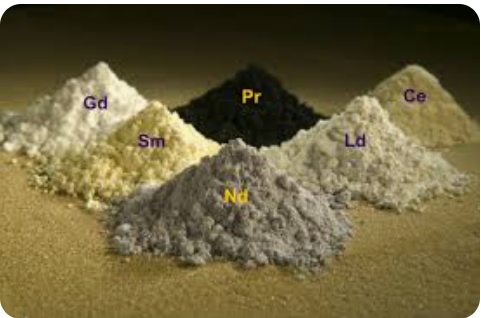
REEs—a group of 17 metals—are the “invisible engines” of modern life, critical for manufacturing everything from electric vehicles (EVs) and wind turbines to mobile phones and precision-guided missiles.
Erdoğan’s Goal: Top-Five Global Producer
The discovery coincides with escalating trade tensions between the US and China over REEs, a sector where Beijing currently processes nearly 90% of the world’s supply. China has increasingly restricted exports, hitting US manufacturing industries hard.
Addressing the national ambition, President Recep Tayyip Erdoğan announced that Turkey is actively in talks with international companies for potential collaboration to develop the sector.
“We aim to become one of the world’s top-five REE producers,” Erdoğan stated earlier this month.
The True Value Lies in ‘Magnet Metals’
Experts emphasize that the geopolitical and economic power in this market won’t depend solely on the size of the reserves but on the ability to process and apply the materials.
Prof. Dr. Mustafa Kumral, Dean of the Faculty of Mining at Istanbul Technical University, notes that REEs are gaining centrality because they power permanent magnets—metals essential for making electric motors lighter, turbines more efficient, and precision weapons more accurate.
- The “magnet suite”—including elements like neodymium, praseodymium, dysprosium, and terbium—represents more than 90% of the global REE trade value, despite being a small portion of the total volume.
- Control over these “magnet metals” translates directly into global economic clout and geopolitical sway.
The discovery comes at a pivotal time, with the critical minerals market projected to grow from $325 billion last year to $770 billion by 2040.
Midstream Refining: The Critical Hurdle
While the reserve is a “phenomenal gift,” monetizing it requires navigating a complex value chain, according to industry veterans.
Sait Uysal, founder of the Critical Minerals Initiative, notes that the upstream phase (mining ore and producing concentrate) is the most straightforward, thanks to Turkey’s mature mining sector. The government is already setting up a pilot processing plant to kickstart extraction.
However, the midstream hurdle is the biggest challenge:
- This phase involves refining the concentrate into high-purity individual elements. This process is “extremely complex and capital-intensive,” requiring dedicated R&D, specialized researchers, and hundreds of millions of dollars in investment—a domain long dominated by China.
- Uysal suggests Turkey’s strategic plan must center on strategic partnerships or technology transfer agreements with companies that already possess the refining know-how.
Only by overcoming this technical and financial barrier can Turkey advance to the downstream manufacturing of magnets for EVs and turbines, leveraging its robust domestic automotive base.
Assoc. Prof. Salih Cihangir of Munzur University confirms that Turkey has progressed to “laboratory and, to a lesser extent, pilot scale” production of some purified fractions. He emphasizes that scaling up to high-value production requires achieving milestones like bulk separation into individual REE oxides and rigorous Environmental, Health, and Safety (EHS) protocols to ensure robust risk management.