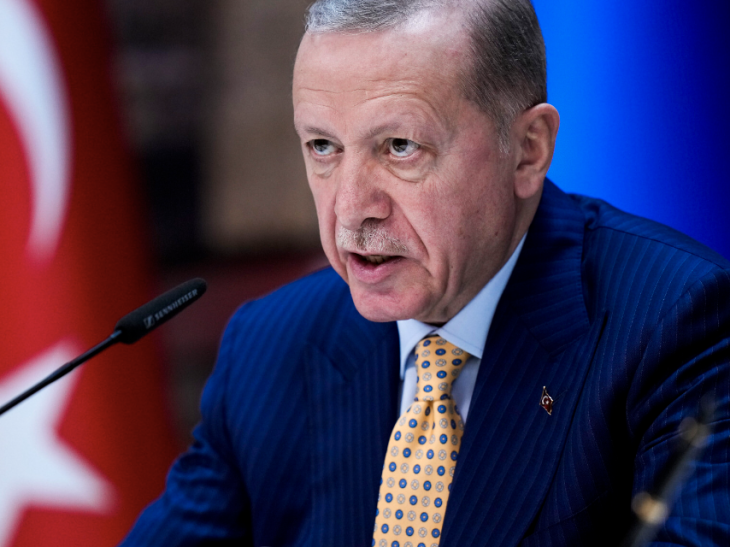
U.S. Supreme Court to Decide Whether to Hear Halkbank Immunity Appeal
 halkbank
Summary: The U.S. Supreme Court will consider on September 29 whether to review an appeal by Turkey’s state-owned Halkbank, which argues it should be immune from criminal prosecution in the U.S. under “common-law immunity.” If the Court declines to hear the case, Halkbank would face trial in New York on sanctions-busting charges linked to Iran. A guilty verdict could expose the bank to multi-billion-dollar fines, severe restrictions on its operations, and long-term reputational damage.
A Closed-Door Conference with High Stakes
The U.S. Supreme Court is set to hold a closed-door conference on Monday, September 29, to decide whether it will grant certiorari in the Halkbank case. Unlike oral hearings, such conferences are private deliberations where justices determine whether a case merits full review.
Halkbank’s lawyers have argued that, as a state-owned entity, the bank should be shielded from prosecution under the doctrine of common-law immunity. They claim that allowing the trial to proceed would represent a breach of sovereign protections traditionally extended to state actors.
Possible Outcomes from the Supreme Court
The Court’s decision could shape the future of the long-running case:
-
If certiorari is granted:
The Court will hear arguments in 2026 on whether state-owned enterprises can be prosecuted in U.S. criminal courts. The proceedings would have implications far beyond Halkbank, potentially setting a precedent on how sovereign-linked institutions are treated under U.S. law. -
If certiorari is denied:
The decision of the lower courts — that Halkbank does not enjoy immunity — would stand. The case would return to federal court in New York, paving the way for a full criminal trial on sanctions-busting charges.
Announcements are expected within days of the September 29 conference.
Why the Case Matters
The Halkbank case has attracted global attention because it sits at the crossroads of geopolitics, finance, and international law.
-
It touches on the limits of U.S. jurisdiction over foreign state-owned enterprises.
-
It directly impacts U.S.–Turkey relations, as President Recep Tayyip Erdoğan has repeatedly pressed for the case to be dropped.
-
It is also linked to the enforcement of U.S. sanctions against Iran, a core pillar of Washington’s foreign policy.
If Found Guilty: Potential Penalties for Halkbank
Should Halkbank ultimately lose its immunity claim and be convicted in a U.S. court, the consequences could be far-reaching:
-
Massive Financial Penalties:
U.S. prosecutors have accused Halkbank of facilitating billions of dollars in transactions that violated sanctions on Iran. If convicted, the bank could face multi-billion-dollar fines. Previous cases involving non-Turkish banks, such as BNP Paribas in 2014, resulted in penalties exceeding $8.9 billion. -
Restrictions on U.S. Dollar Transactions:
Perhaps more damaging than fines, Halkbank could face limits or bans on accessing U.S. dollar clearing systems. Such restrictions would severely undermine its ability to operate internationally, as most global trade is settled in dollars. -
Impact on Correspondent Banking:
U.S. or European banks could sever correspondent relationships with Halkbank to avoid compliance risks. This would curtail the bank’s ability to handle cross-border payments. -
Reputational Damage and Investor Confidence:
A guilty verdict would likely shake investor confidence in Turkey’s broader financial system. Halkbank, already central to several state-backed financing initiatives, could see its role in trade and energy payments weakened. -
Spillover Risks for Ankara:
U.S. courts could pursue further sanctions or restrictions targeting entities doing business with Halkbank. This could complicate Turkey’s international financing and deepen strains with Washington.
In short, the stakes go far beyond a single financial penalty: the outcome could reshape Turkey’s financial integration with Western markets.
Common-Law Immunity: A Wider Precedent
Legal experts note that the Supreme Court’s decision will also carry weight for other state-owned enterprises worldwide.
-
A ruling that rejects Halkbank’s immunity claim would strengthen U.S. prosecutors’ hand in pursuing similar cases against sovereign-linked companies accused of sanctions violations or money laundering.
-
Conversely, if the Court sides with Halkbank, it could limit the scope of U.S. jurisdiction and force Washington to rely more heavily on diplomatic rather than judicial tools to enforce sanctions.
The Geopolitical Dimension
The Halkbank case has been a persistent irritant in U.S.–Turkey relations.
-
Ankara has framed the prosecution as politically motivated and an infringement on Turkish sovereignty.
-
For Washington, the case has tested the balance between enforcing sanctions regimes and managing a critical NATO ally.
-
The timing is sensitive: with Turkey already under scrutiny for its energy ties to Russia and complex regional diplomacy involving Syria, Gaza, and NATO, a guilty verdict could exacerbate tensions.
Looking Ahead
If the Supreme Court grants review, the case will be heard in 2026, prolonging uncertainty. If not, Halkbank could face trial in New York as early as next year. Either way, the decision will have implications not just for Turkey’s financial sector, but also for the broader debate on how far U.S. courts can reach into the affairs of foreign state-owned entities.
Source: Gemini, U.S. Supreme Court filings
IMPORTANT DISCLOSURE: PA Turkey intends to inform Turkey watchers with diverse views and opinions. Articles in our website may not necessarily represent the view of our editorial board or count as endorsement.
Follow our English language YouTube videos @ REAL TURKEY: https://www.youtube.com/channel/UCKpFJB4GFiNkhmpVZQ_d9Rg
And content at Twitter: @AtillaEng
Facebook: Real Turkey Channel: https://www.facebook.com/realturkeychannel/
Related articles
Reuters: Turkey Offers $100M Settlement to End Halkbank Case
Dorian Jones: Trump Tests Turkey’s Energy Dependence on Russia with the Lure of U.S. Power

Atilla Yeşilada: Why Erdogan Will Never Win Another Election?