Murat Yetkin: Disarming the PKK Will Be Far From Easy
 houston
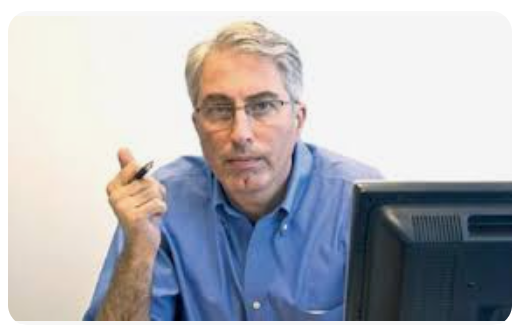
Along with Erdal Saglam, Muırat Yetkin are the longest serving Ankara correspondents. They also have great scoops. Saglam focuses on economic policy, while Yetkin is an expert on politics. Here is his latest revelation:
Despite growing diplomatic momentum and public political debate, the disarmament of the Kurdistan Workers’ Party (PKK) is shaping up to be a long and complex process. While the PKK’s leadership has declared the end of its armed struggle in a recent congress, the group has notably stopped short of announcing an actual surrender of weapons—raising serious doubts about the sincerity and feasibility of the move.
No Consensus in Ankara, No Clarity From Qandil
Tensions between government figures and the pro-Kurdish DEM Party reflect deeper fractures within Turkish politics over how to approach the Kurdish question. Over the weekend, President Erdoğan’s legal advisor Mehmet Uçum publicly rebuked the DEM Party for its rhetoric, particularly its use of the term “political prisoners.” DEM co-chair Tuncer Bakırhan responded sharply, accusing the government of hypocrisy and denying the existence of genuine legal reform.
But the bigger issue lies beyond Ankara’s political sparring. On May 12, the PKK announced that its May 5–7 congress had resulted in a formal decision to end its armed struggle—but crucially, the declaration made no mention of disarmament. This ambiguity deepened on May 21, when the group leaked a video of top commander Murat Karayılan delivering a defiant speech.
Karayılan Signals Continued Resistance
In the video, Karayılan said he did not fully grasp the rationale behind the group’s dissolution decision but expressed faith in the judgment of jailed PKK founder Abdullah Öcalan. Nevertheless, Karayılan asserted that conditions in the Middle East—particularly in what he described as “Kurdistan”—remained favorable for armed resistance. He referenced an ongoing “Third World War,” claiming it centered on Kurdish territories, and suggested that international support for the PKK could be sustained.
This contradicts the ongoing political messaging around the “A Turkey Without Terror” initiative—a prospective parliamentary process that envisions resolving the Kurdish conflict through political means. First championed by Nationalist Movement Party (MHP) leader Devlet Bahçeli, then echoed by Öcalan, and later supported by Erdoğan as “his government’s greatest legacy,” the plan is already running into complications.
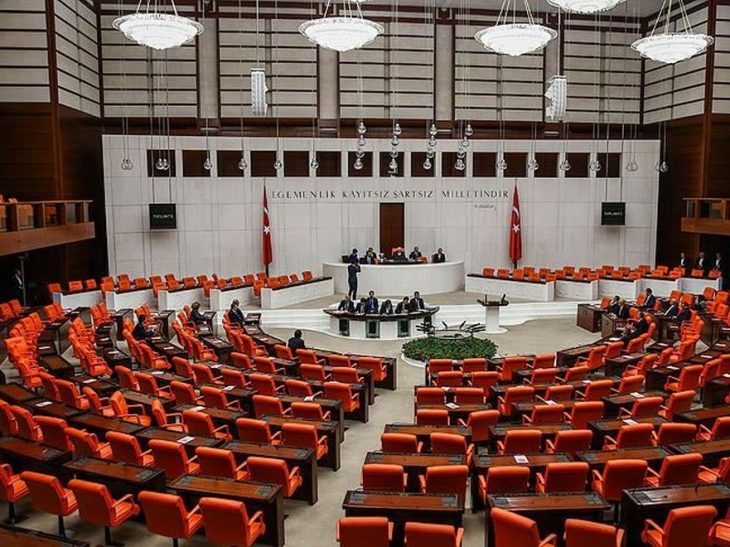
Even within the ruling coalition, there’s no agreement on sequencing: Should the Turkish Grand National Assembly (TBMM) create a commission before or after the PKK disarms?
Who Is the PKK Really Speaking To?
The timing of Karayılan’s message and the choice to leak it amid growing international diplomatic activity suggests strategic intent. Was the PKK signaling that it only accepted the dissolution at Öcalan’s behest, while refusing to disarm? Or is this a message aimed at foreign backers, trying to keep geopolitical options open?
Karayılan alluded vaguely to unnamed international actors who might support continued armed resistance, but offered no specifics. Whether he meant the U.S., Israel, Iran, or others remains unclear. What is clear is that the PKK leadership is not united on the path forward.
Meanwhile, diplomatic engagements involving the U.S., Turkey, Syria, and Iraq are accelerating. On May 14, former U.S. President Donald Trump hosted a virtual call involving leaders from the U.S., Turkey, Saudi Arabia, and Syria. Shortly afterward, Turkish intelligence chief İbrahim Kalın traveled to Damascus for a rare meeting with Syrian leader Ahmed Shara. The next day, Deputy Foreign Minister Nuh Yılmaz was in Washington, attending the inaugural meeting of a new U.S.-Syria working group.
The same day—May 21—the PKK released the Karayılan video.
A Game-Changing Move From Trump
In an unprecedented development, Trump appointed U.S. Ambassador to Turkey Jeff Barrack as his special envoy to Syria. This signals Washington’s intention to manage Turkey-Syria-PKK affairs through a centralized diplomatic channel.
In Turkey, President Erdoğan chaired the National Security Council (MGK) on May 22. The top five items in the council’s concluding statement focused on the PKK, its Syrian offshoot YPG, and Syria in general. The declaration emphasized close monitoring of all developments—particularly the disarmament process, now under the operational oversight of Turkey’s intelligence agency, MİT.
Yet, one major piece of the puzzle remains in the background: Iraq.
The PKK has operated bases in Iraq’s Qandil Mountains near the Iranian border for nearly half a century. If a deal is eventually reached, questions will remain about what happens to the PKK’s military infrastructure, leadership, and what kind of political or economic reintegration plan might follow. Iraq’s Prime Minister Mohammed Shia’ Al Sudani has so far proceeded cautiously.
DEM Party and Presidential Advisor Clash Over Terminology
Returning to the political flashpoint: On May 24, Mehmet Uçum criticized the DEM Party’s terminology on social media, stating that their repeated use of “political prisoners” was both legally inaccurate and politically harmful. Uçum argued that Turkey does not recognize such a category under its legal system and claimed that anyone refusing to accept existing laws had no right to call for legal reform.
In response, Tuncer Bakırhan gave a fiery speech in Diyarbakır at a municipal gathering, saying:
-
“Can a century-old social peace process be discussed with such petty-minded people?”
-
“They say we shouldn’t call them political prisoners. What should we call them, then?”
-
“Objects are called by their names. Just as we call an advisor an advisor, we call Selahattin Demirtaş and Figen Yüksekdağ political prisoners.”
-
“They act as though there’s real democracy, that no one is imprisoned for their beliefs. Maybe he’s right—we should call them political hostages instead.”
It seems this is just the beginning of what promises to be a long and contentious process.
IMPORTANT DISCLOSURE: PA Turkey intends to inform Turkey watchers with diverse views and opinions. Articles in our website may not necessarily represent the view of our editorial board or count as endorsement.
Follow our English language YouTube videos @ REAL TURKEY: https://www.youtube.com/channel/UCKpFJB4GFiNkhmpVZQ_d9Rg
And content at Twitter: @AtillaEng
Facebook: Real Turkey Channel: https://www.facebook.com/realturkeychannel/