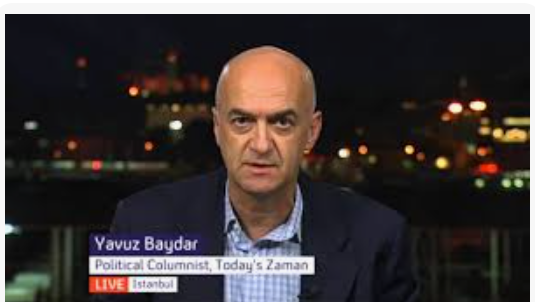
Yavuz Baydar: Peace Commission Report Is a Blueprint for “Neutralizing Opposition”
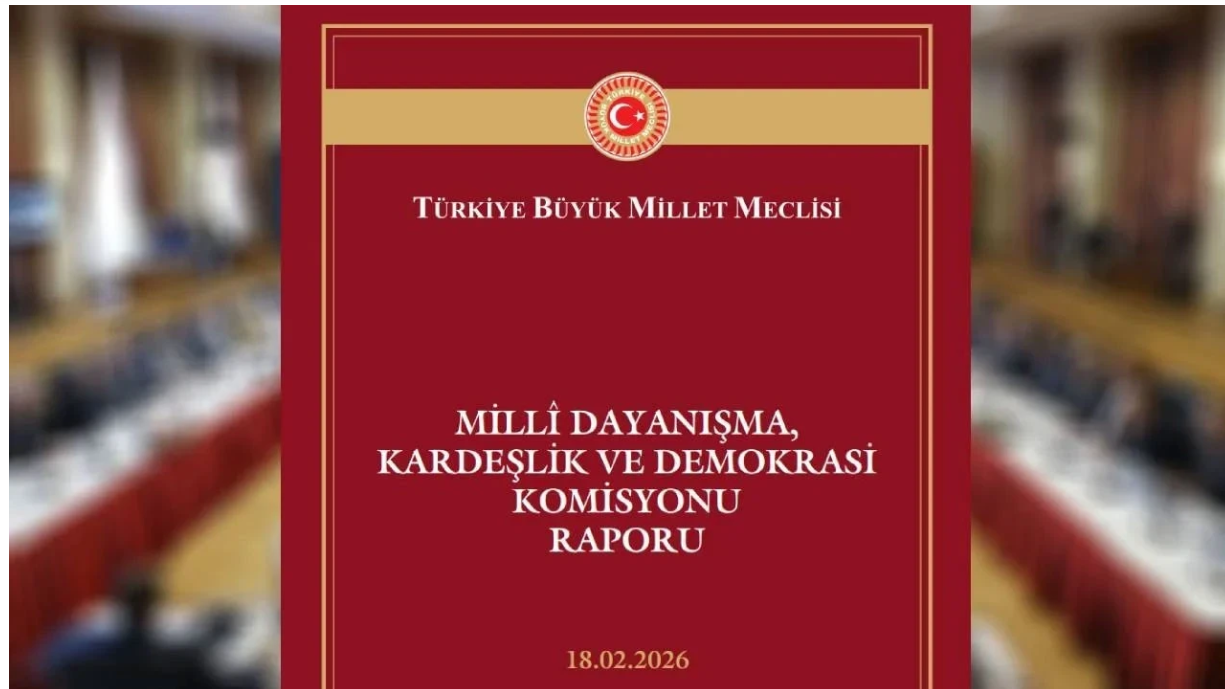 barış komisyonu raporu
A newly released 70-page “process report” by Turkey’s Peace Commission presents itself as a roadmap toward a “Terror-Free Turkey.” Veteran journalist Yavuz Baydar argues that it is, instead, a state-driven document designed to neutralize the opposition, avoid structural reforms, and recast the Kurdish question in vague language of “brotherhood” rather than enforceable rights. The report, he contends, signals not democratic deepening but a managed political consolidation ahead of constitutional change.
“State Policy,” Not Political Pluralism
The report opens with a telling line: the goal of a “Terror-Free Turkey” is not a temporary initiative but a matter of state policy. For Baydar, that framing defines the entire exercise. If the subject is the state, then political parties are relegated to a supporting role.
Opposition parties formally appended reservations to the document, yet ultimately endorsed it. The DEM Party objected to terminology such as “terror organization” and “terror scourge,” arguing that the report’s language is one-sided. Critics asked a simple question: if the core framing is objectionable, why approve it?
Baydar calls the episode a “tragic comedy,” noting that the commission itself is not established by a specific enabling law but functions as an ad-hoc body with deliberately ambiguous legitimacy.
Rhetoric Over Rights
The report repeatedly invokes “brotherhood” while largely avoiding direct references to Kurdish identity. Baydar stresses that “brotherhood” has no standing in domestic or international law; it is political rhetoric rather than a rights-based framework.
He highlights what the report does not address:
-
No constitutional status for the Kurdish language
-
No right to mother-tongue education
-
No meaningful strengthening of local governance
-
No mention of the removal of elected Kurdish mayors and the appointment of trustees
Human Rights Watch’s 2026 assessment warned that peace efforts lacking structural reform would remain fragile. Baydar argues the commission report sidesteps this warning.
Rule of Law and European Court Judgments
The report calls for full compliance with rulings of the European Court of Human Rights (ECHR). Yet as of August 2025, Turkey reportedly had over 21,000 pending cases before the Court—more than one-third of its total docket. Dozens of judgments in 2025 found violations in fair trial, liberty, expression, and assembly rights.
As of September 2025, more than 140 leading ECHR rulings remained unimplemented. Baydar notes that non-compliance is not a technical gap but a political choice.
He further questions the appointment of Justice Minister Akin Gürlek—associated with high-profile prosecutions of opposition figures—at the time of the report’s adoption.
“Turkey Model” Without Mechanisms
The report suggests the process could become known as a “Turkey Model.” Baydar contrasts this with international precedents:
-
The Belfast (Good Friday) Agreement in Northern Ireland recognized two equal founding communities and established independent monitoring bodies.
-
Spain amended its constitution to grant meaningful autonomy to the Basque region.
In contrast, the Turkish report leaves verification largely to security institutions, contains no independent oversight mechanism, and provides no role for international monitoring or structured civil society participation.
Amnesty and “Right to Hope”
The commission dismisses a general amnesty as “not on the table.” Baydar argues that without some form of amnesty, claims of “national solidarity” ring hollow.
The “Right to Hope”—derived from ECHR jurisprudence concerning life sentences—is framed by officials not as freedom but as conditional release based on good conduct. Baydar questions whether a government that has resisted implementing other ECHR rulings would change course now.
Political Realignment?
Baydar predicts that the DEM Party, drawn into the process, may find itself constrained by a timetable set by the governing alliance. He suggests that any future constitutional reform could depend heavily on negotiations involving imprisoned PKK leader Abdullah Öcalan.
At the same time, he sees signs of intensified pressure on the main opposition Republican People’s Party (CHP), including renewed legal proceedings and rhetoric that may aim to weaken it internally.
The broader objective, he argues, is the “neutralization” of two major opposition blocs—what he terms “de-opposition.”
Conclusion
Baydar concludes that hope alone is not an argument. Without concrete, measurable reforms—on language rights, political participation, local governance, and rule of law—the report risks becoming another rhetorical milestone rather than a transformative one.
Whether it marks the beginning of reconciliation or a recalibration of power will depend not on the language of solidarity, he suggests, but on institutional change.
PA Turkey intends to inform Turkey watchers with diverse views and opinions. Articles in our website may not necessarily represent the view of our editorial board or count as endorsement.
Follow our English YouTube channel (REAL TURKEY):
https://www.youtube.com/channel/UCKpFJB4GFiNkhmpVZQ_d9Rg
Twitter: @AtillaEng
Facebook: Real Turkey Channel: https://www.facebook.com/realturkeychannel/
Related articles
Columnist Deniz Zeyrek: What is next in the Peace Process (with Kurds)?
Soner Cagaptay: Kurdish Actors in Erdogan’s Drive to Solve the Terrorism Threat
Opposition party leader Kılıçdaroğlu promises to bring back Istanbul Convention