What the Iran War Means for Türkiye: Inflation, Energy Risks and Geopolitics
 tr iran
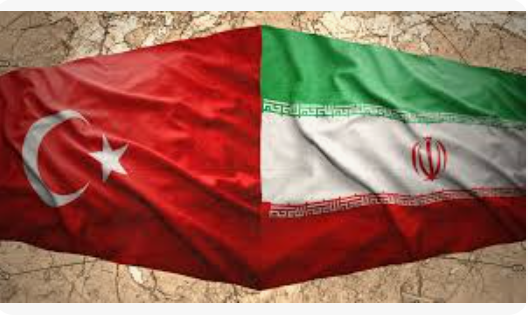
The escalating war involving Iran could have major economic and geopolitical consequences for Türkiye. A prolonged conflict risks triggering higher inflation, widening the current account deficit and slowing economic growth due to rising energy prices and regional instability. At the same time, the war is reshaping Ankara’s relations with Washington, NATO and Israel, particularly around the CAATSA sanctions dispute and the future of defense cooperation.
Author Guldem Atabay

Energy shock could widen Türkiye’s current account deficit
A prolonged conflict around Iran—especially if tanker traffic through the Strait of Hormuz is disrupted—could push oil prices above $100 per barrel, creating a significant energy shock for Türkiye.
Because Türkiye relies heavily on imported energy, higher oil prices would immediately increase the country’s import bill. According to economist Hakan Kara, a $10 increase in oil prices raises Türkiye’s current account deficit by roughly $7 billion when related energy costs are included.
This could significantly worsen Türkiye’s external balance.
The current account deficit, expected to reach about $35 billion by the end of this year, could rise to roughly $42 billion if oil prices remain around $83 per barrel. If prices exceed $100, the deficit could climb to $55–60 billion.
Such a shift would push the current account deficit to about 4% of GDP, well above the 2.3% forecast for 2026 and far higher than the 1.3% target outlined in the government’s Medium-Term Program (OVP).
The financing challenge is particularly sensitive. Last year’s $25.2 billion current account deficit required approximately $22 billion in central bank reserve usage, highlighting the vulnerability of Türkiye’s external financing position.
Inflation risks could intensify
Higher energy prices would also generate new inflationary pressure across the Turkish economy.
Energy costs feed directly into transportation expenses, industrial production costs and food prices. In an environment where inflation is already elevated, another surge in energy prices could derail the ongoing disinflation process.
Broad-based price increases could emerge particularly through:
-
transportation costs
-
food prices
-
manufacturing input costs
Under current projections, the official year-end inflation target stands at 16%, with forecasts ranging between 19–21%.
However, analysts argue that inflation above 30% could become more realistic if energy prices remain elevated.
If oil prices stay between $80–85 per barrel, Türkiye’s consumer inflation rate by the end of 2026 could reach 33–35%. If prices exceed $100, inflation could move toward 40%.
Pressure on the Turkish lira and interest rates
Rising energy imports would increase demand for foreign currency, placing additional pressure on the Turkish lira.
Higher inflation could also force authorities to allow faster currency depreciation, particularly if global financial conditions tighten.
If the U.S. Federal Reserve delays interest rate cuts and global risk sentiment deteriorates, the U.S. dollar index could strengthen further, adding to pressure on emerging market currencies.
Under these conditions, the USD/TRY exchange rate could move toward the 55–60 range by the end of 2026, according to some projections.
Monetary policy could also face new constraints. The Central Bank of the Republic of Türkiye (TCMB) may find it difficult to continue cutting interest rates.
Instead, policymakers could be forced to raise rates again to stabilize the currency and attract foreign capital.
Bond markets are already reflecting these concerns. Türkiye’s two-year government bond yield rose from 36.2% on February 25 to 37.6% by March 4.
Growth outlook could weaken
Economic growth could also suffer if the conflict persists.
One of the sectors most exposed to regional instability is tourism, which represents a major source of foreign currency income for Türkiye.
At the same time, higher inflation, rising interest rates, weaker domestic demand and declining exports could all weigh on economic activity.
Türkiye’s Medium-Term Program projects 3.8% growth, while market expectations currently hover around 4–4.1%.
However, in a prolonged conflict scenario, economic growth could fall to between 1% and 2.5%, depending on how the war affects energy prices and investor sentiment.
Natural gas supply risks
Another critical concern for Türkiye is natural gas supply from Iran.
Türkiye imports gas from Iran via pipeline. If the conflict expands or damages Iran’s energy infrastructure, gas flows could be disrupted.
In such a scenario, Türkiye would likely need to increase liquefied natural gas (LNG) imports.
However, global LNG markets are already tightening due to production disruptions in Qatar and rising demand in Asia. This could significantly raise Türkiye’s natural gas import costs.
Despite this risk, analysts do not currently expect widespread production disruptions caused by gas shortages.
Missile incident highlights regional risks
Regional tensions have already reached Türkiye’s borders.
A piece of missile debris that fell near Dörtyol in Hatay province highlighted how close the conflict is to Turkish territory.
Available evidence suggests the missile was not aimed at Türkiye directly. According to reports citing sources in the Wall Street Journal, the intended target may have been Incirlik Air Base, a major NATO installation.
The missile was reportedly intercepted by NATO missile defense systems in the Eastern Mediterranean, and the debris that landed in Hatay was likely part of that interception.
Because the missile did not directly strike a Turkish target and its intended destination remains unclear, the incident is unlikely to trigger NATO’s Article 5 collective defense mechanism.
Ankara is therefore expected to handle the situation diplomatically rather than escalate tensions.
CAATSA sanctions and the F-35 dispute
The Iran war may also influence the broader strategic relationship between Türkiye and the United States.
Turkish Foreign Minister Hakan Fidan recently signaled that discussions about lifting CAATSA sanctions and resolving the long-standing F-35 fighter jet dispute may be re-entering the political agenda.
Türkiye was removed from the F-35 program after purchasing the Russian S-400 air defense system, triggering U.S. sanctions under the CAATSA framework during the final months of Donald Trump’s first presidency.
Although Ankara and Washington have maintained dialogue, the issue remains unresolved.
Fidan suggested that progress could be possible before the upcoming U.S. midterm elections, indicating that the political calendar in Washington may influence negotiations.
Israel factor complicates negotiations
A key complication in the CAATSA debate is Israel’s position.
Israel has traditionally sought to maintain its “Qualitative Military Edge” in the Middle East, meaning that neighboring countries should not acquire advanced military systems that could challenge Israeli technological superiority.
From Israel’s perspective, Türkiye’s potential return to the F-35 program or acquisition of similar capabilities could alter regional power balances.
Relations between Ankara and Tel Aviv have also been strained by tensions over the Gaza war, despite continued trade between the two countries.
As a result, Israel is widely seen as opposing steps that could strengthen Türkiye’s military capabilities.
Türkiye’s strategic importance for Washington
Despite these tensions, Türkiye remains strategically important for the United States.
As a NATO member bordering Iran, Türkiye occupies a crucial position in regional security architecture, energy routes and logistics corridors linking Europe, the Middle East and the Black Sea.
For Washington, a complete breakdown in relations with Ankara would complicate regional strategy at a time when the Iran war is already reshaping geopolitical dynamics.
This makes the future of Türkiye–U.S. defense cooperation, CAATSA sanctions and broader regional security arrangements one of the key strategic questions likely to unfold in the coming months.
Related articles

US Lawmaker Criticizes Türkiye’s F-16 Deployment to Northern Cyprus, Warns of Legal Consequences

Türkiye’s June Current Account Deficit Exceeds Forecast at $2.01B

Deutsche Bank/Onay: Türkiye’s Inflation Risks, Rate Cuts, and OVP Projections