What do Turkey’s Kurds think about Syria?
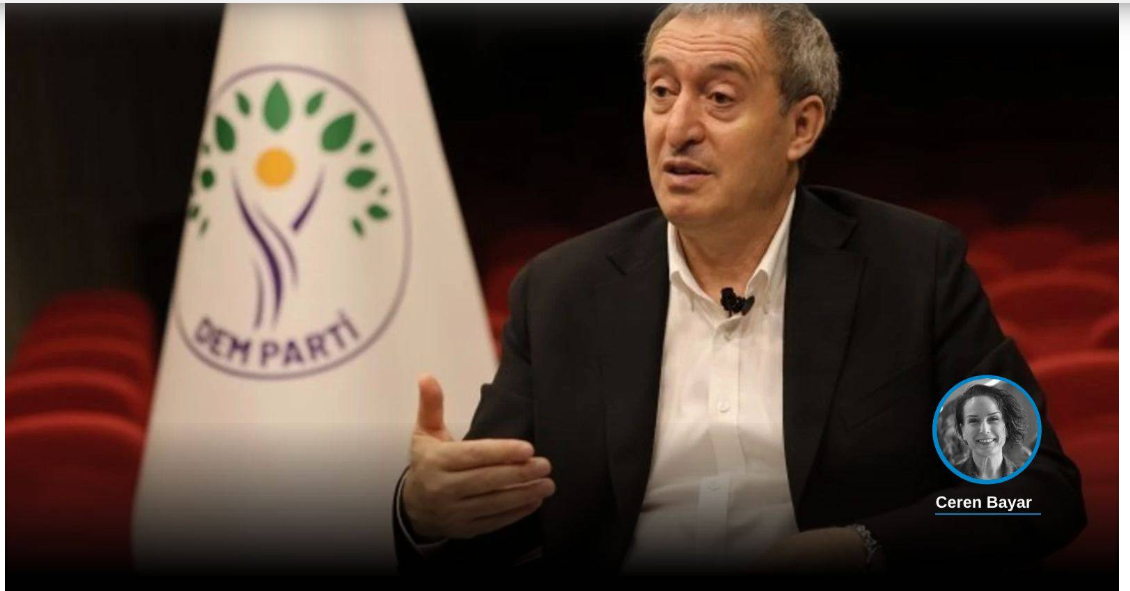 tuncer bakirhan
“Peace Cannot Be Built in Fragments”: Tuncer Bakırhan on the Kurdish Struggle in Syria and Turkey
As the geopolitical landscape of Northern Syria undergoes a seismic shift following the recent escalation in Aleppo and the surrounding regions, the implications for the Kurdish people—and Turkey’s own internal peace process—have moved to the center of political discourse. In an exclusive evaluation of these developments, DEM Party Co-Chair Tuncer Bakırhan describes the current situation not as an end, but as a critical “maneuver to manage the ship amidst a storm.”
Bakırhan’s insights provide a sobering look at how the military maneuvers in Syria are deeply intertwined with the “extended hand” of peace recently discussed in Ankara. His message is clear: the path to a democratic future in Turkey is inseparable from the status of Kurds in Syria.
The Myth of Failure: Kurdish Gains in Syria
While some analysts view the recent territorial shifts as a setback for Kurdish aspirations, Bakırhan argues that the reality is more permanent. “It is misleading to read gains solely through the results of battles,” he stated. “In Syria, Kurds have become permanent on their own land with their own identities. To belittle this achievement would be an injustice to the struggle carried out for years. The noise of war must not drown out the language of the negotiation table.”
He revealed that PKK leader Abdullah Öcalan had contact with Rojava prior to the recent clashes in Aleppo, emphasizing that the Kurdish movement remains a strategic actor despite the chaos. However, he noted that the recent ten days of conflict have impacted the Kurdish psyche more negatively than perhaps any other time in recent history, largely due to the perceived role of regional powers.
The Failure of the “March 10 Agreement”
Addressing the collapse of previous diplomatic frameworks, Bakırhan noted that the offensive on Aleppo effectively signaled the end of the March 10 Agreement. He described the accord as a “bitter experience” that left behind a memory of betrayal and violated promises.
“We do not know the full results of the talks in Damascus, but it is clear that a new, democratic agreement is needed—one that guarantees the political, administrative, cultural, and legal rights of the Kurds,” Bakırhan said. He argued that the previous status quo is no longer viable and that any future stability in Syria must be built on the constitutional recognition of Kurdish identity.
Turkey’s Role: Support for HTS and Strategic Contradictions
One of the most stinging criticisms leveled by the DEM Party leader concerns Turkey’s current foreign policy. Bakırhan asserted that Turkey has provided military, diplomatic, and moral support for the attacks carried out by groups like Hayat Tahrir al-Sham (HTS).
“While MHP Leader Devlet Bahçeli spoke of Turkish-Kurdish strategic relations, we encountered a different reality in Syria,” Bakırhan observed. “The government has positioned itself against the Kurds by developing a strategic relationship with HTS. This mindset seeks only to find ‘fuel’ for Kurdish animosity, and today, that fuel is the attack on Kurdish neighborhoods in Aleppo.”
He responded directly to ruling party spokesperson Ömer Çelik, who recently accused the Syrian Democratic Forces (SDF) of attempting to “strike” the peace process. Bakırhan countered: “The strike against the process does not come from Kurds defending their land; it comes from those who cheered and encouraged Salafist groups as they attacked Kurdish neighborhoods.”
The Link Between Ankara and Rojava
The core of Bakırhan’s argument lies in the “unity of peace.” He warns that the Turkish government’s attempts to separate its domestic “Peace and Democratic Society Process” from its Syrian policy are doomed to fail. He argued that the excuses used by the government to delay democratic reforms—often citing Syrian instability—have now been exhausted.
“A hand extended in Ankara cannot turn into a fist in Syria,” he warned. “Such a contradiction poisons the process. If Kurds attain constitutional rights in a democratic Syrian system, it provides the foundation for the ‘Democratic Republic’ vision in Turkey. When Kurds are equal components in both countries, the policies Turkey maintains under the name of ‘security’ will become meaningless.”
A Warning to the Opposition
Bakırhan also directed a message toward Turkey’s broader opposition parties, urging them to take a more active stance against the violence in Syria. He cautioned that silence today would lead to regret tomorrow.
“Those who remain silent regarding Syria today will be too late to object when they see the effects in Turkey tomorrow,” he said. He emphasized that the fight for secularism, decentralization, and the rule of law in Syria is directly linked to the survival of these values in Turkey.
The Emotional Break: A Crisis of Trust
Reflecting on his recent visits to cities like Kars, Bakırhan noted a profound “emotional rupture” among the Kurdish population. He described a sense of deep anger fueled by the sight of “victory celebrations” in Turkey over attacks on Kurdish areas in Syria.
“The government spokespeople are adopting a stance that will cause great wounds in Turkish-Kurdish relations,” he concluded. “They may say ‘we are not against Kurds,’ but they do not determine the truth. The truth is determined by how the Kurdish people interpret and feel these events. Whether on this side of the border or that, a Kurd is a Kurd. Peace is not a stance you change by looking at a map; it is a moral and political choice that requires consistency.”
As Syria enters a new and uncertain chapter, Bakırhan’s words serve as a reminder that for the DEM Party, the “table of peace” must be large enough to cover the entire region, or it risks collapsing under the weight of its own contradictions.
PA Turkey intends to inform Turkey watchers with diverse views and opinions. Articles on our website may not necessarily represent the view of our editorial board or constitute endorsement.
Follow our English YouTube channel (REAL TURKEY): https://www.youtube.com/channel/UCKpFJB4GFiNkhmpVZQ_d9Rg
Twitter: @AtillaEng
Facebook: Real Turkey Channel: https://www.facebook.com/realturkeychannel/
Related articles

DEM Party Delegation Completes Political Meetings

Türkiye Claims SDG Is Backed by Israel as Fidan Threatens Military Force
Twin Incidents in Mersin and Diyarbakır Raise Fears of Renewed Political Provocation in Türkiye