Was Kürecik the Target? Questions Mount Over Iran’s Fourth Missile Attempt Toward Türkiye
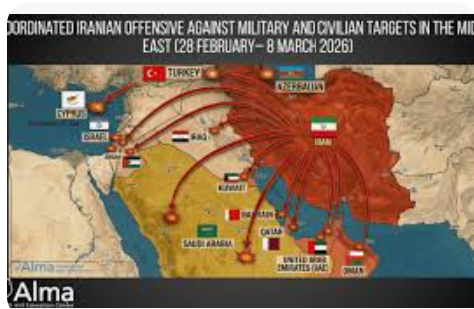 iran missile targets
As tensions between Iran, Israel, and the United States escalate, a fourth alleged missile launch toward Türkiye has raised new security concerns. While Iranian officials have not confirmed targeting Türkiye, Turkish authorities and NATO say the missile was intercepted mid-air. Analysts now suggest that the intended target may have been the strategically important Kürecik radar base.
Iran Denies Targeting Türkiye
Iranian officials have not publicly confirmed claims that a missile was fired toward Türkiye.
According to Iran’s state-affiliated Islamic Revolutionary Guard Corps (IRGC), missiles launched on Monday were aimed at:
- Command and control centers
- Drone facilities
- Locations used by U.S. and Israeli forces in the Middle East
No targets within Türkiye were mentioned in official Iranian statements.
Four Missile Attempts, All Intercepted
Since the outbreak of the Iran-Israel conflict on February 28, 2026, Turkish authorities say there have been four attempted missile launches from Iran toward Türkiye.
The NATO and Türkiye’s Ministry of National Defense report that all four missiles were successfully intercepted mid-air by NATO assets positioned in the Eastern Mediterranean.
The latest interception has drawn particular attention due to its trajectory and possible intended target.
Middle East Realignment: Turkey, Egypt and Pakistan Emerge as Key Players in US–Iran Diplomacy
Was Kürecik the Intended Target?
According to Sinan Burhan, Editor-in-Chief of Millethaber Agency, the fourth missile may have been aimed at the Kürecik radar base in eastern Türkiye.
Burhan’s assessment includes three key points:
- The missile was reportedly launched from western Iran
- It was intercepted over Malatya airspace
- The likely target is believed to have been the Kürecik facility
Kürecik hosts a critical early warning radar system that is part of NATO’s missile defense architecture, making it a high-value strategic asset.
Debate Over Türkiye’s Strategic Position
Burhan also addressed domestic debates regarding Türkiye’s geopolitical alignment.
He argued that framing Türkiye’s NATO role purely through an anti-American or “Eurasianist” lens is misleading, emphasizing that:
- Türkiye acts based on its national interests
- It is a decision-making power within NATO
- Security cooperation should not be reduced to ideological narratives
He also noted that discussions about a NATO-related command structure in Adana predate the current conflict and should not be directly linked to the ongoing war.
Montreux Convention and Control of the Straits
The analysis further underscored Türkiye’s authority over the Turkish Straits under the Montreux Convention.
Key points include:
- No NATO base or operational deployment exists in the Turkish Straits
- Türkiye retains full control over access and navigation
- Any military movement in the region is subject to Ankara’s approval
Turkey Walks a Tightrope as Iran War Escalates Across Region
Rising Risks, Unanswered Questions
While the missile was intercepted and no damage reported, the incident raises critical questions:
- Was Türkiye deliberately targeted?
- Are NATO assets in Türkiye becoming part of a broader conflict zone?
- Could further escalation draw Türkiye more directly into the crisis?
For now, the answers remain uncertain—but the risks are clearly rising.