“Wait Until the Dollar Hits 80”: Economist Selçuk Geçer Blasts Minister Şimşek’s Economic Narrative
 ekonomi devastation
ISTANBUL – Prominent Turkish economist Selçuk Geçer has issued a blistering critique of Treasury and Finance Minister Mehmet Şimşek, accusing the government of masking structural economic failures with geopolitical excuses. In a recent assessment of Turkey’s widening current account deficit, Geçer warned that unless the country breaks its “addiction” to imports, a massive currency devaluation is inevitable—projecting a potential climb of the US Dollar to the 80 TL mark.
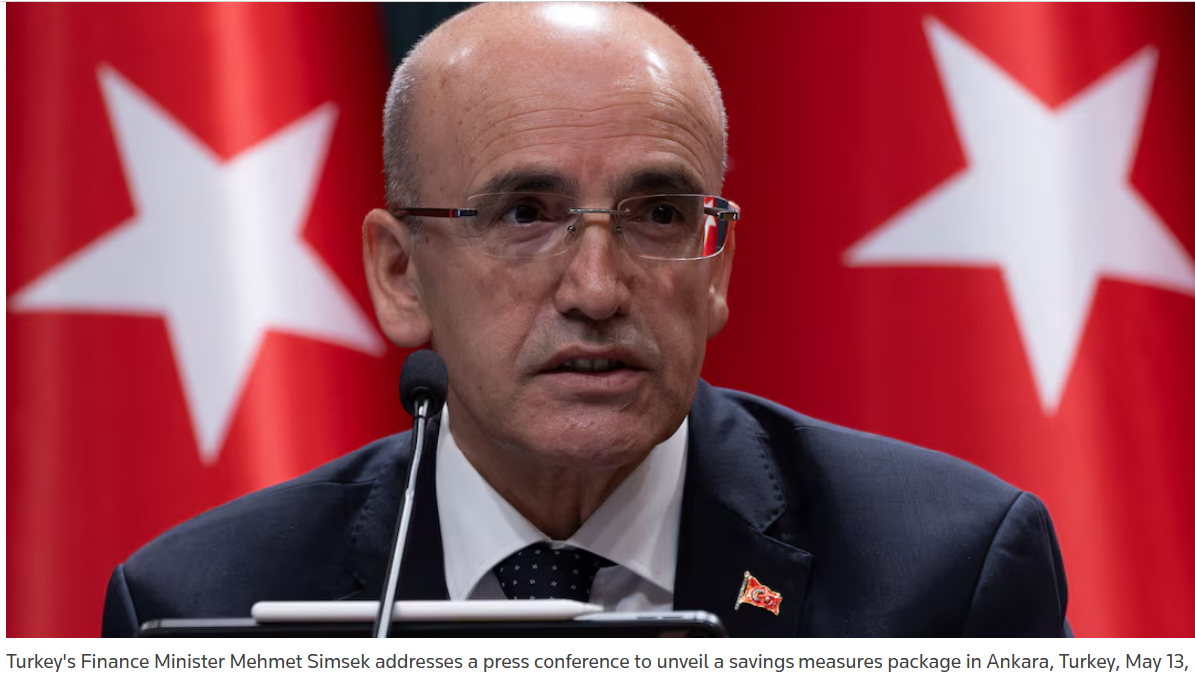
The row follows statements by Minister Şimşek, who attributed the recent rise in the current account deficit to surging energy prices driven by regional conflicts. Geçer, however, dismissed this justification as a diversion from the fundamental rot within Turkey’s production model.
Author Selcuk Gecer

The “Import Addiction” Trap
Geçer argues that Turkey’s economic woes are far older and deeper than any current war. He pointed out that the nation recorded a staggering $6.8 billion current account deficit in the first month of the year alone, long before recent energy spikes could be blamed.
“It’s as if Turkey didn’t have a deficit before the war,” Geçer remarked. He contends that the true driver of the deficit is not just oil or gas, but the fact that nearly every sector—from high-tech to basic sustenance—is tethered to foreign currency.
According to Geçer, the “monopoly of foreign goods” has reached a dangerous level:
-
Technology: Almost 100% of phones, computers, and electronics are imported.
-
Healthcare: Medicines, medical equipment, and even hospital infrastructure rely on foreign sourcing.
-
Agriculture: In a move he finds particularly egregious, Geçer noted that while tomatoes and peppers are grown in Turkey, the seeds, fertilizers, pesticides, and diesel required to produce them are all imported. “In essence,” he says, “the vegetables on your table are priced in foreign currency.”
CBRT Interest Rate Decision: Top Analysts Weigh In on Turkey’s Economic Path
Critique of the “Success Story”
The economist took direct aim at Minister Şimşek’s three-year tenure, alleging that the Minister has attempted to write a “success story” based on tax hikes, borrowing, and high interest rates rather than fixing the broken production engine.
“For three years, he has stifled the producer, the consumer, and the citizen,” Geçer stated. He accused the government of using “showcase” inflation data from the Turkish Statistical Institute (TÜİK) to pretend the situation is under control. “The issue was never just interest rates; the issue is on the production side. With this mindset, the economy won’t recover—it will sink further.”
Geçer contrasted Turkey’s situation with those of Russia and Ukraine. He noted that despite being actively at war, these nations have managed their trade balances more effectively because they do not suffer from the same level of systemic import dependency as Turkey.
The 80 TL Warning: “A Real Fire”
The most alarming part of Geçer’s analysis remains his forecast for the Turkish Lira. He argues that the current pressure on the exchange rate is a direct result of the need for foreign currency to keep factories running—factories that import their raw materials, intermediate goods, and even machinery.
He warns that the current economic model is a “lack of model” that leaves Turkey vulnerable to every global tremor. If the structural shift toward a “National and Planned Mixed Economy” is not made—prioritizing local seeds, local energy, and local raw materials—the currency will eventually find its “true value.”
“I hope the exchange rate doesn’t explode,” Geçer warned. “But if the dollar reaches its rightful place at 80 Lira, then you will see the true state of the markets. That is when the real fire starts.”
Geçer concluded by calling for a return to the economic principles of the early Republican era, advocating for a “National Production” model to break the cycle of debt and dependency. Without such a transformation, he believes Turkey will remain trapped in a loop of chronic deficits and increasing poverty, regardless of whether global energy prices rise or fall.
ANALYSIS: Current Account Deficit Widens and Reserves Dip, but Financing Remains Abundant