



US Ambassador to Turkey in Epstein Message Bombshell
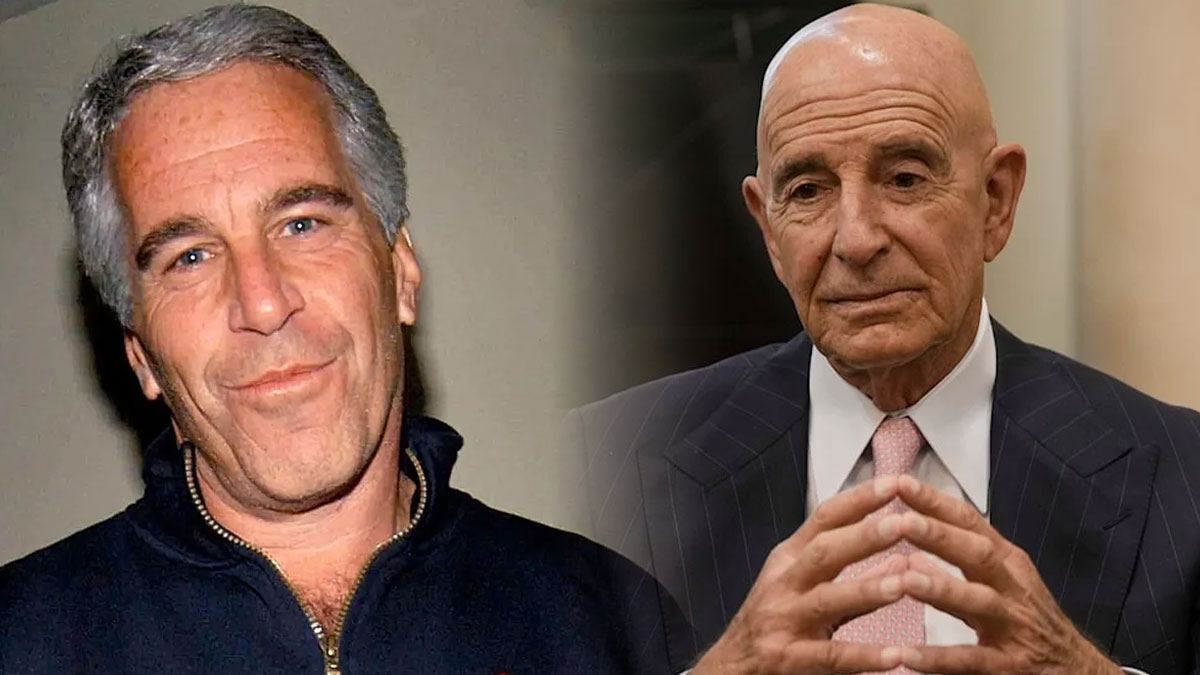 Epstein-barrack
Newly released files from the U.S. Department of Justice have brought renewed scrutiny to Tom Barrack, who is currently serving as the U.S. Ambassador to Turkey in Ankara. The documents reveal that Barrack maintained contact with convicted financier Jeffrey Epstein for years after Epstein’s 2008 conviction.
The materials, reviewed by CBS News, include more than 100 text messages and email exchanges. While the records do not show that Barrack was involved in or aware of Epstein’s criminal conduct, they offer a detailed look at how Epstein maintained relationships within elite political and financial networks long after his legal downfall.
Messages Continued Years After 2008 Conviction
The correspondence shows that communication between Barrack and Epstein extended well beyond 2008, continuing into politically sensitive periods, including the 2016 U.S. presidential campaign.
In a 2011 email cited in the files, Barrack wrote to Epstein, “I will not rest until you hire me as your servant. How is my role model?” In another message, he stated, “It won’t happen until you hire me as your servant. Who is my role model?”
Although the tone of these messages appears informal, their resurfacing has drawn attention, given Epstein’s criminal record at the time. The exchanges also reveal that Epstein encouraged Barrack to use encrypted platforms such as Signal for communication, a detail that has intensified public interest in the nature of their contact.
Alleged Attempt to Reach Trump
The documents suggest that Epstein viewed Barrack as a potential channel to then-presidential candidate Donald Trump. Emails show Epstein sending Barrack information related to legal challenges facing Trump during the 2016 campaign.
However, the available records indicate no proof that Barrack forwarded Epstein’s notes to Trump. The communications appear one-sided, with Epstein positioning himself as a source of political intelligence rather than as a confirmed intermediary with direct access to campaign leadership.
At the time, Barrack was deeply embedded in Trump’s political circle. He played an active role during the 2016 campaign and later chaired the presidential inauguration committee. His influence within fundraising and diplomatic networks made him one of the most visible business figures aligned with Trump’s first administration.
Introductions to Global Power Figures
Beyond political matters, the correspondence highlights Epstein’s role in facilitating introductions between Barrack and internationally prominent individuals. Among those referenced are Peter Thiel, co-founder of Palantir; Ehud Barak, former Prime Minister of Israel; and Vitaly Churkin, Russia’s former Ambassador to the United Nations.
The records suggest that Epstein sought to remain connected to influential figures across technology, diplomacy, and finance. In 2010, he proposed arranging a meeting in New York between Tom Barrack and Prince Andrew. Two years later, correspondence referenced plans to sell Epstein’s New York mansion to Hamad bin Jassim bin Jaber Al Thani, Qatar’s former prime minister.
These details reinforce the view that Epstein strategically leveraged high-level connections to reestablish credibility and maintain influence after his conviction.
Barrack’s Legal History and Current Role in Turkey
Barrack, now 78, has faced legal scrutiny in the past. In 2022, he was acquitted of charges alleging that he conducted undisclosed lobbying on behalf of the United Arab Emirates during Trump’s first term. A jury cleared him of acting as an unregistered foreign agent.
Despite that case, Barrack returned to a senior diplomatic role during Trump’s second term. As of early 2026, he serves as U.S. Ambassador to Turkey and Special Envoy for Syria, positions that place him at the center of regional diplomacy in Ankara and the broader Middle East.
The Justice Department documents do not accuse Barrack of participating in Epstein’s crimes or having knowledge of them. Instead, they illustrate how Epstein maintained contact with powerful individuals across political and financial spheres even after his conviction.
Strategic Networking Under the Spotlight
The broader significance of these revelations lies in the durability of elite networks. The documents suggest that Epstein viewed Barrack as a strategic connection—someone positioned within political and diplomatic circles who could potentially expand access to decision-makers.
At the same time, the absence of direct evidence linking Barrack to criminal activity remains central to understanding the scope of the disclosures. The communications highlight association, not complicity.
For Turkey, the issue carries added relevance given Barrack’s current diplomatic post in Ankara. As the story unfolds, attention is likely to remain focused on how past relationships intersect with present public office and international representation.