Türkiye Opposes Greece’s Chevron Deal Offshore Crete Amidst Improving Relations
 tr greece offshore drilling
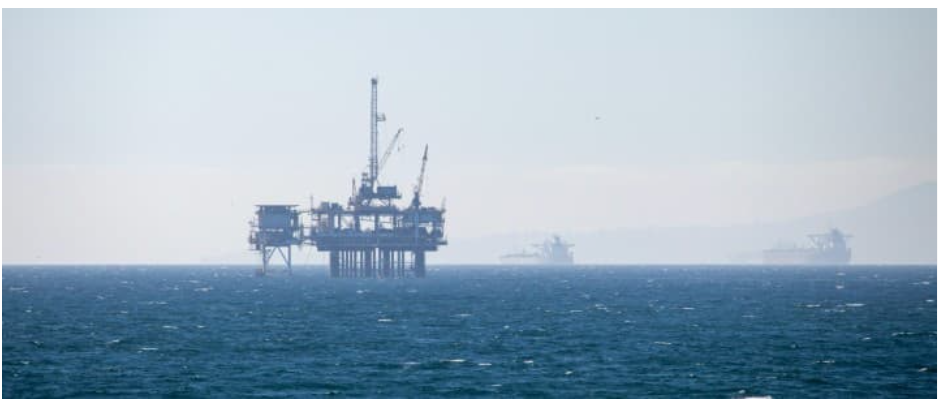
Türkiye sharply criticized Greece’s decision to sign lease agreements with a consortium led by Chevron for hydrocarbon exploration south of Crete.
The Turkish Defense Ministry said Athens’ “unilateral activities” violated international law and good neighborly relations, even if they do not directly affect Türkiye’s declared maritime jurisdiction areas.
Greece this week signed four offshore exploration contracts with Chevron and Greek energy company Helleniq Energy, covering blocks south of Crete and the Peloponnese with a total area of approximately 47,000 square kilometers. The move effectively doubles the maritime area Greece has opened for exploration.
Chevron joins ExxonMobil, which expanded its Greek offshore presence in late 2025, increasing U.S. energy involvement in the Eastern Mediterranean.
Ankara’s objections are rooted in the 2019 maritime delimitation agreement it signed with Libya, which Greece rejected on the grounds that it ignored Crete’s presence between the Turkish and Libyan coasts. Türkiye maintains that any energy activities contradicting that framework are unlawful.
Turkish officials have reiterated their support for Libyan authorities to challenge what they describe as Greece’s unilateral initiatives.
Maritime Disputes Resurface
Energy exploration in the Eastern Mediterranean has long been a flashpoint between Türkiye and Greece. Core disputes remain unresolved, including:
-
Maritime jurisdiction boundaries in the Aegean and Eastern Mediterranean
-
The legal status of certain Aegean islands
-
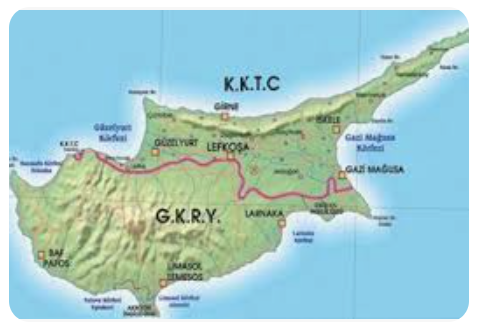
The Cyprus question
-
Greece’s right to extend its territorial waters to 12 nautical miles
Türkiye has previously declared that a unilateral 12-nautical-mile extension in the Aegean would constitute a casus belli, underscoring how sensitive these maritime questions remain.
The Crete offshore deal revives familiar tensions, even as both sides publicly emphasize dialogue.
High-Level Diplomacy Signals Managed Tensions
Despite renewed friction over exploration rights, recent diplomatic engagement suggests that both governments are seeking to prevent escalation.
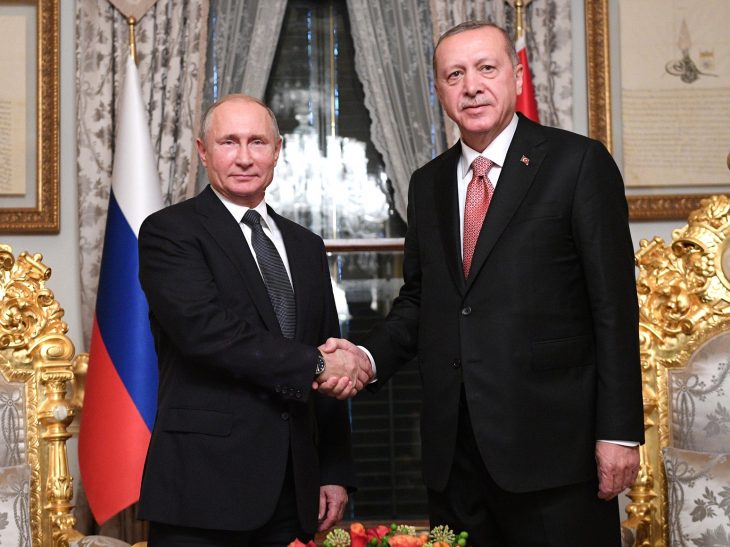
Last week, President Recep Tayyip Erdoğan hosted Greek Prime Minister Kyriakos Mitsotakis in Ankara for the sixth Türkiye-Greece High-Level Cooperation Council meeting.
The meeting produced agreements focused on trade, transport, tourism and energy connectivity. Both leaders projected a tone of calm pragmatism.
Notably, contentious issues were largely left unspoken during public remarks. Instead of revisiting entrenched disputes, the emphasis was placed on expanding economic ties and reaching a bilateral trade target of $10 billion.
Observers note that this strategic ambiguity — acknowledging disagreements without publicly escalating them — marks a departure from previous cycles of rhetorical confrontation.
Economic Interdependence as Stabilizer
Greek Ambassador to the United Kingdom Yannis Tsaousis recently stated that roughly 95% of current engagement between Ankara and Athens centers on economic cooperation.
Trade, tourism flows, transportation links and energy interconnections have become the backbone of bilateral interaction. Rather than attempting comprehensive political settlements, both governments appear to be pursuing incremental confidence-building measures through economic channels.
Analysts suggest that this economic pragmatism is partly driven by domestic considerations.
In Greece, heightened media attention to Türkiye’s expanding defense industry and foreign policy activism has fueled public anxiety. Mitsotakis’ visit to Ankara — accompanied by senior ministers — was widely interpreted as a signal aimed at calming domestic tensions.
For Ankara, maintaining stability in the Aegean reduces foreign policy overload at a time when Türkiye is managing complex dynamics in the Middle East, the Black Sea and the Caucasus.
The NATO and U.S. Factor
The broader geopolitical context also shapes the current thaw.
As political scientist Gokhan Cinkara argues, U.S. diplomacy likely plays a quiet role in encouraging stability between two NATO allies amid regional volatility.
A calmer Aegean reduces internal friction within NATO’s southeastern flank and limits the risk of a hardened alignment among Greece, Israel and the Greek Cypriot administration that could sideline Ankara in Eastern Mediterranean energy politics.
At the same time, increased U.S. corporate involvement in Greek offshore exploration through Chevron and ExxonMobil adds a new layer of strategic complexity.
A Dual-Track Relationship
The current state of Türkiye-Greece relations reflects a dual-track approach:
-
On one track, maritime and sovereignty disputes remain structurally unresolved and prone to periodic flare-ups.
-
On the other, economic cooperation and diplomatic engagement continue to deepen.
The Crete exploration agreement illustrates how quickly dormant tensions can resurface. Yet the recent high-level meetings demonstrate that both sides are actively working to manage disagreements without allowing them to spiral into broader crises.
In the historical arc of Turkish-Greek relations — often marked by abrupt escalations — the ability to protest firmly while sustaining dialogue represents a measured shift.
Whether this balancing act can withstand renewed energy competition in the Eastern Mediterranean will depend on how both capitals navigate the interplay between legal claims, domestic politics and regional geopolitics.
PA Turkey commentary
Türkiye has strongly opposed Greece’s newly signed offshore exploration agreements with a Chevron-led consortium south of Crete, accusing Athens of unilateral actions that violate international law and undermine good neighborly relations. The dispute, rooted in longstanding maritime boundary disagreements and overlapping claims in the Eastern Mediterranean, revives familiar tensions between the two NATO allies.
At the same time, high-level diplomatic engagement between President Recep Tayyip Erdoğan and Greek Prime Minister Kyriakos Mitsotakis signals a parallel effort to compartmentalize disputes and expand economic cooperation. While maritime and Cyprus-related disagreements remain unresolved, both governments appear determined to prevent energy exploration tensions from derailing broader economic and diplomatic normalization.
Author: PA Turkey News Desk
PA Turkey intends to inform Turkey watchers with diverse views and opinions. Articles on our website may not necessarily represent the view of our editorial board or count as endorsement.
Follow our English YouTube channel (REAL TURKEY):
https://www.youtube.com/channel/UCKpFJB4GFiNkhmpVZQ_d9Rg
Twitter: @AtillaEng
Facebook: Real Turkey Channel: https://www.facebook.com/realturkeychannel/