Türkiye Faces Deepening Drought Crisis as Rainfall Hits 52-Year Low
 Görsel bulunamadı
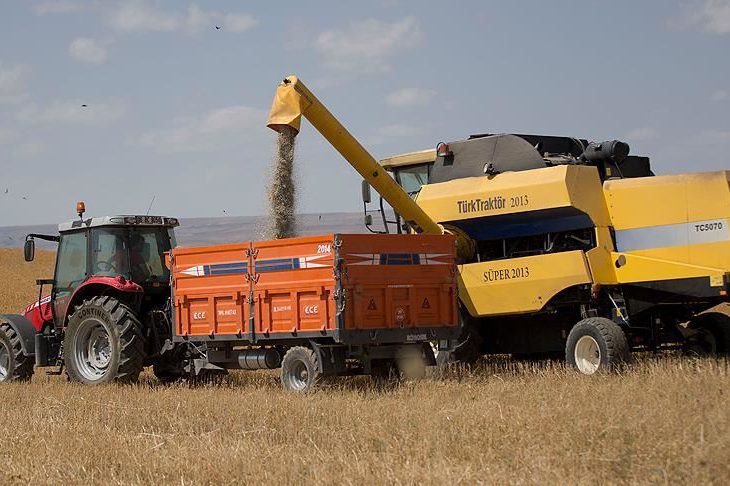
Türkiye is confronting a severe and increasingly structural drought crisis, with rainfall in 2025 falling to the lowest level in 52 years. The decline in water availability is already hitting agricultural production, driving down yields and raising concerns over food security. Experts warn that without comprehensive water management policies, the country risks entering a prolonged period of economic and environmental stress.
Rainfall drops to historic lows
According to the Turkish State Meteorological Service, total precipitation in 2025 fell to its lowest level in more than five decades.
This sharp decline underscores growing desertification risks and highlights the urgency of sustainable water management across the country.
Majority of Türkiye at risk of water deficit
Climate experts estimate that 60% to 70% of Türkiye’s territory consists of arid or semi-arid regions, already prone to water scarcity.
With climate change intensifying, drought conditions are expected to become more frequent and severe.
Irregular rainfall patterns and prolonged summer heat are further exacerbating water stress.
Agricultural output declines sharply
The impact of drought is increasingly visible in agricultural data.
According to official statistics:
- Total crop production fell to 68.1 million tons in 2025
- A loss of 11.4 million tons has been recorded over the past two years
Key crops have been particularly affected:
- Wheat production dropped from 22 million tons to 17.9 million tons
- Barley fell from 9.2 million tons to 6 million tons
- Lentil production declined by 41%
- Chickpeas dropped by 29%
Frost events worsen agricultural losses
In addition to drought, extreme weather events — particularly frost — have compounded the damage.
Experts report:
- Up to 70% losses in some fruit crops
- Significant declines across broader agricultural output
These temperature shocks are increasingly disrupting planting cycles and reducing yields.
Fruit and vegetable production also falls
Production declines are not limited to grains.
- Fruit output fell from 28.4 million tons to 19.6 million tons
- Vegetable production dropped by more than 300,000 tons
These reductions are linked to prolonged water stress and climate variability.
A “silent crisis” with long-term effects
Unlike sudden disasters, drought develops gradually, making it harder to detect in its early stages.
Experts describe it as a “silent crisis” that accumulates over time and eventually impacts:
- Food prices
- Agricultural incomes
- Household budgets
The delayed but widespread impact makes it particularly dangerous.
Farming patterns shift under water pressure
Drought is not only reducing yields but also reshaping agricultural practices.
As water scarcity intensifies:
- Irrigation costs are rising
- Farmers are shifting away from water-intensive crops
- Cultivated land is shrinking in some regions
Cotton production, for example, has declined by approximately 42% over the past three years, reflecting broader structural changes in agriculture.
COMMENTARY: Iran War Escalates Into Global Shock as Türkiye Faces Economic and Strategic Risks
Water management becomes critical policy issue
Experts stress that individual conservation efforts alone are insufficient.
Addressing drought requires integrated policy measures, including:
- Efficient agricultural irrigation systems
- Urban and industrial water management
- Reduction of water losses in infrastructure
- Development of alternative water sources
Without coordinated action, water scarcity risks becoming a persistent constraint on economic growth.
Major infrastructure investment launched
In response, a large-scale municipal infrastructure project has been launched across eight provinces in southern and southeastern Türkiye.
With a total budget of €367 million, the project aims to:
- Upgrade drinking water systems
- Reduce annual water losses by 22 million cubic meters
- Treat 12.5 million cubic meters of wastewater annually
Approximately 1.9 million people are expected to benefit from the improvements.
Euphrates Basin at center of strategy
The project focuses heavily on the Euphrates Basin, Türkiye’s largest and most strategically important water resource.
Enhancing infrastructure in this region is seen as key to improving resilience against climate change and ensuring long-term water security.
Related articles
Van Lake Retreats as Drought Deepens: Scientists Warn of Irreversible Change
Fires Break Out at Turkey’s Eber Lake as Drought Intensifies Environmental Risks
Türkiye Faces Drought Crisis, And It Is Worse Than It Looks