Türkiye Emerges as a Key Energy and Trade Corridor Amid Global Route Shifts
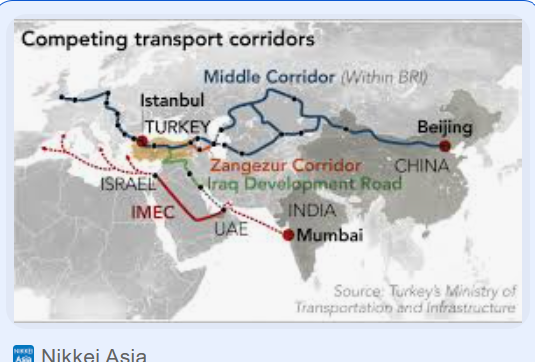 transport corridors
As the disruption in the Strait of Hormuz forces a rethink of global energy and trade routes, Türkiye is rapidly emerging as a critical transit hub. From oil pipelines to the Middle Corridor connecting Asia and Europe, Ankara’s strategic position is gaining renewed importance in a fragmented global system.
Hormuz Disruption Accelerates Search for Alternatives
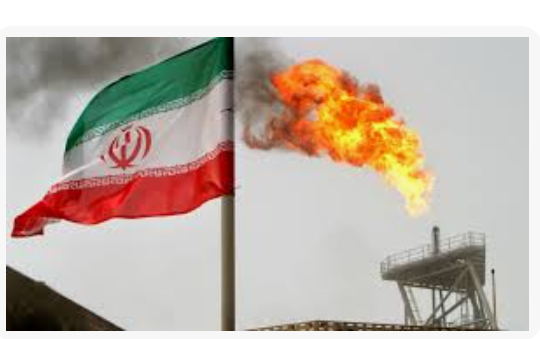
The ongoing conflict involving Iran has effectively constrained traffic through the Strait of Hormuz, a chokepoint for:
- ~20% of global oil and LNG flows
- Key energy supplies to Asia and Europe
This has triggered:
- Sharp increases in oil and gas prices
- Supply chain disruptions
- Urgent efforts to diversify transport routes
In this context, alternative corridors—both energy and logistics—are gaining prominence.
Türkiye Positioned as a Strategic Energy Hub
Türkiye is increasingly being viewed as a viable alternative route for energy flows.
Energy Minister Alparslan Bayraktar highlighted that:
- The Kirkuk–Ceyhan pipeline has a capacity of 1.5 million barrels per day
- It can play a key role in redirecting crude flows from northern Iraq to global markets
Additional proposals under discussion include:
Qatar–Türkiye–Europe Gas Pipeline
- Transport Qatari natural gas via pipeline to Türkiye
- Extend supply onward to European markets
This concept becomes particularly relevant if:
👉 LNG infrastructure is disrupted and Hormuz remains closed
LNG Supply More Fragile Than Oil
While oil has limited rerouting options, LNG remains highly dependent on Hormuz.
- Short-term alternatives are insufficient
- Redirection is operationally complex
This reinforces Türkiye’s role as:
👉 A complementary corridor for non-Hormuz energy flows into Europe
Middle Corridor Gains Strategic Momentum
Beyond energy, logistics routes are also being reshaped.
The Middle Corridor (Trans-Caspian Route) connects:
- China → Central Asia → South Caucasus → Türkiye → Europe
Key advantages:
- Bypasses Russia and Iran
- Faster than maritime routes
- Less exposed to geopolitical chokepoints
Recent developments have amplified its relevance:
- Red Sea disruptions
- Security risks in Bab el-Mandeb
- Delays via the Cape of Good Hope
👉 Result: The Middle Corridor is emerging as the most efficient East-West route
Türkiye as the Gateway to Europe
Türkiye is the final and most critical link in this corridor.
- Transit time: 12–18 days
- Cargo volumes have quadrupled since 2022
- World Bank projects 11 million tons by 2030
Türkiye’s role:
👉 Primary gateway for Asian goods entering Europe
Dual Advantage: Energy + Logistics
Türkiye’s strategic strength lies in combining two roles:
1. Energy Transit Hub
- Russian gas via TurkStream
- Iraqi oil via Ceyhan
- Potential Gulf gas pipelines
2. Logistics Backbone
- Expanding rail infrastructure
- Port capacity growth
- Istanbul Northern Rail Crossing Project (INRAIL) backed by $2 billion World Bank financing
South Caucasus Becomes Critical
Countries such as:
- Azerbaijan
- Georgia
- Armenia
are gaining importance as part of the corridor.
- Azerbaijan already supplies ~4% of Europe’s gas
- Target: 20 bcm by 2027
However, a key constraint remains:
👉 Regional stability
Global Competition Intensifies
The Middle Corridor is also a geopolitical arena:
- US-backed TRIPP project
- China’s Belt and Road investments
- EU diversification strategies
Türkiye’s position:
👉 A balancing power between competing global blocs
Expert View: A Medium-Term Strategic Alternative
According to Claudia Kemfert (German Institute for Economic Research):
- Prolonged Hormuz disruption will keep energy prices elevated
- Alternative pipelines lack sufficient capacity
- Türkiye cannot fully offset shocks in the short term
But:
👉 It can emerge as a critical medium-term energy corridor
Conclusion
The Hormuz crisis is not just an energy shock—it is reshaping global trade architecture.
In this evolving landscape:
- Energy security
- Supply diversification
- Trade efficiency
are becoming central priorities.
👉 Türkiye stands out as a strategic bridge between East and West, with rising influence in both energy transit and global logistics.
AA, DW, WS37