Türkiye, Egypt, Saudi Arabia align in Red Sea strategy as regional competition shifts
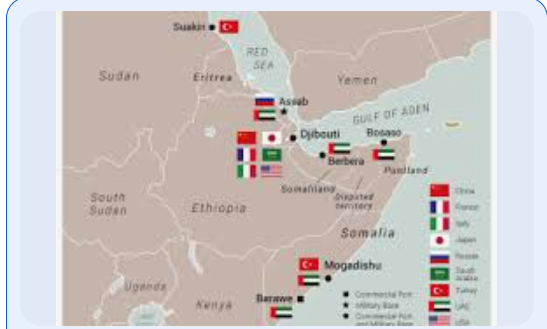 horn of africa
A growing alignment between Türkiye, Egypt, and Saudi Arabia in the Horn of Africa and Red Sea region is reshaping regional geopolitics. Rather than competing for influence, the three countries are increasingly coordinating policies on key crises such as Somalia and Sudan, signaling a shift toward pragmatic cooperation aimed at stabilizing one of the world’s most strategic and volatile regions.
Strategic region at the center of global competition
The Horn of Africa and the Red Sea basin have become critical geopolitical zones due to their role in global trade and energy routes.
This strategic positioning has:
- Intensified competition among regional and global powers
- Increased political instability and security risks
While some actors have contributed to fragmentation, others—particularly Türkiye—have pursued policies aimed at stability and development.
Türkiye shifts from competition to coordination
Ankara’s recent foreign policy approach prioritizes coordination over competition, especially with Cairo and Riyadh.
This strategy reflects:
- A focus on joint crisis management
- Efforts to align bilateral relations toward shared regional goals
The normalization of ties with Egypt and the strengthening of relations with Saudi Arabia have played a key role in enabling this shift.
Somalia emerges as a key cooperation arena
Somalia stands out as a central case of coordinated engagement.
The country continues to face:
- Weak state institutions
- Security challenges
- Political fragmentation
Türkiye has long supported the Somali government through:
- Military training
- Infrastructure investments
- Humanitarian assistance
Ankara’s policy emphasizes protecting Somalia’s territorial integrity and strengthening central authority.
Egypt aligns with Türkiye on Somalia
Egypt has recently adopted a similar stance on Somalia.
Cairo views:
- Ethiopia’s actions
- External recognition of Somaliland
as threats to Somalia’s sovereignty and regional stability.
This convergence has led to increasing coordination between Türkiye and Egypt, particularly in defending Somalia’s unity and countering destabilizing external influences.
Sudan crisis drives Türkiye–Saudi cooperation
A parallel dynamic is emerging in Sudan, where civil war has persisted for several years.
Türkiye has long sought to:
- Prevent further instability
- Mitigate humanitarian risks
Recent normalization between Ankara and Riyadh has enabled closer cooperation on Sudan.
Saudi Arabia, concerned about spillover risks across the Red Sea, has also intensified diplomatic efforts to contain the conflict.
Joint approach to prevent regional escalation
Türkiye and Saudi Arabia are increasingly working together to:
- De-escalate the Sudan conflict
- Prevent it from turning into a broader proxy war
Their coordinated approach combines:
- Diplomatic initiatives
- Engagement with regional actors
- Potential use of security tools if necessary
Egypt’s support further strengthens this emerging alignment.
From rivalry to pragmatic cooperation
The evolving Türkiye–Egypt–Saudi axis reflects a broader shift in regional politics.
Instead of competing for influence, the three countries are:
- Seeking common ground
- Managing overlapping interests
- Focusing on stability and development
This model demonstrates that even in a fragmented geopolitical environment, coordinated foreign policies can produce tangible outcomes.
Implications for regional stability
The new alignment could have several key effects:
- Reduce external interventions that fuel instability
- Strengthen state institutions in fragile countries
- Create a deterrent against actors pursuing destabilizing agendas
However, success will depend on:
- Continued political will among regional actors
- A shift away from zero-sum competition
- Inclusive engagement with local stakeholders
Conclusion
The emerging coordination between Türkiye, Egypt, and Saudi Arabia marks a significant shift in the geopolitical landscape of the Horn of Africa and the Red Sea.
By prioritizing cooperation over rivalry, these countries are attempting to reshape regional dynamics and address long-standing conflicts through coordinated strategies.
If sustained, this approach could lay the groundwork for a more stable and predictable regional order.
Source: Politics Today, excerpt
PA Turkey intends to inform Turkey watchers with diverse views and opinions. Articles in our website may not necessarily represent the view of our editorial board or count as endorsement.
Follow our English YouTube channel (REAL TURKEY):
https://www.youtube.com/channel/UCKpFJB4GFiNkhmpVZQ_d9Rg
Twitter: @AtillaEng
Facebook: Real Turkey Channel: https://www.facebook.com/realturkeychannel/