Türkiye and Syria Caught Between Alliances in Escalating Iran Conflict
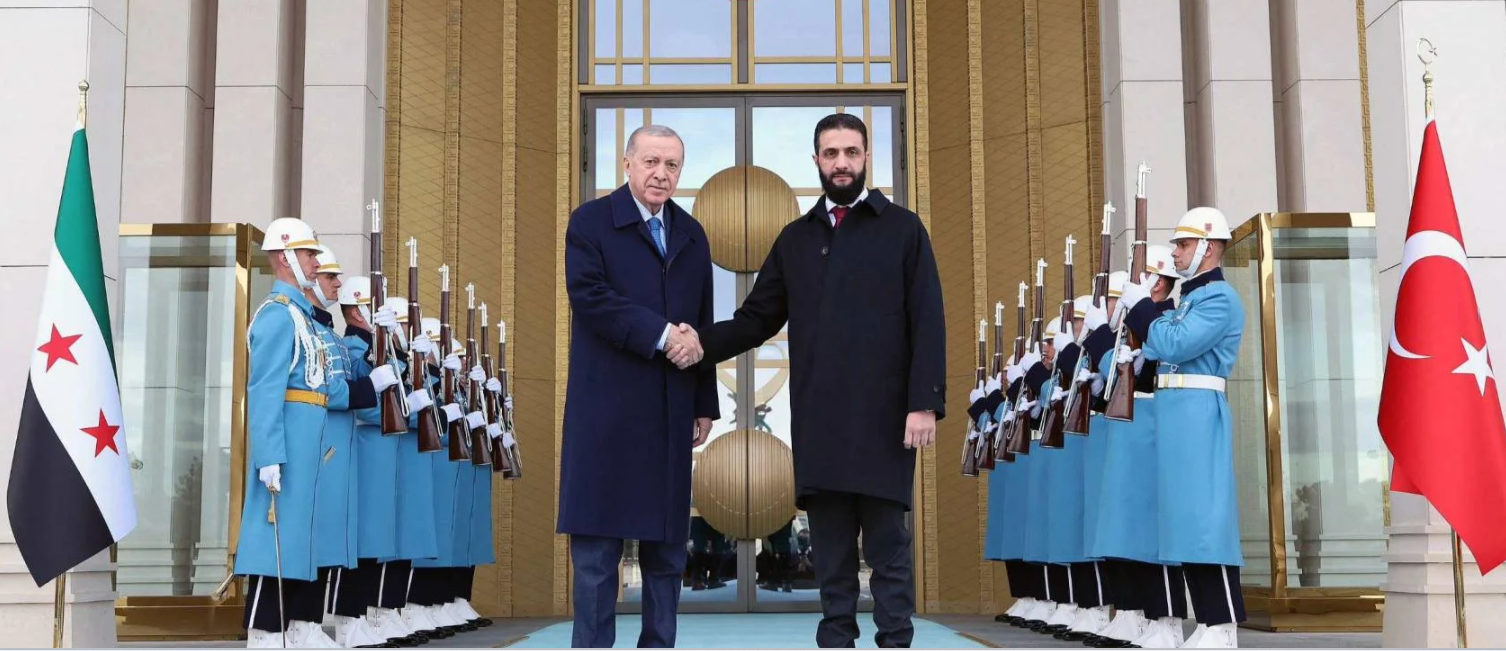 rte sharaa
The ongoing Iran war is placing both Türkiye and Syria in a complex geopolitical bind, forcing their leaders to balance domestic political pressures, regional rivalries, and evolving ties with the United States. While President Recep Tayyip Erdoğan and Syria’s new leader Ahmed al-Sharaa seek to avoid direct involvement, growing tensions, shifting alliances, and Kurdish dynamics threaten to pull both countries deeper into the conflict.
Erdoğan Walks a Delicate Geopolitical Tightrope
President Recep Tayyip Erdoğan used his Eid message to call for unity across the Islamic world, framing the Iran war as a broader regional challenge. The Turkish leader has long leveraged religious rhetoric and regional crises to consolidate domestic support, positioning himself as a defender of المسلمين and a critic of Western policies.
However, the current conflict presents a more complicated landscape.
Traditionally, Ankara has openly criticized Israel and the United States, both of which resonate with domestic sentiment. Iran, by contrast, represents a more nuanced relationship shaped by:
- Sectarian differences (Sunni Türkiye vs. Shia Iran)
- A shared border and migration routes
- Opposing roles in the Syrian civil war
This makes outright alignment in the current conflict politically risky.
War Tests Improving US-Türkiye Relations
Since Donald Trump’s return to the White House in 2025, relations between Ankara and Washington have improved significantly. Türkiye’s role in mediating the Ukraine conflict and ideological similarities between the two leaders have contributed to warmer ties.
Washington is now reportedly considering lifting sanctions imposed on Türkiye in 2020 over its purchase of Russian missile systems — a key objective for Ankara.
Yet, openly siding with the US in the Iran conflict would effectively place Türkiye alongside Israel, creating political discomfort for Erdoğan domestically.
Iran appears to be exploiting this tension. It has launched ballistic missile attacks toward the NATO base at Incirlik, near Adana — though the base has not been directly involved in the conflict. NATO’s Patriot systems intercepted the missiles, and additional defenses have since been deployed, deepening Türkiye’s reliance on Western security structures.
Syria’s New Leadership Faces Similar Constraints
In Damascus, President Ahmed al-Sharaa is navigating equally difficult terrain.
Following the fall of Bashar al-Assad, Syria has cut ties with Iran, which had previously used the country as a central hub for its regional military strategy. Iranian-backed militias and Revolutionary Guard units had played a major role during the civil war.
Despite limited sympathy for Iran among Syrians, there is also little appetite for another conflict.
At the same time, Sharaa depends heavily on the United States economically. After meeting Trump in May 2025, US sanctions on Syria were lifted, paving the way for reconstruction investments and energy deals critical to the country’s recovery.
Pressure from Washington Builds
The US is now pushing Syria to take a more active role in the conflict, including potential military operations against Hezbollah in Lebanon.
For Sharaa, however, such a move carries significant domestic risks:
- Syria remains officially at war with Israel
- Israel has expanded its control in the Golan region
- Public opinion strongly supports the Palestinian cause
Although quiet coordination channels exist between Syria and Israel under US mediation, any overt alliance would be politically explosive.
So far, Damascus has avoided direct involvement, but prolonged conflict could increase US pressure.
Kurdish Factor Emerges as Key Risk
For both Türkiye and Syria, the most sensitive issue remains the Kurdish question.
In Syria:
- The northeast remains under Kurdish control
- Kurdish groups are demanding autonomy
- Damascus seeks full territorial reintegration
In Türkiye:
- Erdoğan has initiated a fragile ceasefire with the PKK
- He is pursuing a potential political alliance with pro-Kurdish factions ahead of elections
This delicate balance could be disrupted if the US supports Kurdish forces in a broader campaign against Iran.
Such a scenario could:
- Reignite Kurdish militancy across the region
- Undermine Türkiye’s domestic reconciliation efforts
- Complicate Syria’s attempts to consolidate control
A Fragile Balance with High Stakes
Both Ankara and Damascus are attempting to avoid being drawn directly into the conflict while preserving strategic ties with Washington.
However, the situation remains fluid.
Key risks include:
- Escalation of US pressure on regional allies
- Expansion of the conflict to include non-state actors
- Renewed Kurdish mobilization
- Domestic political backlash from perceived alliances with Israel
The rapid collapse of the Assad regime demonstrated how quickly regional dynamics can shift. As the Iran conflict evolves, Türkiye and Syria may find their room for maneuver narrowing.
Source: Engelsberg Ideas (Hannah Lucinda Smith), excerpt
PA Turkey intends to inform Turkey watchers with diverse views and opinions. Articles in our website may not necessarily represent the view of our editorial board or count as endorsement.
Follow our English language YouTube videos @ REAL TURKEY: https://www.youtube.com/channel/UCKpFJB4GFiNkhmpVZQ_d9Rg
And content at Twitter: @AtillaEng
Facebook: Real Turkey Channel: https://www.facebook.com/realturkeychannel/***
Related articles
Will Türkiye Invade Iran? Kurdish Dynamics Could Shape Ankara’s Next Move

MARKET PREVIEW: Turkish Markets Brace for Volatility Amid Escalating Iran Conflict and Key Inflation Data

Morning Brief: Markets whipsawed by Iran war headlines as brief “Trump rally” fades