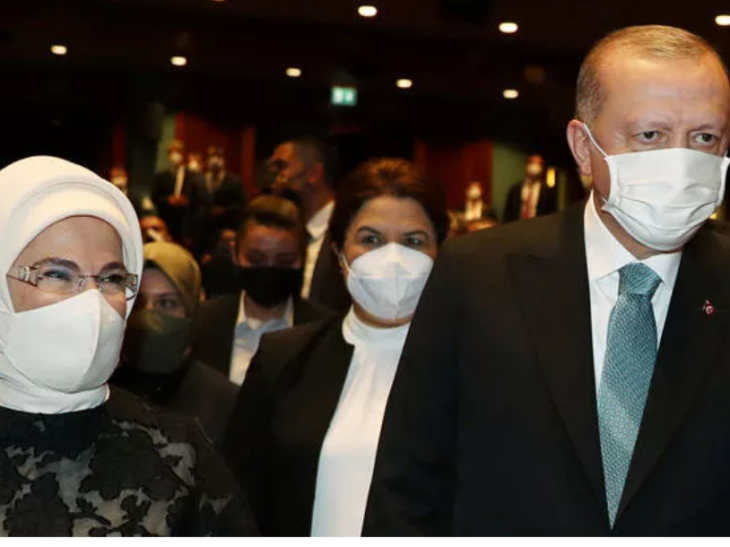
Turkish Politics in pollls: Fragmentation and the Succession Crisis
 anket ekonomi
ANKARA – As Turkey moves deeper into 2026, the political landscape is being redefined by a “two-party squeeze,” a fragmented nationalist base, and a brewing leadership battle within the ruling AK Party (AKP). Recent year-end data from December 2025 and new surveys from January 2026 suggest that while the CHP and AKP remain the dominant poles, neither side has a clear path to an absolute majority, leaving the electorate in a state of flux.
The Great Nationalist Fracture
A defining trend of 2026 is the dissolution of the once-solid nationalist blocs. According to strategic analyst Hatem Ete, the roughly 20% of the electorate that identified as “nationalist” is no longer consolidated within the MHP or IYI Party.
The vote is now split across four distinct directions:
-
The Ruling Bloc: Loyalists remaining with the MHP or moving toward the AKP.
-
The Opposition Bloc: Former IYI Party voters migrating to the CHP.
-
The Protest Vote: A surge toward the Victory Party (Zafer) and the newly formed Key Party (Anahtar Parti – A Parti).
Anahtar Parti, in particular, has emerged as a significant disruptor. By tapping into the “Z-generation” and disillusioned AKP-MHP voters, the party has crossed the 5% threshold in several polls, positioning itself as a potential kingmaker in future alliances.
The Succession Race: Fidan Leads, Bilal Trails
The question of “Who after Erdogan?” has moved from whispered speculation to public polling. A recent study by Refleks Data & Research asked voters who should lead the AKP after President Recep Tayyip Erdoğan. The results indicate a preference for “state experience” over “family lineage”:
| Candidate | Poll Share (%) |
| Hakan Fidan (Foreign Minister) | 33.4% |
| Süleyman Soylu (Former Interior Minister) | 32.5% |
| Bilal Erdoğan (President’s Son) | 14.2% |
| Selçuk Bayraktar (Baykar CTO/Son-in-law) | 12.9% |
Despite his high profile in civic foundations and recent massive rallies in Galata for Palestine, Bilal Erdoğan remains a distant third. Analysts suggest the AKP base is increasingly looking toward figures like Hakan Fidan, whose tenure as intelligence chief and top diplomat has earned him a reputation for “institutional stability.”
The Polling War: CHP vs. AKP
Two major polling firms, Gündemar and GENAR, released conflicting year-end results that highlight the razor-thin margin between the two leading parties:
-
Gündemar Research: Places the CHP at 34.3%, maintaining its lead as the first party, while the AKP trails at 29.7%.
-
GENAR: Conversely, GENAR puts the AKP at 33.7%, narrowly leading the CHP (32.1%).
Given the standard 2-point margin of error, the race for the top spot is effectively a dead heat. Notably, the MHP’s support has dipped as low as 4.38% in some surveys, suggesting that the “People’s Alliance” (AKP-MHP) is currently struggling to reach a combined 40%—a critical threshold for governing legitimacy.
Strategic Outlook: A Two-Party Hegemony?
Hatem Ete notes that Turkey has effectively settled into a two-party system. In direct preference polls, nearly 70% of voters (after distributing the undecideds) now cluster around the CHP and AKP. However, the collapse of smaller parties from the 2023 “Nation Alliance” (DEVA, Gelecek, Saadet) has left a void in the center, which new players like Anahtar Parti are eager to fill.
As the government continues to weigh the “Internal Peace Process” against security risks in Syria, these polling shifts will likely dictate whether Ankara moves toward a snap election or doubles down on its current trajectory.
Related articles
Erdogan’s former ally Davutoglu prepares opposition alliances in Turkey
Main opposition leader Ozel predicts early elections by end-2025
Yusuf Ziya Cömert: Who Undermined the Belief That “The Pious Are Good”?