



Turkish Official Optimistic on KAAN Engines Following High-Level Washington Talks
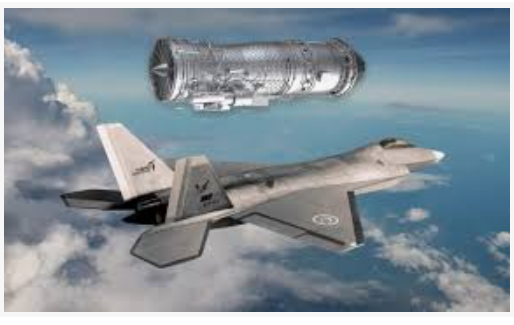 kaan motor
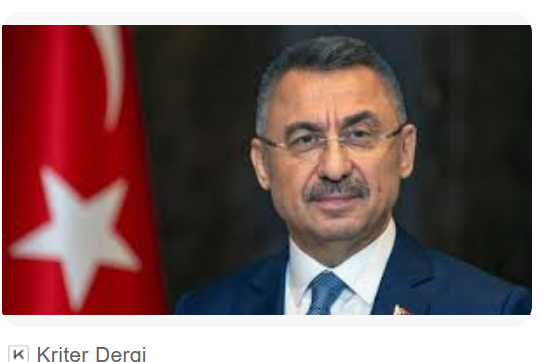
WASHINGTON, D.C. — In a significant pivot for Turkey’s fifth-generation fighter jet program, Fuat Oktay, Chairman of the Turkish Parliament’s Foreign Affairs Committee, has signaled a potential breakthrough regarding the supply of American engines for the KAAN aircraft. Speaking at the Turkish Embassy in Washington following a series of intensive meetings with the U.S. Congress, Oktay asserted that the procurement of General Electric F110 engines should be immune to the restrictive CAATSA (Countering America’s Adversaries Through Sanctions Act) framework.
The diplomatic mission, which included a bipartisan delegation of Turkish lawmakers, aimed to solidify the “positive atmosphere” currently shared by President Recep Tayyip Erdoğan and the Trump administration. While the F-16 modernization package has paved the way for improved defense ties, the KAAN’s engine requirements have remained a sensitive point of contention in the halls of Congress.
Decoupling KAAN from CAATSA
Oktay’s primary message to U.S. lawmakers focused on the legal distinction between the KAAN’s propulsion needs and the existing sanctions regime triggered by Turkey’s purchase of the Russian S-400 system.
“The main focus of our discussions was the KAAN engines—essentially the F110s, which are also used in F-16s,” Oktay told reporters. “We clearly stated that since these engines have no direct or indirect connection with CAATSA or other NDIA-related sanctions, we can develop this cooperation much faster and proceed on our path, potentially even acting jointly.”
The Chairman emphasized that while Turkey is aggressively pursuing its own indigenous engine project, which he estimates will be ready for full integration within three to five years, the immediate acquisition of F110 units is a matter of bilateral defense efficiency rather than a violation of existing sanctions.
A New Regional Doctrine: “Bilateral Ownership”
Beyond defense procurement, the talks covered a sweeping array of regional issues, with Oktay noting a “convergence of vision” between Ankara and the current U.S. administration. The discussions reflected a shift toward a “regional ownership” model, where local actors take the lead in resolving conflicts with U.S. backing, rather than direct American intervention.
-
Syria: Oktay highlighted a shared stance on strengthening Syria’s central government and ensuring territorial integrity. He noted that U.S. counterparts expressed interest in Turkey’s efforts to rebuild Syrian infrastructure, including banking, electricity, and water systems, to foster long-term stability.
-
The S-400 Impasse: Addressing the “elephant in the room,” Oktay reiterated that the S-400 purchase was a necessity born of the U.S. refusal to provide Patriot missiles. However, he noted that the dialogue has shifted from a political dispute to a “technical” one, with both governments actively working on a solution to resolve the security concerns and move past the sanctions.
-
Gaza and Regional Peace: The delegation detailed Turkey’s multifaceted role in Gaza, focusing on humanitarian aid and the potential for an international security force. Oktay noted that previous disagreements over Hamas were being addressed through transparent dialogue, with U.S. officials increasingly recognizing Turkey’s constructive contributions to the peace process.
Strengthening Parliamentary Ties
The visit appears to have successfully thawed some of the historical frostiness between the Turkish Parliament and the U.S. Congress. Brian Mast, Chairman of the House Foreign Affairs Subcommittee on Middle East, North Africa, and Central Asia, has reportedly expressed intent to lead a congressional delegation to Turkey later in 2026.
“We want to carry this positive agenda into the halls of Congress,” Oktay said. “We saw a positive feedback loop from figures like Jim Risch and Ryan Zinke. Our ambassadors and respective ministries will now follow up on these technical tracks.”
As Turkey continues to bridge the gap between its current reliance on U.S. aerospace technology and its future as an independent defense powerhouse, the outcome of these engine negotiations will serve as a litmus test for the “New Era” of U.S.-Turkey relations.
PA Turkey intends to inform Turkey watchers with diverse views and opinions. Articles in our website may not necessarily represent the view of our editorial board or count as endorsement.
Follow our English YouTube channel (REAL TURKEY):
https://www.youtube.com/channel/UCKpFJB4GFiNkhmpVZQ_d9Rg
Twitter: @AtillaEng
Facebook: Real Turkey Channel: https://www.facebook.com/realturkeychannel/