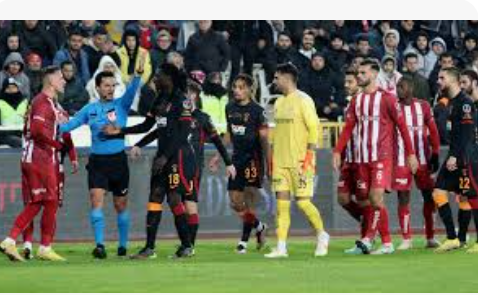
Turkish Football Shaken by Nationwide Raid: 32 Detained in High-Level Match-Fixing and Betting Probe
 futbol bahis
Turkish football faced a “Black Friday” as authorities launched a massive synchronized operation across 10 provinces, targeting club executives accused of orchestrating illegal betting schemes. The investigation, led by the Istanbul Chief Public Prosecutor’s Office, centers on a shocking betrayal of sports integrity: club officials allegedly betting against their own teams.
The operation, which targeted 33 suspects, resulted in 32 detentions as of Friday morning. With one suspect still at large, the scandal has sent shockwaves through the Turkish football pyramid, from the upper management of professional leagues to local associations.
The Betrayal: Betting on the Opponent
According to the Prosecutor’s statement, the suspects are charged with violating Article 11 of Law No. 6222 (Prevention of Violence and Disorder in Sports), which explicitly covers match-fixing and incentive premiums.
The most damning evidence involves digital forensic analysis of betting accounts. Investigators discovered that several high-ranking club executives had active profiles used to place significant wagers. In a direct conflict of interest and an act of sporting fraud, these officials were found to be betting on the rival team’s victory during matches where their own clubs were competing.
Context: A Mounting Crackdown on Sports Crime
Today’s raids are not an isolated event but the climax of a months-long pressure campaign by the Turkish Ministry of Interior and the judiciary to clean up the multi-billion dollar illegal betting industry.
-
Previous Raids: Between late 2025 and early 2026, several club facilities in Anatolia and Istanbul were raided. At the time, authorities seized computers and financial ledgers following tips regarding money laundering and unlicensed sponsorship deals.
-
The “Phenomenon” Link: The probe initially gained momentum through a crackdown on social media influencers promoting illegal gambling sites. These investigations eventually led “upstream” to professional football executives who allegedly utilized these illicit financial networks to manage club debts or personal enrichment.
-
Structural Fragility: Many lower-tier Turkish clubs have struggled with high debt levels in 2026, creating a vacuum where illegal betting syndicates could offer “quick fixes” to executives in exchange for influence over match outcomes.
Analysis: A Shift in the Nature of Corruption
Unlike the infamous match-fixing scandals of 2011, which focused primarily on league standings and championships, the 2026 probe highlights a commercialization of corruption.
1. Institutional Betrayal: When an executive bets against their own team, the corruption is no longer about winning a trophy; it is about maximizing financial gain from a loss. This undermines the very foundation of the “fair play” concept that fans and sponsors rely on.
2. Legal Repercussions: By invoking Law 6222, the judiciary is signaling that this will not be settled with mere administrative fines or bans from the Turkish Football Federation (TFF). Suspects face significant prison sentences under the “Match-Fixing and Incentive Premium” clause.
3. Economic Impact: As the TFF seeks to increase the value of broadcasting rights and international sponsorships, a scandal of this magnitude—reaching into the boardroom—risks deterring global investors and damaging the “Century of Turkey” branding in sports.
PA Turkey news desk