Turkish FM Claims Mossad Is Fueling Iran Protests to Push Region Toward Conflict
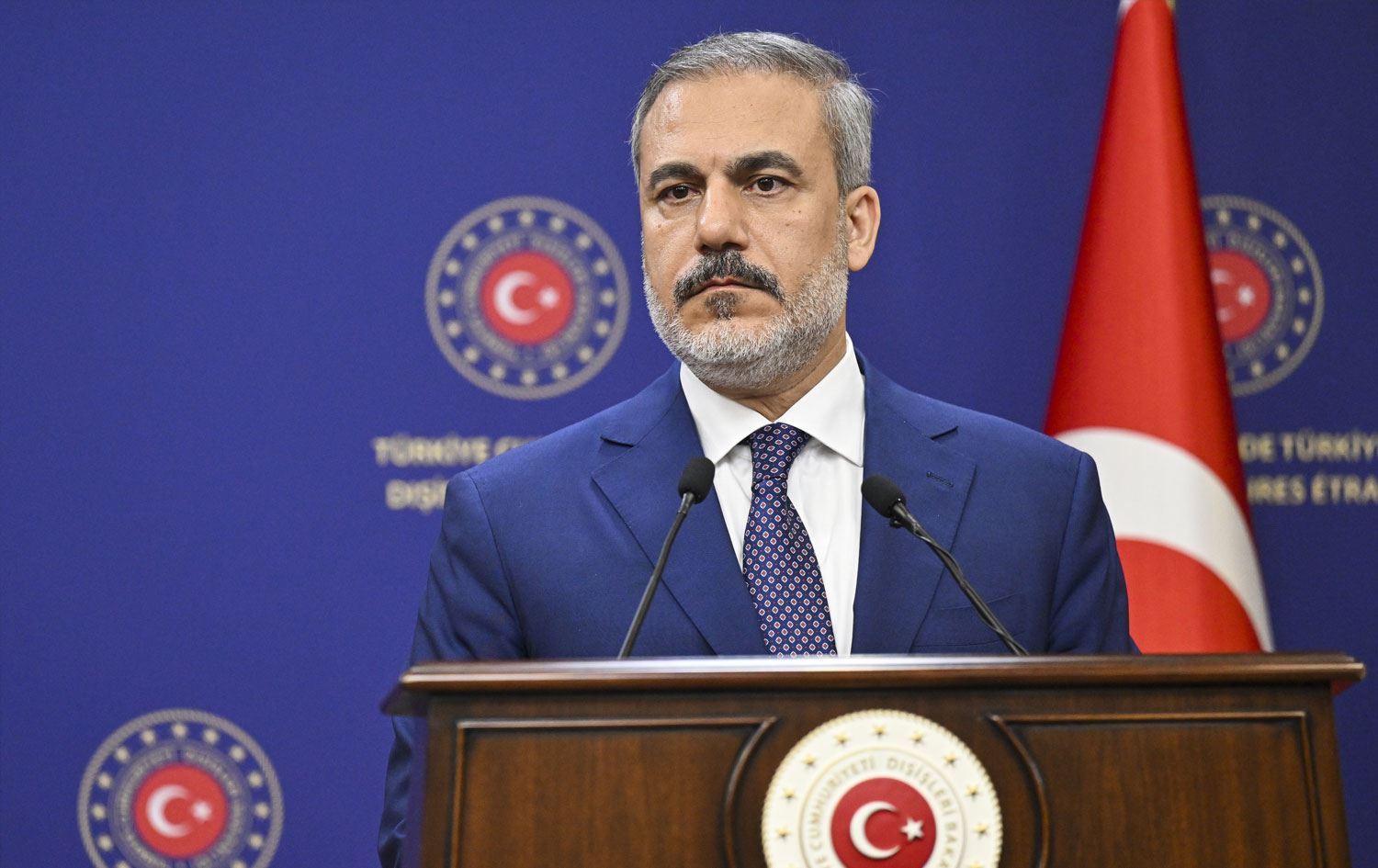 Hakan Fidan
Turkey’s Foreign Minister Hakan Fidan has accused Israel’s intelligence agency, Mossad, of actively encouraging and exploiting protests in Iran as part of a broader strategy to destabilize the country and drag the wider Middle East into prolonged conflict. Speaking in a televised interview on Saturday, Fidan argued that Israel is openly intervening in Iran’s internal affairs and using social unrest as a geopolitical tool rather than operating through covert means.
According to Fidan, the protests currently unfolding across Iran are not only the result of domestic economic and social pressures but are also being deliberately amplified by external actors. He claimed that Israel, under Prime Minister Benjamin Netanyahu’s leadership, sees Iran’s internal instability as an opportunity to weaken a key regional rival and reshape the balance of power in the Middle East.
Allegations of Open Intelligence Involvement
In his remarks, Fidan stated that Israel’s intelligence activities are no longer hidden or deniable. He asserted that Mossad is openly calling for regime change in Iran, particularly through digital platforms and social media channels.
“The Mossad is not hiding this,” Fidan said. “They are calling on the Iranian people to rise up against the regime through their internet and Twitter accounts.” He suggested that such actions go beyond traditional intelligence gathering and represent a direct attempt to influence public sentiment and political outcomes inside Iran.
Fidan’s comments imply that Israel is leveraging modern communication tools to reach Iranian citizens directly, encouraging dissent and resistance during a period of heightened economic hardship and public dissatisfaction. He framed this approach as part of a calculated campaign rather than spontaneous commentary or isolated online activity.
Israel’s Alleged Strategy Toward Iran
Throughout the interview, the Turkish foreign minister repeatedly accused Israel of pursuing a long-term strategy aimed at destabilizing Iran internally instead of engaging in direct military confrontation. According to Fidan, Israel views Iran’s economic difficulties, inflation, and public frustration as vulnerabilities that can be exploited to weaken the Islamic Republic from within.
He argued that this approach aligns with what he described as Prime Minister Netanyahu’s broader regional ambitions. In Fidan’s view, Israel is seeking to provoke instability that could spill across borders, increasing the likelihood of regional confrontation involving multiple actors.
Fidan warned that such policies risk pushing the Middle East into deeper chaos, stating that manipulating internal protests in a major regional power like Iran could have consequences far beyond its borders. He suggested that escalating tensions through indirect means may ultimately be more dangerous than open diplomacy or conventional military deterrence.
Regional Tensions and Broader Implications
The accusations come at a time of heightened instability across the Middle East, with conflicts, proxy confrontations, and political crises overlapping in several countries. Iran’s internal protests, driven largely by economic grievances and currency depreciation, have already drawn international attention. Fidan’s remarks add another layer to the narrative by placing the unrest within the context of regional power struggles and intelligence operations.
From Ankara’s perspective, the foreign minister indicated that such actions undermine regional stability and violate principles of state sovereignty. He suggested that encouraging mass protests in another country, particularly through intelligence-linked channels, sets a dangerous precedent that could be used by multiple actors in the future.
Fidan also implied that these dynamics increase the risk of miscalculation. If Iran perceives the protests as being orchestrated or heavily influenced from abroad, it could respond in ways that escalate tensions not only with Israel but also with other regional or global powers.
Turkey’s Position on Regional Stability
Turkey has consistently presented itself as a country favoring dialogue and diplomatic solutions in regional crises, even while maintaining complex relations with both Iran and Israel. In his interview, Fidan emphasized the importance of avoiding actions that inflame existing tensions or push societies toward violent confrontation.
He framed Turkey’s stance as one focused on preventing the Middle East from sliding into a broader conflict driven by covert operations, economic pressure, and political manipulation. According to Fidan, exploiting public anger and hardship for strategic gain risks long-term instability that no regional actor can fully control.
While Israel has not publicly responded to Fidan’s claims, the accusations reflect growing rhetorical friction between Ankara and Tel Aviv, particularly over regional security issues and the future balance of power in the Middle East.
Uncertainty Ahead
As protests in Iran continue and geopolitical tensions remain high, Fidan’s statements underscore how internal unrest is increasingly viewed through the lens of international rivalry. Whether or not Mossad is directly involved as alleged, the perception of foreign interference alone could influence how events unfold inside Iran and how Tehran responds on the regional stage.
The situation highlights the fragile intersection of domestic discontent, intelligence activity, and geopolitical competition. With multiple actors closely watching Iran’s internal developments, the risk of escalation—intentional or accidental—remains a pressing concern for the region as a whole.