



Turkey’s Water Crisis Deepens Despite Winter Relief
 su krizi
Structural Risks Mount for Agriculture and Economy
Above-average winter precipitation in early 2026 has temporarily stabilized dam levels and eased immediate drought risks. However, expert Prof Dr Aykut Gul warns that Türkiye is facing a chronic and structural water crisis driven by groundwater depletion, disappearing lakes, desertification risks and climate change. Long-term agricultural productivity, food security and macroeconomic stability remain under threat unless structural reforms are implemented.
Short-Term Relief Masks Long-Term Deficit
Heavy snowfall and rainfall across central and eastern Türkiye in early 2026 provided a temporary boost to reservoirs. According to official meteorological data, most regions recorded “normal to above-normal” precipitation levels in January.
Istanbul’s dam occupancy rate rose to 35.8% as of February 9, 2026. While this marked an improvement compared to 2025’s severe lows, it remains significantly below historical averages, which exceeded 70% in 2024 and 90% in 2019.
The recovery follows one of the harshest drought years in half a century. In mid-2025, rainfall in some regions declined by as much as 99% year-on-year. Experts caution that despite recent rains, a “clear water deficit” is being carried over from previous years, creating what analysts describe as a “new normal” of structural scarcity.
Disappearing Lakes and Depleting Aquifers
Beyond surface reservoirs, Türkiye is experiencing severe losses in natural water storage.
Over the past 60 years, roughly 75% of the country’s lakes have either shrunk dramatically or disappeared entirely. Environmental groups estimate that 186 of Türkiye’s 240 lakes have dried up since 1960.
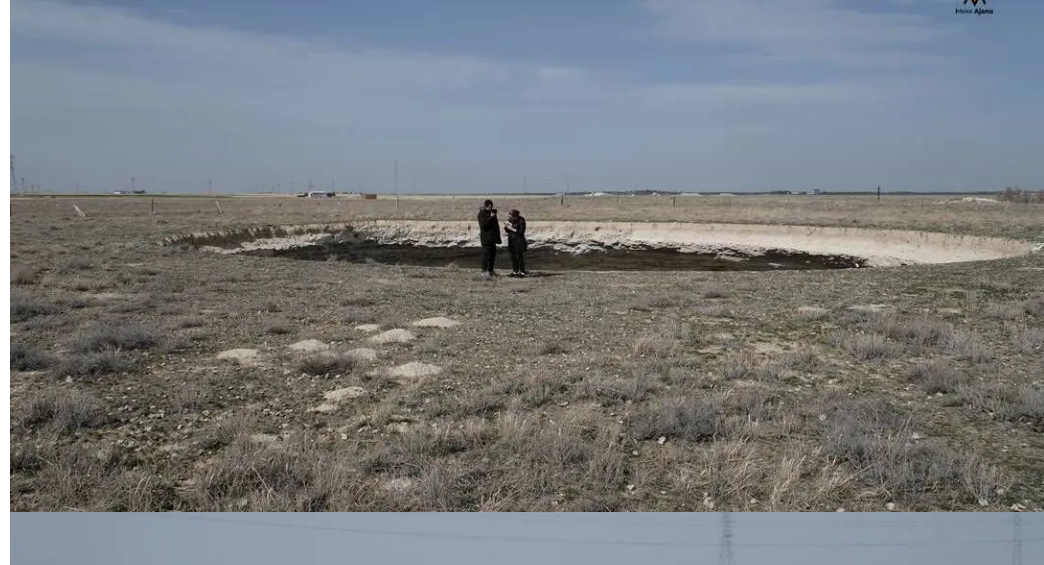
The groundwater situation is even more alarming. In the Konya Basin—Türkiye’s agricultural heartland—water tables are declining by 4 to 5 meters annually. In some areas, cumulative depletion exceeds 50 meters.
The overuse of groundwater is largely driven by irrigation for water-intensive crops such as sugar beets, corn and alfalfa. This unsustainable extraction has triggered a secondary environmental disaster: nearly 700 sinkholes have formed in Konya province as aquifers collapse.
Approaching the “Water Scarcity” Threshold
Per capita water availability in Türkiye has fallen sharply over the decades—from approximately 4,000 cubic meters in the 1960s to around 1,350 cubic meters today. Projections suggest that figure could drop to 1,000 cubic meters by 2030, the internationally recognized threshold for water scarcity.
A 2025 United Nations report warned that 88% of Türkiye’s landmass faces high desertification risk by 2030 due to climate change and unsustainable water management practices.
Water governance remains fragmented across multiple agencies and ministries, complicating coordinated long-term planning. Analysts argue that structural reform—not temporary rainfall—will determine the country’s resilience.
Climate Change: The Bigger Agricultural Threat
Renowned academic and DÜNYA columnist Prof. Dr. Aykut Gül warns that climate change poses a deeper long-term risk to Türkiye’s agricultural model.
While above-average winter precipitation may reduce food price pressures in 2026, the Mediterranean basin remains one of the regions most exposed to climate volatility.
European Parliament research on climate change and EU food security highlights trends that directly concern Türkiye:
-
Agricultural climate zones in Europe are shifting 50–150 km northward per decade.
-
By 2050, wheat yields in Southern Europe could fall by up to 49%.
-
Corn production losses could reach 80% if irrigation infrastructure remains inadequate.
-
Drought frequency in Mediterranean countries could triple.
-
Climate-related food inflation may rise 50% by 2035.
Northern Europe may see moderate productivity gains, but these are unlikely to offset southern losses. Moreover, increasing storm volatility and irregular rainfall create additional uncertainty.
Structural Adaptation Required
Experts argue that the challenge now extends beyond classical agricultural economics. Climate management capability—rather than traditional supply-demand modeling—will define long-term competitiveness.
The European Union is shifting from a sustainability narrative toward resilience and competitiveness. Policy priorities include:
-
Development of drought-resistant crop varieties
-
Expansion of agricultural insurance mechanisms
-
Smart irrigation and water-use optimization
-
Strategic food reserves beyond standard market tools
-
Reduced food waste and more efficient logistics systems
Temperature increases, fungal contamination risks, declining labor productivity due to heat, disrupted pollination cycles and biodiversity loss add further complexity.
Crucially, recent crop losses across Europe have exceeded earlier projections by nearly 30%, suggesting that climate deterioration is occurring faster than anticipated.
Strategic Outlook
Temporary rainfall relief does not alter the structural trajectory. Without coordinated water governance reform, groundwater regulation, crop pattern adjustments and climate adaptation investments, Türkiye’s agricultural productivity and food security face sustained pressure.
The core question is no longer whether drought will return—but whether structural resilience can be built before water scarcity becomes irreversible.