



Turkey’s Trade Minister: EU-India Deal Poses No Threat to Customs Union Resilience
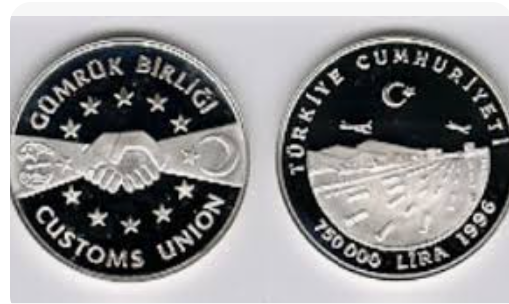 gumruk birligi
ANKARA — In a comprehensive policy review on January 31, 2026, Turkish Trade Minister Ömer Bolat addressed growing concerns regarding the European Union’s (EU) Free Trade Agreement (FTA) with India, asserting that Turkey’s deeply integrated position within European value chains remains “irreplaceable.”
Bolat dismissed media speculation that the EU-India deal would force Turkey to lower its own tariffs against New Delhi. “Turkey has no such agenda or plan. Any reports suggesting we will lower customs duties for India as a byproduct of the EU’s FTA are entirely unfounded,” Bolat told Anadolu Agency.
The 30-Year Anchor: Beyond Volume to Structural Depth
Refuting claims that the Customs Union (CU) has worked against Turkey’s interests, Bolat highlighted the transformative power of the 30-year partnership:
-
Balanced Trade: In 2025, bilateral trade reached $233 billion, with Turkey’s exports to the EU ($117 billion) nearly perfectly balancing its imports ($115 billion).
-
Technology Shift: Middle and high-tech products now account for 43.5% of Turkey’s exports, a testament to the industrial upgrade catalyzed by EU standards.
-
Investment Magnet: More than 60% of the $295 billion in Foreign Direct Investment (FDI) that entered Turkey over the last 25 years originated from the EU.
Modernizing the “Obsolete” 1995 Framework
While praising the CU’s history, Bolat emphasized that the framework—designed in 1995 solely for industrial goods—is now inadequate for the 2026 global economy. Turkey is pushing for an “upgrade” that includes:
-
Services & Digital Economy: Capturing growth in sectors currently outside the CU’s scope.
-
Logistics & Visas: Lifting transport quotas and easing business mobility to secure European supply chain resilience.
-
Agriculture & Public Procurement: Expanding the scope to reflect modern economic complexities.
India vs. Turkey: “Value” over “Price”
Addressing the EU-India FTA, Bolat noted that India’s economy remains largely inward-looking (exports are only 11% of GDP). He argued that Turkey’s proximity, “Responsible®” green transition programs, and full compliance with EU technical regulations give it a decisive edge.
“Turkey is not just a ‘supplier’ to the EU; we are a value chain partner integrated into production processes. Our competitive power is determined by quality and reliability, not just customs walls,” Bolat stated.
Turkish Business Community Urges EU to Update Customs Union and Rethink Accession
Strategic Takeaway for Investors
Bolat’s remarks signal that Turkey will maintain a defensive stance on tariff asymmetries while doubling down on the “Remote Countries Strategy”—targeting 60 nations in 2026 to diversify its export portfolio beyond the EU.