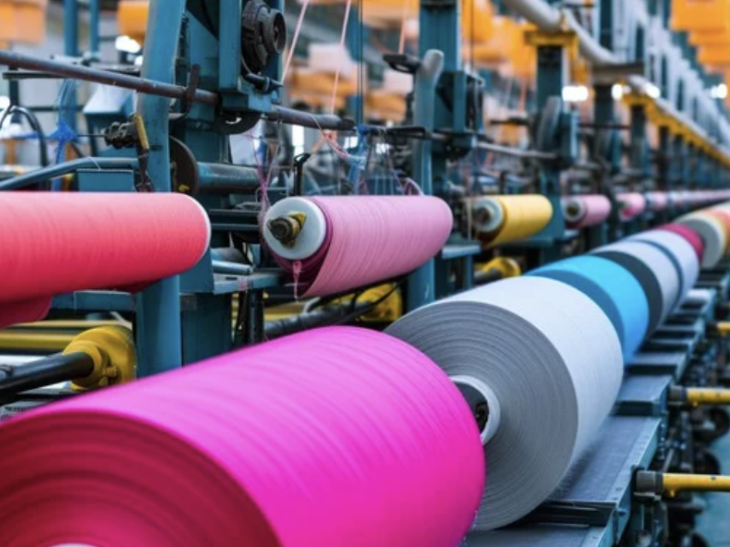
Turkey’s textile heartland reels as EU orders shift to China and Bangladesh
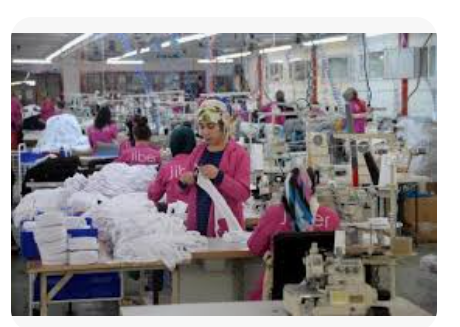 tekstil sanayi
Türkiye’s textile and apparel sector—one of the country’s biggest employers and a longstanding export engine—is sliding into a structural downturn as European buyers increasingly source from China and Bangladesh. Factory closures, wage pressure, and relocation to lower-cost countries are accelerating, unions say, while business groups warn that high inflation, high interest rates and currency-policy choices are squeezing competitiveness at a time when the industry’s EU market share is falling to multi-decade lows.
On a freezing winter day in Tokat, a central Anatolian city better known for agriculture than global supply chains, former denim workers huddle in a solidarity tent outside the gates of the Şik Makas factory. Many of them have been protesting since October, after pay delays turned into mass dismissals at one of the region’s biggest employers.
Sündüz Akkan, a mother of three, said she worked at the plant for more than three years before being dismissed after the workforce went on strike over unpaid wages. “Now we’re being treated like beggars, even though we’re just asking for what we’re entitled to,” she said, referring to severance pay claims that remain unresolved.
Their protest has delivered limited wins. Workers say they received back pay in January and succeeded in overturning a termination classification known as “Code 22,” a label that can block access to unemployment and severance benefits by citing “other reasons” for dismissal. But the larger fight—severance compensation and job security—continues, and it is increasingly emblematic of a wider crisis across the sector.
A flagship exporter under strain
Textiles and ready-to-wear clothing have been a pillar of Türkiye’s economy for decades, supporting hundreds of thousands of households and helping build the country’s reputation as a fast-turnaround supplier to Europe. Official statistics put employment in the sector at roughly 1.1 million people, though unions argue the real figure is higher due to undocumented labour, including refugees and informal workers.
The sector’s business model has historically relied on proximity to Europe, flexible production, and established relationships with global brands. Şik Makas itself—founded in 1939 and ranked among Türkiye’s largest industrial companies—says it exports around 20 million denim products annually, mainly to Europe. According to workers and union representatives, major international brands are among its customers, alongside the company’s own Cross Jeans label sold in several European markets.
Yet even large producers are being squeezed by the macro backdrop. Industry executives point to soaring input costs, expensive financing, and an unstable cost base amid high inflation. Workers, meanwhile, describe a workplace environment where pressure to raise output has intensified, with strict controls on breaks and access to medical care.
Buse Kara, one of the dismissed workers and a protest spokesperson, said the factory imposed increasingly tight limits on breaks as the company struggled. She also said she faced a legal investigation after the October strike, allegations she and supporters describe as intimidation. The company denied accusations of workplace abuses and said in written comments that it operates within Turkish law and labour regulations.
Relocation to cheaper hubs accelerates
A growing number of Turkish textile companies have shifted parts of their production abroad, particularly to Egypt, where labour and operating costs are lower. The trend reflects a broader regional competition for garment investment as brands push suppliers to cut costs amid weak consumer demand in Europe and tighter procurement budgets.
For Türkiye, relocation is more than a firm-level decision—it is a signal of eroding competitiveness in a sector where margins are thin and pricing is relentless. Companies argue they are trapped between rising costs at home and buyer demands abroad, with limited ability to pass costs through.
Union leaders counter that the “cost-cutting” strategy is often implemented at workers’ expense. Mehmet Türkmen, head of the BİRTEK-SEN union, said sector jobs are already heavily concentrated around the minimum wage, leaving many households below the poverty threshold. He also said unpaid overtime and holiday shifts are widespread, and that firms increasingly relocate within Türkiye to rural areas to access incentives and tap high local unemployment, further weakening wage bargaining power.
EU market share erodes as China and Bangladesh gain
The most alarming warning signs are emerging in the sector’s most important export destination: the European Union single market. More than 60% of Türkiye’s clothing production is destined for the EU, making European orders critical not only for exports but also for employment and regional stability.
Industry data show Türkiye losing ground as China and Bangladesh gain. According to the Istanbul Textile and Raw Materials Exporters Association (İTHİB), EU imports of Chinese textile and apparel goods rose 21.8% between January and May 2025, while imports from Bangladesh increased 17.9% over the same period. Imports from Türkiye, meanwhile, fell 5.1%, even though Türkiye remains the EU’s third-largest supplier after China and Bangladesh.
Of the EU’s ten biggest suppliers, only Türkiye and Tunisia lost market share over that timeframe, a stark marker of competitive stress. Industry representatives say the shift reflects both price differences and scale advantages enjoyed by Asian producers, alongside buyer preferences for very low unit costs in basic categories.
The longer-term trend is even more concerning for Ankara. Sector representatives say 2025 marked the first time in three decades that Türkiye’s market share in the EU clothing and textile sector fell below 5%, and the first time in 35 years that its share in global markets dropped below 3%. If sustained, such declines would represent a structural reset—not a cyclical dip—given the EU’s importance to Turkish manufacturing.
Closures and job losses mount
The human cost is rising alongside the trade data. Sector stakeholders say 380,000 jobs have been lost over the past three years, and around 4,500 companies shut down in 2025 alone. If accurate, those figures would point to a contraction large enough to ripple through Türkiye’s broader labour market, particularly in provinces where textiles remain a key source of formal employment for women.
The knock-on effects extend beyond wages. Factory closures weaken local tax bases, reduce demand for logistics and services, and can accelerate outmigration from smaller cities. For policymakers, the sector’s health is tied to social stability as well as export earnings.
Currency policy, financing costs, and a shrinking runway
Business groups warn that macro policy is amplifying the crisis. Şeref Fayat, an industry representative within the Union of Chambers and Commodity Exchanges of Türkiye, said the outlook remains bleak as long as the government continues efforts to manage the lira through market intervention—an approach critics argue can distort pricing and complicate exporter planning.
Employers also cite financing costs as a major constraint. High interest rates, while aimed at restoring macro stability and containing inflation, make working capital and investment loans more expensive. In a sector that depends on pre-financing raw materials and production cycles, expensive credit can quickly turn a margin squeeze into insolvency.
President Recep Tayyip Erdoğan has promised higher state subsidies for the sector—up to 3,500 lira per worker—and steps aimed at limiting layoffs and encouraging hiring. But industry voices say support still falls short of what is needed to offset cost disadvantages versus Asian competitors.
“We have hit bottom,” said Mustafa Paşahan, vice president of the Istanbul Apparel Exporters Association, warning that firms are running out of capacity to absorb losses. İTHİB chair Jak Eskinazi has also issued sharply critical assessments of the policy environment, arguing that the sector is being pushed into survival mode rather than supported as a strategic exporter.
Outlook: a strategic sector at a crossroads
Türkiye’s textile industry sits at the intersection of employment, exports, and industrial identity. The sector’s traditional advantages—speed to market for Europe, established quality, and flexible production—remain valuable. But executives and unions increasingly describe a system-wide crunch where labour shortages in some regions coexist with falling orders, and where costs rise even as prices face a ceiling set by global competition.
For workers like those outside Şik Makas, the macro debate is personal: unpaid wages, severance disputes, and the fear that even long-established factories can collapse without warning. For Ankara, the stakes are broader. If the industry continues to lose EU market share to China and Bangladesh, the adjustment may require not only short-term subsidies but also a longer-term competitiveness strategy—spanning energy costs, financing access, productivity, and the rule-of-law and predictability concerns that shape investment decisions.
Source: Deutsche Welle