Turkey’s “Stale Bread” Controversy: A Window into Rising Poverty and State Denial
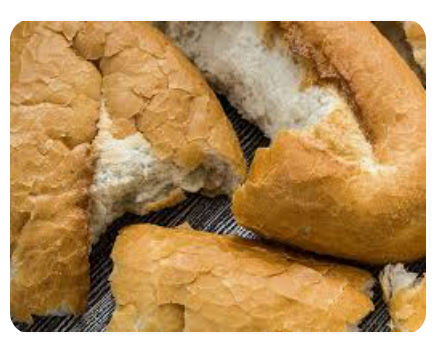 bayat ekmek
In March 2026, the quiet districts of Etimesgut and Keçiören in Ankara became the flashpoints for a national debate that transcends simple commerce. The catalyst was a local market’s decision to sell “day-old” bread for 6 TL—less than half the official regulated price of 15 TL. What followed was a spectacle that has become increasingly common in Turkey: long queues of citizens waiting to secure basic sustenance at a discount, followed by a swift, defensive intervention from the state.
The Ministry of Trade’s reaction was telling. Rather than addressing the underlying economic desperation that drives a person to queue for discounted leftovers, the Ministry issued a stern clarification. Officials insisted the products were not “stale” (bayat), but merely “produced the previous day,” and framed the price drop as a noble effort to “prevent waste.”
However, for sociologists and economic observers, the “stale bread” incident is not an isolated retail event. It is a microcosm of a much larger, more troubling trend: the institutionalized normalization of poverty in Turkey.
The Mechanics of Poverty Normalization
As inflation continues to erode the purchasing power of the Turkish Lira, a distinct editorial strategy has emerged within government-aligned media—often referred to as “Havuz Medyası” (Pool Media). This strategy seeks to rebrand structural economic failure as a series of individual lifestyle choices or spiritual virtues.
The narrative surrounding the Ankara bread queues highlights four primary tactics used to mask the severity of the country’s rising poverty:
1. The “Healthy Living” Pivot Perhaps the most audacious tactic in the recent controversy was the pivot to “health benefits.” During the height of the debate, several pro-government outlets began circulating claims that day-old bread is actually superior to fresh bread due to a lower glycemic index. By framing the consumption of cheaper, older food as a health-conscious “detox” choice, the media attempts to transform a financial necessity into a wellness trend.
2. Romanticizing the Struggle When health claims fail, the narrative shifts to “Poverty Romanticism.” This involves heavy use of religious rhetoric, specifically the concepts of sabır (patience) and şükür (gratitude). In this framework, the inability to afford fresh bread is presented as a spiritual trial. Media commentators often suggest that those who endure these hardships without complaint are more “virtuous,” effectively moralizing silence in the face of economic decline.
Democracy and Rights Erode Further in Türkiye as Executive Power Consolidates: Bertelsmann Report
3. The “Thrifty Citizen” Manual Mainstream outlets like Sabah and Takvim have faced intense criticism for publishing “survival tips” that critics argue mock the poor. These include advice such as:
-
“Don’t go to the supermarket hungry.”
-
“Use a small basket instead of a trolley.”
-
Promoting elaborate recipes specifically designed to make stale bread palatable. By focusing on “genius shopping hacks,” the burden of the crisis is shifted from government monetary policy to the individual’s “lack of shopping strategy.”
4. Deflection and External Villains The Ministry’s anger over the “stale bread” reporting also points to a strategy of blame deflection. When prices spike, the government frequently points to “stockpilers” (stokçular) or “opportunistic merchants” as the culprits. In metropolitan areas like Istanbul and Ankara, bread lines are often dismissed by pro-AKP media as “political theater” staged by opposition municipalities to make the central government look bad.
A Structural Failure, Not a Lifestyle Choice
The reality on the ground in Ankara contradicts the Ministry’s “anti-waste” narrative. People do not stand in line for 6 TL bread because they are passionate about food conservation; they do so because 15 TL per loaf has become a significant burden for families on the minimum wage.
The “stale bread” controversy is a stark reminder that as poverty rises, the language used to describe it becomes increasingly surreal. When a government ministry spends more energy defending the “freshness” of discounted bread than addressing why its citizens can no longer afford the fresh alternative, the gap between official statistics and the kitchen table becomes a chasm.
For the millions of Turks navigating this 2026 economy, the debate isn’t about glycemic indices or “preventing waste.” It is about the fundamental erosion of a middle-class life and the replacement of the “Turkish Dream” with a guide on how to survive on yesterday’s leftovers.
PA Turkey newsdesk