Turkey’s Inflation Crunch Fuels Salvage Groceries and a Boom in Second-Hand Retail
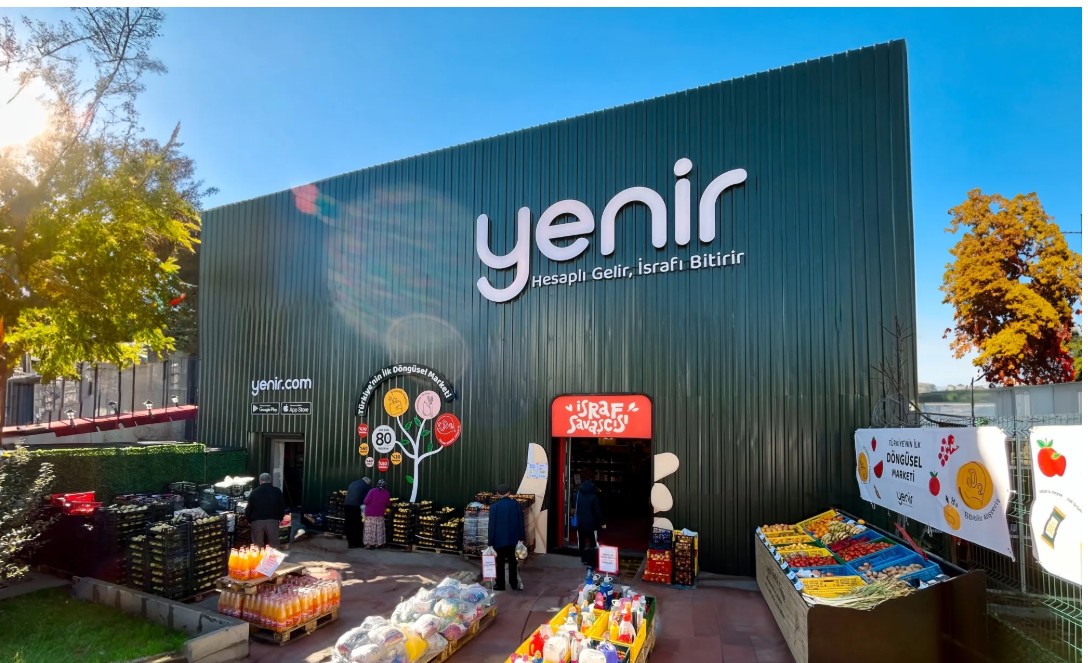 yenir magaza
Summary:
Turkey’s prolonged cost-of-living crisis is reshaping consumer behavior well beyond traditional supermarkets. Years of high inflation have driven middle-income households to seek cheaper alternatives, spurring the emergence of the country’s first salvage grocery chain and accelerating the growth of second-hand goods platforms. From discounted near-expiry food to used furniture and clothing, alternative retail models are becoming a defining feature of daily life as purchasing power continues to erode.
Salvage Grocery Retail Emerges Under Inflation Pressure
Turkey’s inflation shock has given rise to a new retail concept: salvage grocery stores selling near-expiry or past best-by food products at discounted prices. The model has taken hold as households battered by years of price increases hunt for more affordable staples.
Yenir stores — meaning “eatable” in Turkish — source products mainly from large supermarket chains that are unable to sell them through standard channels. The company behind the brand, Yenir Teknoloji AŞ, opened its first outlet in Istanbul in late 2023. Since then, it has expanded to five locations across four cities, focusing on urban wage earners whose real incomes have steadily declined.
The rise of Yenir reflects the broader economic backdrop. Turkey entered a severe inflationary spiral in 2021, when the central bank cut interest rates despite surging prices. A sharp depreciation of the lira followed, pushing annual inflation above 85% in 2022.
After President Recep Tayyip Erdoğan’s re-election in 2023, tighter monetary policy helped slow inflation to 30.9% by the end of 2025. Yet for households, the damage was already done. Food prices have risen nearly sevenfold since 2021, keeping pressure on grocery budgets even as headline inflation moderates.
Targeting the Squeezed Middle Class
Yenir’s management is clear that its business is not aimed at the poorest segments of society. “Our target isn’t people who are destitute; it’s the middle-income, white-collar masses,” said Chief Executive Officer Servet Akdoğan in a phone interview.
Customers are mainly searching for essentials such as milk, cheese, eggs and cooking oil — items that have become increasingly unaffordable in conventional supermarkets. For many salaried workers, discounted food is no longer a temporary solution but a necessity.
Official data highlight the strain on this group. According to Türkiye İstatistik Kurumu (TurkStat), the combined income share of Turkey’s three middle income quintiles declined in 2025 compared with 2021. Over the same period, the top 20% increased its share of national income to 48%, up from 46.7%, underscoring a widening gap that is reshaping consumption patterns.
Expansion Plans and Investor Backing
Yenir’s suppliers — mostly major grocery chains — are actively encouraging the company to scale up as a way to reduce waste and recover value from unsold inventory. The startup aims to reach 20 stores by the end of 2026, supported by private equity funding.
The company is planning a second funding round in the first quarter, targeting a valuation of $10 million, double that of its initial investment round in 2023. Its backers include Eksim Ventures, Founder One, and Yahya Ülker, vice chairman of Yıldız Holding.
Second-Hand Goods Gain Momentum
The shift toward cheaper alternatives is not limited to food. Across Turkey, the sale of second-hand goods is also rising sharply as consumers seek to stretch shrinking budgets and embrace more sustainable consumption.
Second-hand retail typically operates through digital platforms and physical resale shops, covering a wide range of products including furniture, household appliances, clothing and accessories. These platforms connect individuals looking to sell unused items with buyers seeking quality goods at lower prices, while also reducing waste.
General second-hand marketplaces such as Sahibinden, Letgo, Dolap, Gardrops, Gittigidiyor and Facebook Marketplace allow users to trade almost any type of product. Fashion-focused platforms like Modacruz and Zebramo specialize in clothing and accessories, while sites such as Dekopasaj concentrate on furniture and home décor. Global marketplaces like Etsy cater to handmade and vintage goods, attracting both local and international buyers.
Alongside digital platforms, physical “spotçu” stores — traditional second-hand dealers — remain popular, particularly for used furniture and white goods. These shops play an important role in lower- and middle-income neighborhoods, offering immediate access to essential household items at a fraction of new prices.
Economic and Social Benefits
The growth of second-hand retail brings multiple benefits. For sellers, it provides an additional source of income at a time when wages struggle to keep pace with inflation. For buyers, it offers access to affordable goods without sacrificing quality. From an environmental perspective, the reuse of products helps reduce waste and conserve resources.
Together with salvage grocery retail, the rise of second-hand platforms points to a deeper structural change in Turkey’s economy. As real incomes remain under pressure and income inequality widens, consumers are becoming permanently more price-sensitive.
A New Normal in Consumption
Even if inflation continues to slow, analysts say the behavioral shifts triggered by the crisis are likely to persist. Discount food stores and second-hand marketplaces are no longer niche alternatives; they are becoming mainstream features of urban life.
In that sense, Yenir and similar initiatives are not just responding to temporary hardship. They reflect a broader adaptation to an economy where affordability, value and sustainability increasingly define how Turkish households consume.
Source: Bloomberg, Turkish sources
***PA Turkey intends to inform Turkey watchers with diverse views and opinions. Articles in our website may not necessarily represent the view of our editorial board or count as endorsement.
Follow our English YouTube channel (REAL TURKEY):
https://www.youtube.com/channel/UCKpFJB4GFiNkhmpVZQ_d9Rg
Twitter: @AtillaEng
Facebook: Real Turkey Channel: https://www.facebook.com/realturkeychannel/***
Related articles

Turkey’s Seasonally Adjusted Inflation Falls Below Expectations, Opening Door for Possible Rate Cuts

Şimşek predicts inflation to drop to around 30% by early 2025
Eurostat: Turkey leads Europe regarding ‘income inequality’