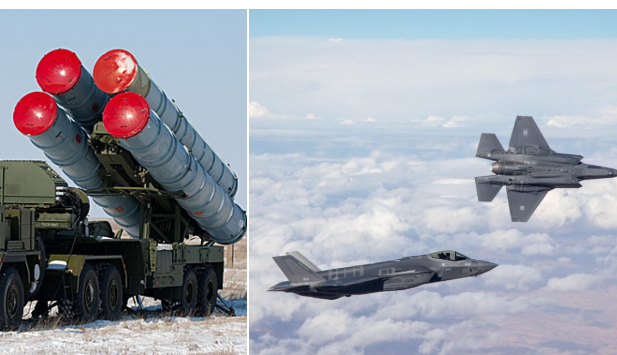
Turkey Weighs $500 Billion U.S. Energy Deal Linked to Potential F-35 Purchase
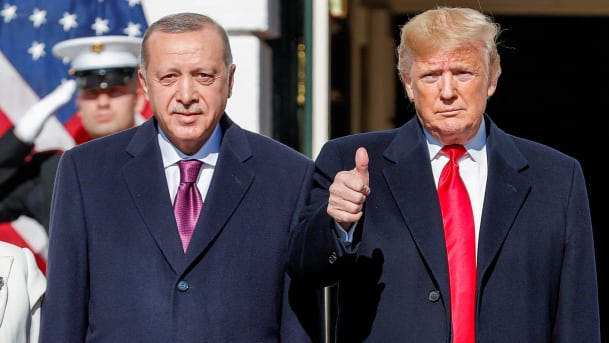 Erdogan Trump
IMPORTANT Note: PA Turkey published a similar report based on Russian sources, this time the soruce is the impartial Euractiv. PA Turkey is yet to confirm the deal from American sources
Türkiye and the United States are reportedly negotiating a sweeping $500 billion “Strategic Energy Plan” that could pave the way for Ankara’s return to the F-35 fighter jet program. The proposed framework would link large-scale U.S. energy and financial sector investments in Türkiye to progress on defense procurement, including the possible lifting of CAATSA sanctions. The package is reportedly targeted for finalization at the NATO Summit in Ankara on 7–8 July 2026.
Energy, Finance and Defense in One Framework
According to local media reports, Ankara and Washington are in talks over a comprehensive cooperation package valued at up to $500 billion. The proposed agreement would integrate energy investment, financial cooperation and defense procurement into a single strategic framework.
Under the plan, U.S. energy companies would directly invest in oil and natural gas exploration, production and pipeline development in Türkiye’s territorial waters in the Mediterranean, as well as onshore. Joint activities in Syria and Libya are also reportedly under consideration.
The proposal further envisages U.S. investment in Türkiye’s financial system, particularly in the banking sector, signaling a broader economic dimension beyond energy infrastructure.
No official confirmation has yet been issued by either government.
Türkiye as a Regional Energy Hub
A central pillar of the reported agreement is positioning Türkiye as a key transit hub for energy flows to Europe.
The framework reportedly includes:
-
Direct U.S. corporate participation in upstream exploration and production
-
Expansion of pipeline infrastructure
-
Joint extraction projects in the Eastern Mediterranean and neighboring regions
Türkiye’s geographic location between energy-producing regions in the Middle East and North Africa and European consumer markets has long been viewed as a strategic advantage. The proposed deal would formalize that role within a structured U.S.-Türkiye partnership.
F-35 Lightning II Back on the Table?
The most consequential aspect of the reported negotiations concerns defense cooperation.
The agreement is said to clear the way for Türkiye to move forward with the purchase of Lockheed Martin F-35 Lightning II fighter jets, potentially reversing Ankara’s 2019 removal from the program.
Türkiye was formally expelled from the F-35 consortium after acquiring the Russian S-400 air defense system. Washington argued that operating the S-400 alongside the F-35 posed risks to the aircraft’s sensitive technology and NATO interoperability.
The future of the S-400 systems remains uncertain. Various options have reportedly been discussed in recent years, including deactivation, third-party transfer or returning the systems to Russia.
Earlier this month, U.S. Ambassador to Ankara Tom Barrack indicated that the F-35 issue could be resolved within four to six months. The timeline coincides with reports that the broader package agreement could be signed during the NATO Summit scheduled for 7–8 July 2026 in Ankara.
CAATSA Sanctions and Strategic Reset
Reports also suggest that the deal could include lifting sanctions imposed under the Countering America’s Adversaries Through Sanctions Act (CAATSA).
CAATSA measures targeted Türkiye’s defense procurement agency and restricted certain military transactions following the S-400 acquisition. Their removal would mark a significant reset in bilateral defense ties.
If finalized, the package would represent one of the most substantial strategic recalibrations in U.S.-Türkiye relations in recent years, combining economic integration with renewed security cooperation.
Regional Reactions: Greece and Israel Watch Closely
Any Turkish acquisition of the F-35 would likely trigger reactions in the region.
Israel and Greece, both current F-35 operators, have previously expressed strong opposition to a potential Turkish return to the program. Officials in both countries argue that expanding Türkiye’s access to fifth-generation fighter capabilities could alter the regional technological balance.
Athens, in particular, remains sensitive to maritime disputes in the Eastern Mediterranean. Analysts have noted that U.S. President Donald Trump’s business-focused approach to foreign policy has generated concern in Greece, where critics argue that commercial priorities should not overshadow unresolved political disputes.
NATO Summit as a Critical Milestone
The reported target date for signing the agreement — the NATO Summit in Ankara in July 2026 — underscores the alliance dimension of the negotiations.
If concluded, the package could:
-
Reinforce Türkiye’s role within NATO
-
Reopen the path to advanced U.S. defense platforms
-
Strengthen Ankara’s ambition to become a regional energy hub
-
Reshape Eastern Mediterranean strategic dynamics
However, until formal announcements are made, the scope and structure of the reported $500 billion framework remain subject to negotiation.
Related articles
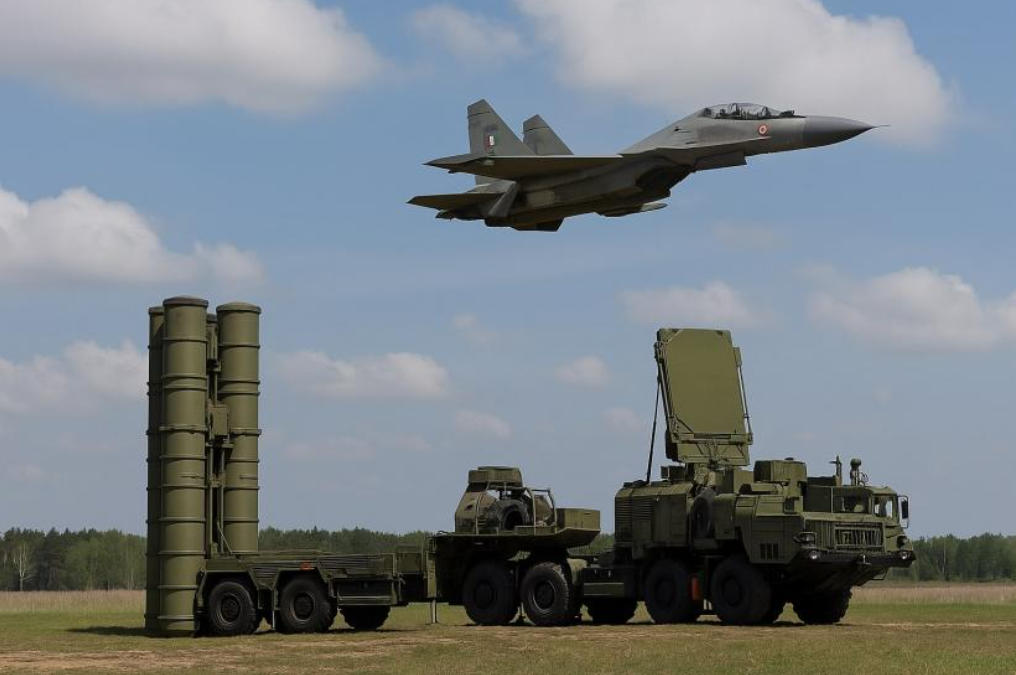
Turkey resists U.S. pressure to scrap Russian S-400s, explores limited-use compromise

Tim Ash: Trump and Erdoğan Both Emerge Winners from White House Meeting
Bloomberg: Erdogan Signals Willingness to Return Russian S-400 Missiles in Bid to Reset U.S. Ties