



Turkey Slides Sharply in 2025 Corruption Perceptions Index
 corruption
The 2025 Corruption Perceptions Index (CPI), published by Transparency International, indicates a significant deterioration in Turkey’s standing, highlighting a sustained erosion in perceptions of public-sector integrity. Covering 182 countries and territories worldwide, the index measures perceived levels of corruption in the public sector on a scale from 0 to 100, with lower scores indicating higher corruption and 100 representing a completely clean system. The latest results place Turkey among the countries experiencing the most pronounced and persistent declines over the past decade.
Turkey’s Falling Score and Global Ranking
In the 2025 edition of the CPI, Turkey recorded a score of 31 points, marking a three-point drop from the previous year. In 2024, Turkey had scored 34 points and ranked 107th globally. The loss of three points resulted in a dramatic 17-place drop in the global rankings, pushing Turkey to 124th position.
This decline is not an isolated setback but part of a longer downward trajectory. According to an analysis compiled by journalist Pelin Ünker for DW Turkish, Turkey has been on a steady slide since 2013. That year marked the country’s highest CPI score to date, at 50 points. By 2025, Turkey is 19 points below that peak, underscoring how far perceptions of transparency and accountability have deteriorated over the past twelve years.
With a current score of 31, Turkey now shares the same rank as Djibouti, Mongolia, Niger, and Uzbekistan, underscoring the extent of its relative decline in global governance indicators.
Among the Countries with the Steepest Declines
Transparency International’s long-term analysis paints an even starker picture. Since 2012, 50 countries have registered significant declines in their CPI scores. Among these, Turkey is listed alongside Hungary and Nicaragua as experiencing some of the sharpest and most sustained drops.
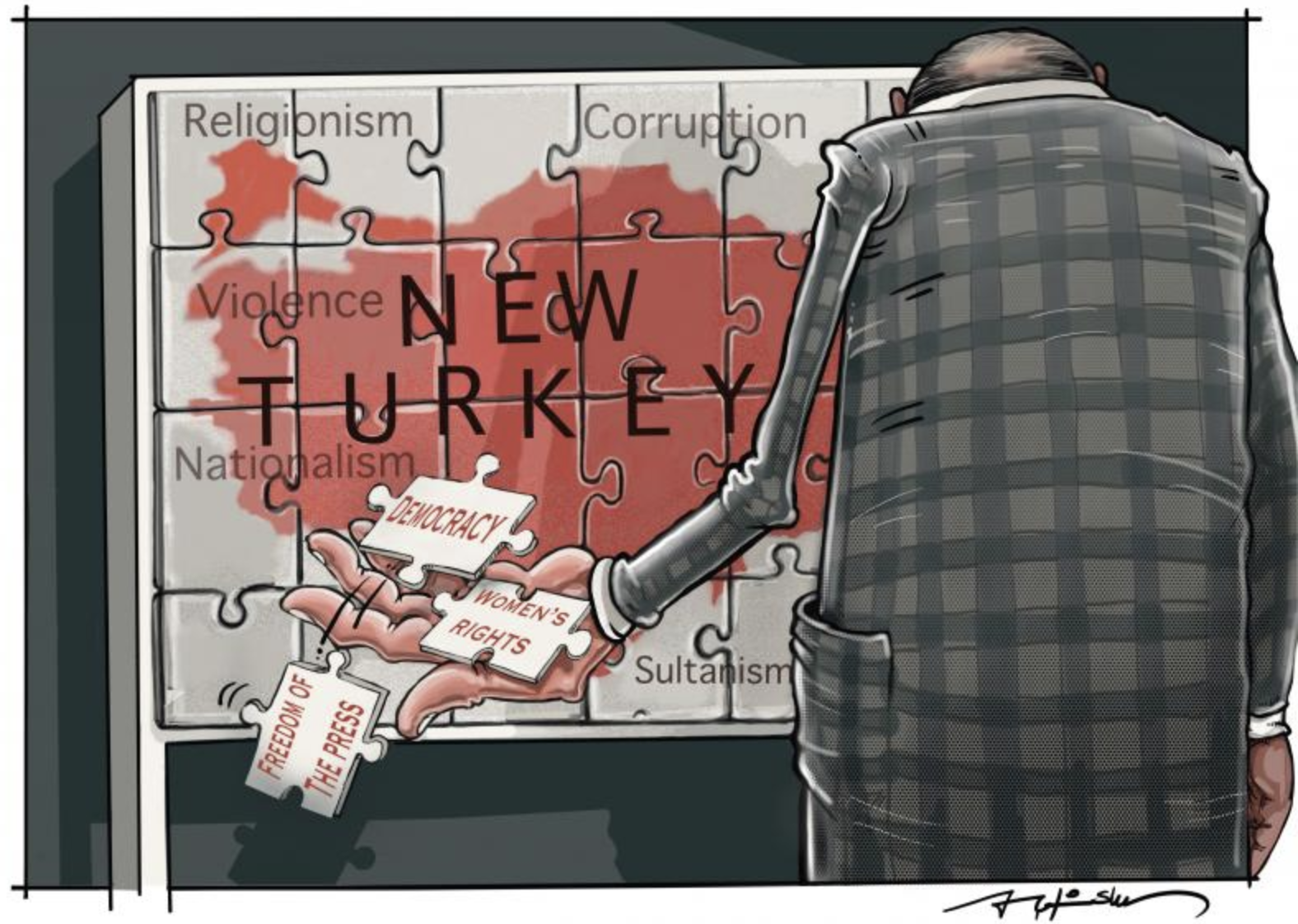
The report attributes these trends to several interlinked factors. Democratic backsliding and weakening institutional checks and balances are identified as central drivers. Over time, structural weaknesses have accumulated, reducing the resilience of public institutions. In addition, the report points to corruption networks becoming embedded within political and administrative systems, making reform increasingly difficult.
Transparency International emphasizes that these negative trends are no longer temporary fluctuations. Instead, they have become entrenched, with corruption deepening to the extent that reversing the trajectory would require substantial and sustained political will.
How Turkey Compares with Other Countries
The 2025 CPI also shows that several countries previously ranked below Turkey have overtaken it by improving their scores. Nations such as Togo, the Philippines, El Salvador, Angola, Ecuador, Laos, and Sri Lanka increased their CPI ratings, moving ahead of Turkey in the global ranking.
At the same time, some countries demonstrated notable upward mobility from lower ranks. Albania, Ukraine, and Uzbekistan were highlighted for advancing from the bottom tiers to the middle tiers of the index. Meanwhile, countries such as Estonia and South Korea maintained their relatively high scores, remaining cited as examples of stable governance and effective anti-corruption frameworks.
Concerning Signals from Established Democracies
One of the most striking aspects of the 2025 CPI is that declining perceptions of integrity are not confined to developing or transitional economies. Several long-established democracies also recorded setbacks.
The United States received a score of 64, its lowest level since the CPI began. Other advanced economies, including Canada (75), New Zealand (81), the United Kingdom (70), and France (66), also experienced declines relative to previous years. These results suggest that challenges to transparency and accountability are becoming more widespread, even in systems traditionally viewed as robust.
In the United States, the report notes a deteriorating political climate over more than a decade. It highlights weakened enforcement of the Foreign Corrupt Practices Act (FCPA), arguing that reduced application sends a signal of tolerance toward corrupt practices. Additionally, cuts to U.S. funding for civil society organizations abroad are cited as undermining global anti-corruption efforts.
Leaders of the Index and Those at the Bottom
At the top of the 2025 Corruption Perceptions Index is Denmark, with a score of 89. Finland follows closely with 88 points, while Singapore ranks third with 84. New Zealand and Norway complete the top five, each scoring 81 points.
However, the report cautions against viewing even the highest-ranked countries as entirely free from corruption risks. Financial hubs such as Switzerland and Singapore are criticized for facilitating cross-border flows of illicit funds, indicating that high scores do not equate to absolute immunity from corruption-related challenges.
At the opposite end of the spectrum are countries plagued by conflict, political repression, and institutional collapse. Somalia and South Sudan occupy the lowest positions with just 9 points each. Libya, Yemen, and Eritrea follow with scores of 13. Venezuela and Azerbaijan are also highlighted among the worst performers, where corruption is described as systemic rather than incidental.
A Broader Warning Signal
Taken together, the 2025 CPI results send a clear warning. For Turkey, the continued decline reflects long-term structural issues rather than short-term volatility. Globally, the index suggests that corruption is becoming more entrenched, even as democratic norms weaken in many regions. Transparency International’s findings underscore the growing difficulty of reversing these trends once they become deeply rooted.