Turkey Eyes 1.6 Trillion Dollar Economy as Bolat Signals Global Climb
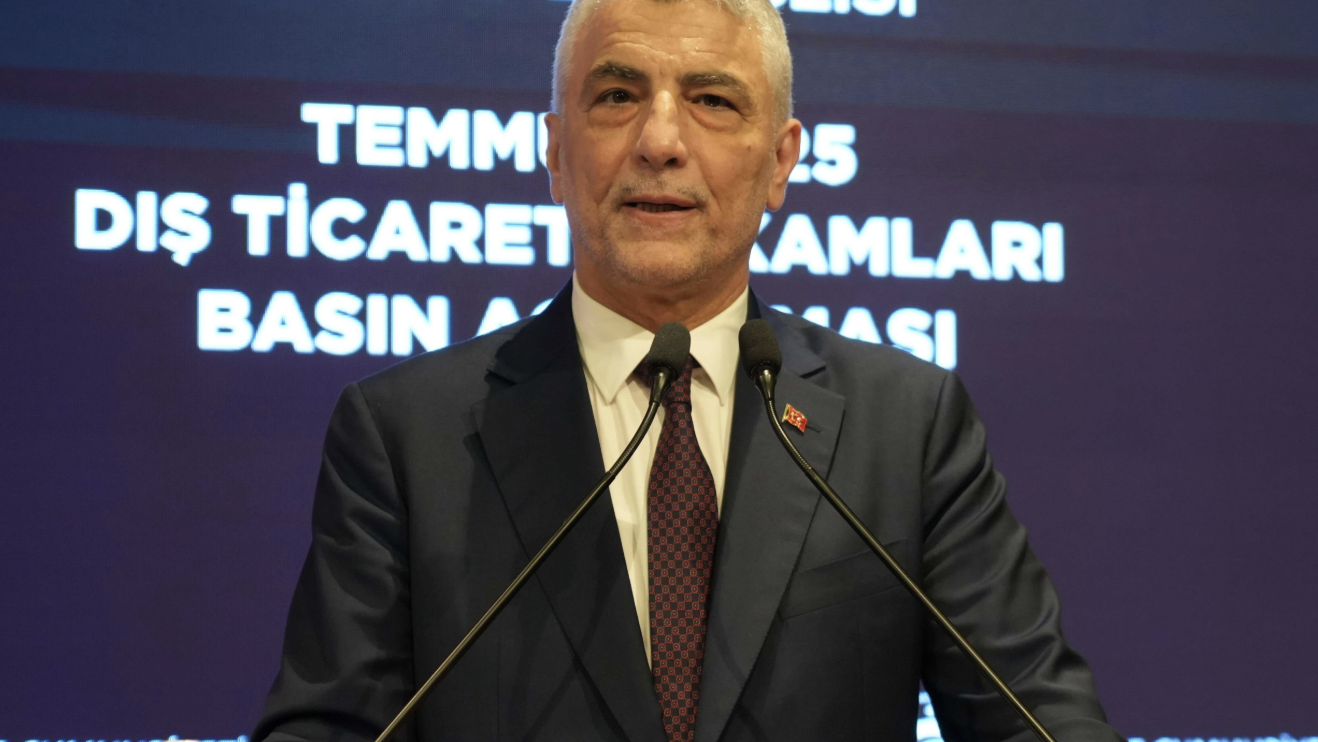 Ömer Bolat
Ömer Bolat projects that Turkey is on track to reach a $1.6 trillion economy, a development that could elevate the country’s standing in global economic rankings. Speaking at the Export Leaders Award Ceremony organized by the Gebze Chamber of Commerce, Bolat said the Turkish Statistical Institute (TÜİK) will soon release the 2025 gross domestic product data.
“If God permits, in about 15 days, TÜİK will announce the 2025 gross domestic product figures. We will rise toward a $1.6 trillion economy. This means we will move from 17th to 16th place in the global economic league. We will become the fourth largest economy in Europe,” Bolat stated.
The announcement reflects Ankara’s continued emphasis on export-led growth, industrial expansion, and macroeconomic stabilization as the backbone of long-term economic strategy.
Kocaeli Emerges as Turkey’s Export Powerhouse
The ceremony, held at Gebze Technical University’s Congress Center, brought together government officials, business leaders, and exporters. Sixty-three member companies of the Gebze Chamber of Commerce were recognized among Turkey’s top 1,000 exporters, according to the Turkish Exporters Assembly.
Bolat underscored Kocaeli’s critical contribution to national trade. With $35 billion in exports, the province accounts for nearly 12.5% of Turkey’s total goods exports, making it the country’s second-largest exporting province after Istanbul.
“Kocaeli is our country’s second export star after Istanbul,” he said. “With $35 billion in total exports, it accounts for nearly one-eighth of Turkey’s goods exports.”
Turkey’s overall goods exports reached $273.5 billion last year, reflecting a 4.4% annual increase and a net rise of $11.7 billion. Thirty-three provinces surpassed the $1 billion export threshold, while 46 provinces recorded export growth. Approximately two-thirds of product categories under customs classifications experienced export increases.
“Exports should not be underestimated. Exports mean investment, production, employing people, creating jobs, and paying taxes,” Bolat emphasized.
Export-Led Strategy Anchors Economic Policy
Bolat reiterated the government’s economic framework centered on investment, production, employment, and exports. Quoting President Recep Tayyip Erdoğan’s guiding principle, he said: “Our red line is investment, production, employment, and exports.”
According to Bolat, this strategy has strengthened fiscal performance. Out of approximately 10 trillion lira in total tax revenues last year, Kocaeli alone contributed nearly 1 trillion lira to the Treasury.
The minister framed exports not only as a trade measure but also as a comprehensive economic engine driving industrial growth and job creation. The country’s export expansion across multiple provinces suggests that growth is geographically diversified rather than concentrated in a few major hubs.
Strong Global Rankings Across Key Industries
Turkey’s economic performance extends beyond headline GDP figures. Bolat highlighted several sectors where the country ranks among global leaders.
“In many sectors, we are among the world’s top 10 countries, and in some sectors we are among the top five,” he said.
Turkey ranks 13th globally in automotive production. In textiles and apparel, it holds 7th place worldwide and 3rd in Europe. The country stands 2nd globally in international contracting services. In tourism, Turkey ranks 4th in visitor numbers and 7th in tourism revenues. In the defense industry, it ranks 10th globally.
Bolat pointed to the transformation of the defense sector as an example of structural progress. “Twenty years ago, we were a country exporting $250 million in defense products. Today, we have reached $10 billion in defense exports,” he noted.
This shift reflects broader efforts to enhance technological capability, expand domestic manufacturing capacity, and increase value-added production.
Current Account Deficit and Gold Imports
Turning to macroeconomic indicators, Bolat stated that goods and services exports now account for 25% of Turkey’s national income. Services exports were recently announced at $122 billion.
Turkey recorded a $25 billion current account deficit, which Bolat attributed entirely to gold imports. “Gold is not a commercial trade product; it is a financial and investment instrument,” he said. “If we exclude gold imports, we actually do not have a current account deficit.”
Historically, Turkey’s current account deficit has averaged around 3.5% of GDP. Bolat expressed confidence that the ratio would decline to between 1.3% and 1.4%, in line with the government’s medium-term economic program, once official GDP figures are released.
Unemployment Falls to 25-Year Low
Labor market data also featured prominently in the minister’s remarks. December figures showed an unemployment rate of 7.7%, the lowest in 25 years.
“We have seen the lowest unemployment rate of the past 25 years at 7.7%,” Bolat said.
Employment has expanded significantly over the past two decades, rising from approximately 20 million people to nearly 33 million. The economy grew 3.7% in the first nine months of the year, while the average annual growth rate over the past 23 years stands at 5.4%.