



Turkey Crowned World’s Top Tea Consumer
 Turkish-tea-consumption
A new international study examining global tea consumption habits has once again confirmed Türkiye’s unshakable leadership in tea drinking. With 3.16 kilograms of tea consumed per person annually, Türkiye ranks first in the world by a wide margin, outperforming even countries traditionally associated with tea culture. The findings highlight not only a statistical achievement, but also the deep social and historical roots of Turkish tea consumption.
Once overshadowed by coffee during the late Ottoman era, tea has evolved into far more than a beverage in modern Türkiye. It is now a defining element of daily life, hospitality, and social interaction. According to the latest global report, no other country integrates tea into everyday routines as intensively or as consistently as Türkiye.
Turkey Leads the World by a Wide Margin
Data cited by Cumhuriyet places Türkiye firmly at the top of the global ranking. The per capita annual tea consumption of 3.16 kilograms puts Türkiye well ahead of its closest competitors, underscoring a level of demand that experts describe as unmatched worldwide.
The nearest followers trail Türkiye by nearly a full kilogram or more per person:
Ireland ranks second with 2.19 kilograms per capita
The United Kingdom follows in third place at 1.94 kilograms
Russia places fourth with 1.38 kilograms
This gap clearly illustrates how tea in Türkiye functions not merely as a cultural preference but as a social constant. From morning breakfasts to late-night conversations, tea accompanies almost every moment of communal life.
Why Tea Means More in Türkiye
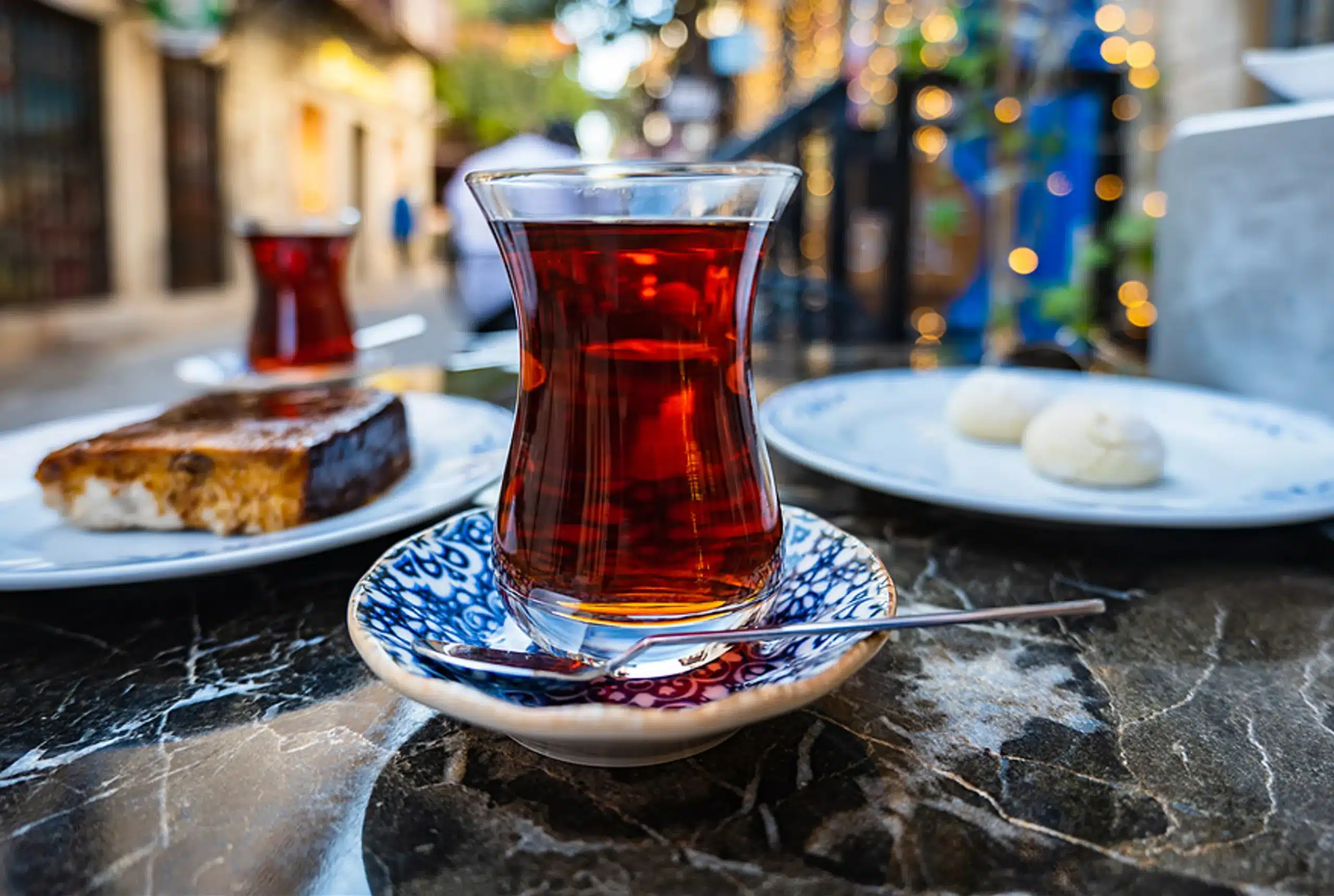
Analysts emphasize that Türkiye’s dominance cannot be explained by climate or production alone. Instead, tea has become a social glue, served in homes, workplaces, cafés, barbershops, and government offices alike. The iconic tulip-shaped glass has become a national symbol, representing warmth, conversation, and continuity.
Unlike many countries where tea is consumed at specific times of day, Turkish tea culture is continuous. Consumption cuts across age groups, income levels, and regions, creating a shared ritual that reinforces social bonds.
Surprising Results from Tea-Producing Giants
One of the most striking aspects of the report is the comparatively low per capita tea consumption in China and India, countries widely regarded as the historical and agricultural heartlands of tea.
China records just 0.57 kilograms per person annually
India follows with only 0.32 kilograms
Despite being among the world’s largest tea producers, both countries lag far behind Türkiye in per capita consumption. Experts attribute this to population size and cultural patterns. In these countries, tea is often tied to ceremonial practices or specific social contexts rather than to everyday, constant consumption. The result is lower per capita figures despite massive overall production volumes.
Countries Where Tea Plays a Minor Role
At the lower end of the ranking are nations where coffee or local beverages dominate daily habits. Mediterranean and Latin American countries, in particular, show limited engagement with tea culture.
Mexico and Italy report just 0.14 kilograms per person
Spain follows closely with 0.15 kilograms
South Korea records 0.17 kilograms
In these societies, tea remains a niche product rather than a central part of social life, highlighting how cultural traditions strongly shape consumption patterns.
Global Tea Consumption Rankings (Per Capita / Annual)
Türkiye leads the global list decisively, followed by European and Middle Eastern countries with established tea traditions.
Türkiye – 3.16 kg – Rank 1
Ireland – 2.19 kg – Rank 2
United Kingdom – 1.94 kg – Rank 3
Morocco – 1.22 kg – Rank 5
Egypt – 1.01 kg – Rank 6
The absence of Asian tea giants from the top tier reinforces the idea that tea consumption is driven by culture rather than production capacity alone.
From Coffee to Tea: A National Transformation
The report also highlights the historical journey that led to Türkiye’s dominance in tea. Until the early Republican era, coffee was the dominant hot beverage across Anatolia. However, supply constraints, rising costs, and new agricultural policies shifted attention toward tea cultivation, particularly in the Black Sea region.
With expanded transportation networks and strong state support for domestic tea production after the 1930s, tea gradually replaced coffee as the everyday drink of choice. By the mid-20th century, tea had become a national beverage, accessible, affordable, and deeply embedded in social routines.
Sociologists describe this shift as a rare example of successful cultural transformation, where economic necessity aligned with social adoption. Today, Turkish tea represents continuity, hospitality, and collective identity, turning a simple drink into a powerful cultural symbol.
A Global Benchmark in Tea Culture
The latest findings make it clear that Türkiye’s position at the top of global tea consumption rankings is not accidental. It reflects decades of cultural evolution, social practice, and everyday rituals that place tea at the center of life.
As global beverage trends continue to shift, Türkiye stands as a unique case where tea is not just consumed, but lived—one glass at a time.